KEY
KNOWLEDGE
�
� Use
of
subjec�ve
and
objec�ve
tools
(including
recall
surveys
or
diaries,
pedometry,
accelerometry
and
observa�on)
to
assess
physical
ac�vity
and
sedentary
behaviours
as
described
in
the
�
Na�onal
Physical
Ac�vity
Guidelines
KEY
SKILLS
Evalua�ng
adherence
to
the
Na�onal
Physical
Ac�vity
Guidelines
and
evalua�on
of
objec�ve
and
subjec�ve
methods
used
for
assessing
sedentary
behaviours.
Par�cipate
in
primary
data
collec�on
and
structure
a
report
in
rela�on
to
physical
ac�vity
and
sedentary
behaviours
�
�
Modern
Life…
A
life
of
Convenience.
�
�
�
Physical
Ac�vity
� Physical
ac�vity
can
be
defined
as
‘any
body
movement
produced
by
the
skeletal
muscles
that
results
in
expenditure
of
energy’.
�
Why
Physical
Ac�vity?
�
Benefits
of
Physical
Ac�vity
�
Main
purposes
of
measuring
physical
ac�vity
�
Summary
of
Na�onal
Physical
Ac�vity
Guidelines
�
Na�onal
Physical
Ac�vity
Guidelines
� Produced
by
the
Australian
Department
of
Health
and
Ageing.
� Outline
the
minimum
levels
of
physical
ac�vity
required
for
op�mum
health
and
body
weight.
� They
are
not
designed
for
high-‐level
fitness
or
sports
training,
but
are
intended
to
provide
realis�c
strategies
for
incorpora�ng
physical
ac�vity
into
our
daily
lives.
�
�
�
Selec�ng
appropriate
measurement
instruments
� When
a
large
number
of
people
are
samples
a
low
cost
subjec�ve
measure
is
generally
used
� When
sampling
individuals
or
small
numbers
of
people
objec�ve
measures
are
more
likely
to
be
used
�
�
The
only
way
to
determine
in
a
physical
ac�vity
program
increases
a
person’s
physical
ac�vity
behaviour
is:
� Measure
their
physical
ac�vity
prior
to
the
introduc�on
of
a
program
(pre-‐interven�on
tes�ng)
� Repeat
the
assessment
during
or
at
the
conclusion
the
program
using
iden�cal
measures
(post
interven�on)
� Repeat
the
assessment
3-‐12
months
a�er
post
interven�on
assessment
(follow
up)
�
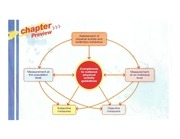
Physical
Ac�vity
monitoring
&
surveillance
concept
model
�
Physical
ac�vity
is
o�en
linked
to
other
variables
such
as
biological,
psychological
and
socio-‐cultural
factors.
The
mutual
rela�onship
between
two
or
more
of
these
factors
and
physical
ac�vity
is
known
as
a
correlate
�
Domains
of
Physical
Ac�vity
Domains
Examples
1.Leisure
�me
P.A
Various
ac�vi�es,
different
surveys
may
ask
ques�ons
about
ac�vity
freq,
intensity
and
dura�on
2.
Gardening
&
Yard
Work
Various
defini�ons
/
intensi�es.
Range
from
light
intensity
gardening
to
vigorous
digging/moving
heavy
objects
3.
Household
Chores
Range
or
tasks.
Significant
gender
differences
4.
Ac�ve
Transport
Walking
or
cycling
for
transport
5.
Occupa�onal
P.A
Diverse
occupa�ons.
Occupa�ons
requiring
less
energy
in
recent
decades.
�
Measuring
Dimensions
of
Physical
Ac�vity
�
Dimensions
of
Physical
Ac�vity
� Type
–
Iden�fies
the
‘type’
of
physical
ac�vity
being
undertaken
e.g.
gardening,
walking,
football,
etc.
� Frequency
–
How
o�en
the
individual
par�cipates
in
the
ac�vity
for.
� Intensity
–
How
hard
the
individual
is
working.
Usually
described
as
a
%
of
max
HR,
%
VO2
max,
or
a
descriptor.
� Dura�on
–
How
long
the
individual
par�cipates
for.
�
Metabolic
Equivalent
–
Describes
the
energy
cost
of
an
ac�vity.
A
MET
ra�ng
of
1.0
occurs
at
rest
=
reference
point
A
MET
value
of
6.0
indicates
an
intensity
6
�mes
that
of
rest
�
�
Subjec�ve
vs
Objec�ve
� Subjec�ve
methods
– Assess
mul�ple
domains
– Can
be
used
for
large
groups
– Have
low
reliability
and
validity
– Not
suitable
for
par�cular
groups
e.g.
elderly,
children
� Objec�ve
methods
– Use
tools
or
devices,
or
– Direct
Observa�on
– Can
be
expensive
&
require
expert
knowledge
�
�
�
�
SOPLAY
� System
for
Observing
Play
and
Leisure
Ac�vity
in
Youth.
�
SOFIT
System
for
Observing
Fitness
Instruc�on
Time
-‐
comprehensive
tool
for
assessing
physical
educa�on
classes
by
providing
for
the
collec�on
of
data
on
student
ac�vity
levels,
the
lesson
context,
and
teacher
behavior.
�
�
�
�
�
�
Sedentary
Behaviours
:
� are
associated
with
low
levels
of
energy
expenditure
(1-‐2
METS)
and
linked
to
various
nega�ve
health
consequences
� involve
si�ng
staying
in
the
same
place
for
long
periods
of
�me
(watching
TV,
commu�ng
by
car,
reading,
using
a
computer,
etc....)
� can
be
seen
in
people
who
are
highly
ac�ve
-‐
but
not
at
the
same
�me
� only
apply
to
people
up
to
18
years
of
age
in
the
Na�onal
Physical
Ac�vity
Guidelines
(as
of
2010)
but
likely
to
include
adults
in
the
future
�
The
Challenge.
�
 Historical archive . public document