Analysis of word co-occurrence in human literature for
supporting semantic correspondence discovery
Jorge Martinez-Gil
Mario Pichler
Software Competence Center Hagenberg
Softwarepark 21, 4232
Hagenberg, Austria
Software Competence Center Hagenberg
Softwarepark 21, 4232
Hagenberg, Austria
jorge.martinez-gil@scch.at
mario.pichler@scch.at
ABSTRACT
Semantic similarity measurement aims to determine the likeness between two text expressions that use different lexicographies for representing the same real object or idea. In
this work, we describe the way to exploit broad cultural
trends for identifying semantic similarity. This is possible
through the quantitative analysis of a vast digital book collection representing the digested history of humanity. Our
research work has revealed that appropriately analyzing the
co-occurrence of words in some periods of human literature
can help us to determine the semantic similarity between
these words by means of computers with a high degree of
accuracy.
1.
INTRODUCTION
Semantic similarity measurement is a well established field
of research whereby two terms or text expressions are assigned a quantitative score based on the likeness of their
meaning [24]. Automatic measurement of semantic similarity is considered to be one of the pillars for many computer
related fields since a wide variety of techniques rely on determining the meaning of data they work with. In fact, for
the research community working in the field of Linked Data,
semantic similarity measurement is of vital importance in order to support the process of connecting and sharing related
data on the Web.
In the past, there have been great efforts in finding new semantic similarity measures mainly due it is of fundamental
importance in many application-oriented fields of the modern computer science. The reason is that computational
techniques for semantic similarity measurement can be used
for going beyond the literal lexical match of words and text
expressions by operating at a conceptual level. Past works
in this field include the automatic processing of text and
email messages [14], healthcare dialogue systems [5], natural language querying of databases [12], question answering
[20], and sentence fusion [2].
In the literature, this problem has been addressed from two
different perspectives: similarity and relatedness; but nowadays there is a common agreement about the scope of each
of them [3]. Firstly, semantic similarity states the taxonomic
proximity between terms or text expressions. For example,
automobile and car are similar because both are means of
transport. Secondly, the more general concept of semantic relatedness considers taxonomic and relational proximity. For example, blood and hospital are related because
both belong to the world of health, but they are far from
being similar. Due to the impact of measuring similarity in
modern computer science we are going to focus on semantic
similarity for the rest of this paper, but it should be noted
that many of the presented ideas are also applicable to the
computation of relatedness.
The usual approach for solving the semantic similarity problem has consisted of using manually compiled dictionaries
such as WordNet [22] to assist researchers when determining the semantic similarity between terms, but an important
problem remains open. There is a gap between dictionaries
and the language used by people, the reason is a balance
that every dictionary must strike for: to be comprehensive
enough for being a useful reference but concise enough to
be practically used. For this reason, many infrequent words
are usually omitted. Therefore, how can we measure semantic similarity in situations where terms are not covered by a
dictionary? We investigate Culturomics as an answer.
Culturomics is a field of study which consists of collecting
and analyzing large amounts of data for the study of human culture. Michel et al. [18] established this discipline by
means of their seminal work where they presented a corpus
of digitized texts representing the digested history of human
literature. The rationale behind this idea was that an analysis of this corpus could enable people to investigate cultural
trends quantitatively.
The study of human culture through digitized books has
had a strong positive impact on our core research since its
inception. We know that it is difficult to measure semantic similarity for terms usually omitted in traditional dictionaries, but it is highly improbable for these terms not
having ever appeared in any book from the human literature. For this reason, we decided to open a new research line
for finding quantitative methods to assist us in the process
of measuring semantic similarity automatically using world
literature. We have tested many methods, but this work is
�
intended to describe one of the most promising approaches
we have found. This approach consists of studying the cooccurrences of words in a significant book sample from the
human literature. Therefore, the main contributions presented in this work are the following:
1. Edge-counting measures which are based on the computation of the number of taxonomical links separating
two concepts represented in a given dictionary [15].
1. We propose for the first time to study the co-occurrence
of words in the human literature for trying to determine the semantic similarity between words.
3. Information theoretic measures which try to determine
similarity between concepts as a function of what both
concepts have in common in a given ontology. These
measures are typically computed from concept distribution in text corpora [13].
2. Feature-based measures which try to estimate the amount
of common and non-common taxonomical information
retrieved from dictionaries [23].
2. We evaluate our proposal according to the word pairs
included in the Miller & Charles benchmark data set
[19] which is one of the most widely used on this context.
The rest of this paper is organized as follows: Section 2 describes related approaches that are proposed in the literature
currently available. Section 3 describes the key ideas to understand our contribution. Section 4 presents a qualitative
evaluation of our method, and finally, we draw conclusions
and put forward future lines of research in Section 5.
2.
RELATED WORK
4. Distributional measures which use text corpora as source.
They look for word co-occurrences in the Web or large
document collections using search engines [6].
There are also several related works that try to combine
semantic similarity measures. These methods come from
the field of semantic similarity aggregation. For instance
COMA, where a library of semantic similarity measures and
friendly user interface to aggregate them are provided [11],
or MaF, a matching framework that allow users to combine
simple similarity measures to create more complex ones [17].
The notion of semantic similarity is a widely intuitive concept. Miller and Charles wrote: ...subjects accept instructions to judge similarity of meaning as if they understood
immediately what is being requested, then make their judgments rapidly with no apparent difficulty [19]. This view has
been reinforced by other researchers who observed that similarity is treated as a property characterized by human perception and intuition [25]. In general, it is assumed that not
only are the participants comfortable in their understanding of the concept, but also when they perform a judgment
task they do it using the same procedure or at least have a
common understanding of the attribute they are measuring
[21].
These approaches can be even improved by using weighted
means where the weights are automatically computed by
means of heuristic and meta-heuristic algorithms. In that
case, most promising measures receive better weights. This
means that all the efforts are focused on getting more complex weighted means that after some training are able to
recognize the most important atomic measures for solving
a given problem [17]. There are two major problems that
make these approaches not very appropriate in real environments: First problem is that these techniques require a lot
of training efforts. Secondly, these weights are obtained for
a specific problem and it is not easy to find a way to transfer
them to other problems.
In the past, there have been great efforts in finding new semantic similarity measures mainly due to its fundamental
importance in many computer related fields. The detection of different formulations of the same concept is a key
method for solving a lot of problems. To name only a few,
we can refer to a) data clustering where semantic similarity
measures are necessary to detect and group the most similar subjects [4], b) data matching which consists of finding
some data representing the same concept across different
data sources [16], c) data mining where using appropriate
semantic similarity measures can facilitate the processes of
text classification and pattern discovery in large texts [10],
or d) machine translation where the detection of term pairs
expressed in different languages but referring to a same idea
is of vital importance [8]. Semantic similarity is also of vital importance for the community working on Linked Data
paradigms since software tools for automatically discovering relationships between data items within different Linked
Data sources can be very useful [28].
Our proposal is a distributional measure since, as it will be
explained in more depth, we try to look for co-occurrences
of words in the same text corpus. In fact, we are going
to get benefit from a corpus of digitized texts containing 5.2
million books which represent about four percent of all books
ever printed [18]. Achieving good results could represent an
improvement over traditional approaches since our approach
does not incur in the drawbacks from the heuristic and metaheuristic methods, and does not require any kind of training
or knowledge transfer.
According to Sanchez el al. [27], most of existing semantic
similarity measures can be classified into one of these four
main categories:
3.
CONTRIBUTION
Semantic similarity measurement is a well established field
of research whereby two text entities are assigned a score
based on the likeness of their meaning. More formally, we
can define a semantic similarity measure as a function µ1 x
µ2 → R that associates the degree of similarity for the text
entities µ1 and µ2 to a score s ∈ R in the range [0, 1] where
a score of 0 stands for no similarity at all, and 1 for total
similarity of the meanings associated to µ1 and µ2 .
Our key contribution is based on the idea of exploring culturomics for designing such a function, thus the application
�
of quantitative analysis to the study of human culture, for
trying to determine the semantic similarity between terms
or text expressions. The main reason for preferring this
paradigm rather than a traditional approach based on dictionaries is obvious; according to the book library digitized
by Google, the number of words in the English lexicon is
currently above a million. The lexicon is in a period of
enormous growth with the addition of thousands of words
per year. Therefore, there are more words from the data
sets we are using than appear in any dictionary. For instance, the Webster’s Third New International Dictionary1 ,
which keeps track of the contemporary American lexicon,
lists much less than 400,000 single-word word forms currently [18]. This means that one of the advantages of this
technique in relation to the traditional ones is that it can
be applied on more than 600,000 single-word word forms on
which dictionary-based techniques cannot work.
One of the problems we have to address is that all information from the book library is stored in data sets which are
currently represented by means of time series. These time
series are sequences of points ordered along the temporal dimension. Each point represents the number of occurrences
of a word in a year of the world literature. Therefore, each
word which has appeared at least once will have a number
sequence (time series) associated. These number sequences
represent the records for the total number of word occurrences per year in the books digitized. This allows us to
compute the frequencies of words along human history, but
it is necessary to have quantitative algorithms for helping us
to get benefit from this information.
The method that we propose consists of measuring how often
two terms appear in the same text statement. Studying the
co-occurrence of terms in a text corpus has been usually
used as an evidence of semantic similarity in the scientific
literature [6, 27]. In this work, we propose adapting this
paradigm for our purposes. To do this, we are going to
calculate the joint probability so that a text expression may
contain the two terms together over time. Equation 1 shows
the mathematical formula we propose:
sim(a, b) =
time units a and b co − occur
time units considered
(1)
This formula is appropriate because it computes a similarity score so that it is possible to take into account if two
terms never appear together or appear together in the same
text expressions each time unit. Due to the way data are
stored, the minimum time unit that can be considered is
a year. Moreover, the result from this similarity measure
can be easily interpreted since the range of possible values
is bounded by 0 (no similarity at all) and 1 (totally similar). Moreover, this output value can be fuzzificated in case
a great level of detail may not be needed. Now, let us see
some examples of application of this technique:
We query the database using the expression “lift elevator”
OR “elevator lift”. We got that there is, at least, a cooccurrence on 14 different time units. Moreover, we know
that 100 years have 20 periods of 5 years, so we have that
14
= 0.7 what means that
sim(lif t, elevator)51850−1950 = 20
these terms are quite similar.
Example 2. Compute the similarity for the terms beach
and drink in the time range [1920, 2000] taking ten-year periods as a time unit.
We query the database using the expression “beach drink”
OR “drink beach”. We got that there is not any co-occurrence
on the different time units that have been specified. Moreover, we know that 80 years have 8 periods of 10 years, so
0
we have that sim(beach, drink)10
1920−2000 = 8 = 0.0 what
means that these terms are not similar at all.
The great advantage of using culturomics instead of classic
techniques is that it can be used for measuring the semantic
similarity for more than 600,000 single-word forms on which
dictionary-based techniques cannot work. Some examples
of these words are: actionscript, bluetooth, dreamweaver,
ejb, ipod, itunes, mysql, sharepoint, voip, wsdl, xhtml or
xslt. However, the mere fact of being able to work with this
vast amount of single words cannot be considered as a great
advantage if the quality achieved is not, at least, reasonable. For this reason, we think that it is necessary to asses
the quality of our method by using classical evaluation techniques. If our proposal succeeds when solving traditional
benchmark data sets, we can suppose that it will also perform well when dealing with other less popular terms since
our technique does not make any kind of distinction between
them. On the other hand, we cannot compare our results
with results from techniques using dictionaries since these
traditional techniques cannot work under these conditions,
i.e. traditional techniques are unable to deal with terms not
covered by dictionaries.
4.
EVALUATION
We report our results using the data set offered by Google2 .
It is important to remark that only words that appear over
40 times across the corpus can be considered. The data
used has been extracted from the English between 1900 and
2000. The reason is that there are not enough books before
1900 to reliably quantify many of the modern terms from
the data sets we are using. On the other hand, after year
2000, quality of the corpus is lower since the book collection
is subject to many changes.
Example 1. Compute the similarity for the terms lift and
elevator in the time range [1850, 1950] taking five-year periods as a time unit.
Results are obtained according Miller-Charles benchmark
data set [19] which is a widely used reference data set for
evaluating the quality of new semantic similarity measures
for word pairs. The rationale behind this way to evaluate
quality is that each result obtained by means of artificial
techniques may be compared to human judgments. Therefore, the goal is to replicate human behavior when solving tasks related to semantic similarity without any kind
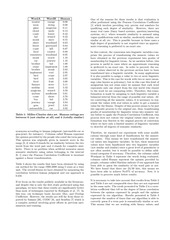
of supervision. Table 1 lists the complete collection of word
pairs from this benchmark data set. This collection of word
pairs ranges from words which are not similar at all (roostervoyage or noon-string, for instance) to word pairs that are
1
2
http://www.merriam-webster.com
http://books.google.com/ngrams
�
WordA
rooster
noon
glass
chord
coast
lad
monk
shore
forest
coast
food
cementery
monk
car
brother
crane
brother
implement
bird
bird
food
furnace
midday
magician
asylum
coast
boy
journey
gem
automobile
WordB
voyage
string
magician
smile
forest
wizard
slave
woodland
graveyard
hill
rooster
woodland
oracle
journey
lad
implement
monk
tool
crane
cock
fruit
stove
noon
wizard
madhouse
shore
lad
voyage
jewel
car
Human
0.08
0.08
0.11
0.13
0.42
0.42
0.55
0.63
0.84
0.87
0.89
0.95
1.10
1.16
1.66
1.68
2.82
2.95
2.97
3.05
3.08
3.11
3.42
3.50
3.61
3.70
3.76
3.84
3.84
3.92
Table 1: Miller-Charles data set. Human ratings are
between 0 (not similar at all) and 4 (totally similar)
synonyms according to human judgment (automobile-car or
gem-jewel, for instance). Columns called Human represent
the opinion provided by the people who rated the term pairs.
This opinion was originally given in numeric score in the
range [0, 4] where 0 stands for no similarity between the two
words from the word pair and 4 stands for complete similarity. There is no problem when artificial measures assess
semantic similarity using values belonging to the interval
[0, 1] since the Pearson Correlation Coefficient is invariant
against a linear transformation.
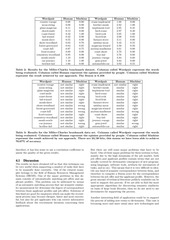
Table 2 shows the results that have been obtained by using
our method for the range 1900-2000 using 5 years as a time
unit. The overall fitness we have obtained by measuring the
correlation between human judgment and our approach is
0.458.
If we focus on the results publicly available in the literature,
and despite this is only the first study performed using this
paradigm, we have that these results are significantly better
than most of techniques reported by Bollegala et al. [7]. In
this way, our technique beats Jaccard, Dice, and Overlap
Coefficient. However, the results are still far from those reported by Sahami [26], CODC [9], and SemSim [7] which is
a complex method involving great efforts in previous optimization and training.
One of the reasons for these results is that evaluation is
often performed using the Pearson Correlation Coefficient
[1] which involves providing very precise real numbers for
qualifying each degree of similarity. However, there are
many real cases (fuzzy based systems, question/answering
systems, etc.) where semantic similarity is assessed using
vague qualifications such as similar, moderately similar, not
similar at all, etc. This is possible because in these cases a
high degree of granularity is not required since an approximate reasoning is preferred to an exact one.
In this context, the conversion into linguistic variables comprises the process of transforming the numeric values we
have obtained in the previous experiment into grades of
membership for linguistic terms. As we mention before, this
process is useful in cases where an approximate reasoning
is preferred to an exact one. In order to proceed, the numeric values observed in the previous section have to been
transformed into a linguistic variable. In many applications
it is also possible to assign a value to two or more linguistic
variables. This is the case for words with two or more meanings (also known as polysemy), but in this case this kind of
assignation has not sense since we assume that each word
represents only one object from the real world (the closest
to the word we are comparing with). Therefore, this transformation is made by assigning to each linguistic variable a
balanced interval from the range of possible real values. After converting all the numeric values, it is necessary to represent the values with real values in order to get a numeric
value for the fitness. Despite of this process seems to be just
the opposite process to the original one, thus, transforming
grades of membership for linguistic terms into numeric values before to apply the Pearson Correlation Coefficient, this
process does not restore the original values since some information was blurred in the original process of conversion
where we have only a limited number of linguistic variables
to describe all degrees of semantic similarity.
Therefore, we repeated our experiment with some modifications through some kind of fuzzification for the numerical values. This means we have transformed the numerical values into linguistic variables. In fact, these numerical
values have been fuzzificated into two linguistic variables
(not similar and similar) since a great level of granularity is
not often needed, but it would be possible to define additional categories if necessary. Therefore, the columns called
Wordpair in Table 3 represent the words being evaluated,
columns called Human represent the opinion provided by
people, columns called Machine indicate if our approach has
been able to guess the similarity of the word pair or not.
We have found that there are 23/30 hits, this means we
have been able to achieve 76.67% of accuracy. Now, it is
possible to perceive much better results.
It is necessary to take into account that results from Table 2
and Table 3 are not comparable since they are not expressed
in the same units. The result presented in Table 2 is a correlation coefficient that tell us the degree of linear correlation
between the opinion expressed by people and the opinion
expressed by our algorithm. Results presented in Table 3
represent the number of times that our algorithm is able to
correctly guess if a term pair is semantically similar or not.
This means that we are working with binary values, and
�
Wordpair
rooster-voyage
noon-string
glass-magician
chord-smile
coast-forest
lad-wizard
monk-slave
shore-woodland
forest-graveyard
coast-hill
food-rooster
cementery-woodland
monk-oracle
car-journey
brother-lad
Human
0.08
0.08
0.11
0.13
0.42
0.42
0.55
0.63
0.84
0.87
0.89
0.95
1.10
1.16
1.66
Machine
0.00
0.00
0.00
0.00
1.00
0.00
0.00
0.70
0.85
0.75
0.00
0.00
0.00
1.00
0.00
Wordpair
crane-implement
brother-monk
implement-tool
bird-crane
bird-cock
food-fruit
furnace-stove
midday-noon
magician-wizard
asylum-madhouse
coast-shore
boy-lad
journey-voyage
gem-jewel
automobile-car
Human
1.68
2.82
2.95
2.97
3.05
3.08
3.11
3.42
3.50
3.61
3.70
3.76
3.84
3.84
3.92
Machine
0.00
1.00
0.45
0.40
1.00
0.85
0.80
0.55
0.50
0.00
0.80
0.60
0.60
0.00
0.55
Table 2: Results for the Miller-Charles benchmark dataset. Columns called Wordpair represent the words
being evaluated. Columns called Human represent the opinion provided by people. Columns called Machine
represent the result achieved by our approach. The fitness is 0.458
Wordpair
rooster-voyage
noon-string
glass-magician
cord-smile
coast-forest
lad-wizard
monk-slave
shore-woodland
forest-graveyard
coast-hill
food-rooster
cementery-woodland
monk-oracle
car-journey
brother-lad
Human
not similar
not similar
not similar
not similar
not similar
not similar
not similar
not similar
not similar
not similar
not similar
not similar
not similar
not similar
not similar
Machine
right
right
right
right
wrong
right
right
wrong
wrong
wrong
right
right
right
wrong
right
Wordpair
crane-implement
brother-monk
implement-tool
bird-crane
bird-cock
food-fruit
furnace-stove
midday-noon
magician-wizard
asylum-madhouse
coast-shore
boy-lad
journey-voyage
gem-jewel
automobile-car
Human
not similar
similar
similar
similar
similar
similar
similar
similar
similar
similar
similar
similar
similar
similar
similar
Machine
right
right
right
right
right
right
right
right
right
wrong
right
right
right
wrong
right
Table 3: Results for the Miller-Charles benchmark data set. Columns called Wordpair represent the words
being evaluated. Columns called Human represent the opinion provided by people. Columns called Machine
represent the result achieved by our approach. There are 23/30 hits, this means we have been able to achieve
76.67% of accuracy
therefore, it has less sense to use a correlation coefficient to
assess the quality of the given results.
4.1
Discussion
The results we have obtained tell us that this technique can
be very useful when supporting a number of tasks that have
to be manually done currently. One of the clearest examples belongs to the field of Human Resources Management
Systems (HRMS). One of the major problems in this domain consists of automatically matching job offers and applicant profiles. This problem can be addressed by means
of an automatic matching process that use semantic similarity measurement for determine the degree of correspondence
between those applicant profiles and job offers. Solutions of
this kind are good for employers which can make the recruitment process may become cheaper, faster and more successful, but also for job applicants who can receive informative
feedback about the recruitment decisions concerning their
applications.
But there are still some major problems that have to be
faced. One of these major problems for these systems is that,
mainly due to the high dynamism of the job market, both
job offers and applicant profiles contain terms that are not
usually covered by dictionaries (emergence of new programming languages, software tools, artifacts for automation of
tasks, and so on). This means that it is very difficult to identify any kind of semantic correspondence between them, and
therefore to compute a fitness score for the correspondence
between the job offer and the applicant profile. However, the
great amount of technical literature publicly available can be
used to support this process. If we are able to find the most
appropriate algorithms for discovering semantic similarity
on basis of large book libraries, then we do not need to use
dictionaries for supporting the process.
Another interesting field of application could be to support
the process of adding new terms to dictionaries. This case is
becoming more and more usual since new technologies and
�
social networks are adopting new terms in a very quick way.
Currently, this task has to be manually performed. The process is quite tedious since requires big efforts to be made by
linguistic experts. We think that our technique can partially
support processes of this kind since it can be possible to look
for similar terms covered by the dictionary to be extended.
This information can help a lot in the process of categorizing and defining this new term. Since the results of this
technique are not perfect yes, techniques of this kind cannot
be used to develop perfect solutions in this field, but semiautomatic tools providing suggestions to people responsible
for taking the final decisions.
5.
CONCLUSIONS & FUTURE WORK
In this work, we have described how we have got benefit from
a new paradigm called culturomics. We aim to go through
the quantitative analysis of a vast digital book collection
representing a significant sample of the history of human literature to solve problems related to the semantic similarity
measurement of words. In fact, semantic similarity measurement is of vital importance for the Linked Data community
since it is in order to support the process of connecting and
sharing related data on the Web.
We have shown that appropriately studying the co-occurrence
of words along human literature can provide very accurate
results when measuring semantic similarity between these
words. Moreover, the major advantage of this technique in
relation to the traditional ones is that it can be applied on
more than 600,000 single-word forms on which dictionarybased techniques cannot work. While we carried out just
a first study, results have outperformed a number of traditional techniques. However, there is still much research work
to do. In fact, it is necessary to further research what are
the best time ranges and time units to compute the semantic
similarity using the huge book library.
It should also be noted that this work focuses on the study
of single words, but our plans include researching about the
similarity of short text expressions. We assume that using
new algorithms for word occurrence or for statistical transformation of data could be beneficial since positive results in
this context could lead to the ability of computers to recognize and predict the semantic similarity between words ever
appeared in the human literature without requiring any kind
of human intervention. We also think that could be very interesting to research towards the creation of benchmark data
sets reflecting time issues. The reason is that semantic similarity is not a fixed notion and can vary along the years.
For example, nowadays we consider that the term pair carautomobile is quite similar, but maybe this fact has not been
always true along the history of humanity or maybe it is not
going to be true in the future. For this reason, we think
that it is important not only to asses the semantic similarity of terms, but also the temporal validity of this semantic
similarity.
Acknowledgments
We thank in advance the anonymous reviewers for their help
to improve our work. This work has been funded by Vertical
Model Integration within Regionale Wettbewerbsfaehigkeit
OOE 2007-2013 by the European Fund for Regional Development and the State of Upper Austria.
6.
REFERENCES
[1] P. Ahlgren, B. Jarneving, R.Rousseau. Requirements
for a cocitation similarity measure, with special
reference to Pearson’s correlation coefficient. JASIST
(JASIS) 54(6):550-560 (2003).
[2] R. Barzilay, K. McKeown. Sentence Fusion for
Multidocument News Summarization. Computational
Linguistics 31(3). 297-328 (2005).
[3] M. Batet, D. Sanchez, A. Valls. An ontology-based
measure to compute semantic similarity in
biomedicine. J. Biomed. Inform. (44): 118-125 (2010).
[4] M. Batet. Ontology-based semantic clustering. AI
Commun. 24(3): 291-292 (2011).
[5] T.W. Bickmore, T. Giorgino. Health dialog systems
for patients and consumers. Journal of Biomedical
Informatics: 556-571 (2006).
[6] D. Bollegala, Y. Matsuo, M. Ishizuka. A Web Search
Engine-Based Approach to Measure Semantic
Similarity between Words. IEEE Trans. Knowl. Data
Eng. (TKDE) 23(7):977-990 (2011).
[7] D. Bollegala, Y. Matsuo, M. Ishizuka. Measuring
semantic similarity between words using web search
engines. WWW 2007: 757-766.
[8] B. Chen, G.F. Foster, R. Kuhn. Bilingual Sense
Similarity for Statistical Machine Translation. ACL
2010:834-843.
[9] H.H. Chen, M.S. Lin, Y.C. Wei. Novel Association
Measures Using Web Search with Double Checking.
ACL 2006.
[10] F.M. Couto, M.J. Silva, P. Coutinho. Semantic
similarity over the gene ontology: family correlation
and selecting disjunctive ancestors. CIKM
2005:343-344.
[11] Do H.H., Rahm, E. COMA - A System for Flexible
Combination of Schema Matching Approaches. VLDB
2002: 610-621.
[12] G. Erozel, N.K. Cicekli, I. Cicekli. Natural language
querying for video databases. Inf. Sci. 178(12):
2534-2552 (2008).
[13] J.J. Jiang, D.W. Conrath. Semantic similarity based
on corpus statistics and lexical taxonomy. ROCLING
1997: 19-33.
[14] L. Lamontagne, G. Lapalme. Textual Reuse for Email
Response. ECCBR 2004: 242-256.
[15] C. Leacock, M. Chodorow. Combining Local Context
and WordNet Similarity for Word Sense Identification,
WordNet: An Electronic Lexical Database. 1998. MIT
Press.
[16] J. Martinez-Gil, J.F. Aldana-Montes. Reverse ontology
matching. SIGMOD Record 39(4): 5-11 (2010).
[17] J. Martinez-Gil.Navas-Delgado, I., Aldana-Montes,
J.F. MaF: An Ontology Matching Framework. J. UCS
18(2): 194-217 (2012).
[18] J.B. Michel, Y. Shen, A. Aiden, A. Veres, M. Gray, J.
Pickett, D. Hoiberg, D. Clancy, P. Norvig, J. Orwant,
S. Pinker, M. Nowak, E. Aiden. Quantitative analysis
of culture using millions of digitized books, Science
331(6014): 176-182 (2011).
[19] G.A. Miller, W.G. Charles. Contextual correlates of
semantic similarity. Language and Cognitive
Processes, 6(1): 1-8 (1991).
�
[20] A. Moschitti, S. Quarteroni. Kernels on Linguistic
Structures for Answer Extraction. ACL (Short
Papers) 2008: 113-116.
[21] J. O’Shea, Z. Bandar, K.A. Crockett, D. McLean.
Benchmarking short text semantic similarity. IJIIDS
4(2): 103-120 (2010).
[22] T. Pedersen, S. Patwardhan, J. Michelizzi.
WordNet::Similarity - Measuring the Relatedness of
Concepts. AAAI 2004: 1024-1025.
[23] E.G.M. Petrakis, G. Varelas, A. Hliaoutakis, P.
Raftopoulou. X-similarity: computing semantic
similarity between concepts from different ontologies.
J. Digit. Inf. Manage. 233-237 (2003).
[24] G. Pirro. A semantic similarity metric combining
features and intrinsic information content. Data
Knowl. Eng. 68(11): 1289-1308 (2009).
[25] P. Resnik. Semantic Similarity in a Taxonomy: An
Information-Based Measure and its Application to
Problems of Ambiguity in Natural Language. J. Artif.
Intell. Res. (JAIR) 11: 95-130 (1999).
[26] M. Sahami, T.D. Heilman. A web-based kernel
function for measuring the similarity of short text
snippets. WWW 2006: 377-386.
[27] D. Sanchez, M. Batet, D. Isern. Ontology-based
information content computation. Knowl.-Based Syst.
24(2): 297-303 (2011).
[28] J. Volz, C. Bizer, M. Gaedke, G. Kobilarov. Silk - A
Link Discovery Framework for the Web of Data.
LDOW 2009.
�
 Historical archive . public document