General Population Brochure2
2/2/04
5:02 PM
Page 1
What is Diabetes?
Diabetes is a chronic disease in which the body does not
make or properly use insulin. Insulin is a hormone the
body makes to convert sugar, starches, and other food
into energy. Without proper levels or use of insulin
(diagnosed as diabetes) sugar builds up in the bloodstream and can damage the heart, eyes, feet, kidneys and
blood vessels.
What Are the Types
of Diabetes?
What Are the Risk Factors
of Diabetes?
• Family history of diabetes
• African American, Hispanic/Latino,
Asian, Pacific Islander or Native
American descent
• 45 years of age or older
• Overweight
• Physical inactivity
• For woman, having gestational
diabetes or a baby weighing more than nine
pounds at birth
• Pre-diabetes
Type 1
results when the body is unable to make its own insulin.
Type 1 is most commonly diagnosed among children and
young adults. Five to 10 percent of people with diagnosed
diabetes have type 1.
Type 2
results when the body can't properly use its own insulin or
doesn't make enough insulin to manage blood sugar levels.
This causes sugar to build up in the blood. Type 2 diabetes
is usually diagnosed in older adults.Ninety to 95 percent of
people with diagnosed diabetes have type 2.
Gestational Diabetes
occurs during pregnancy and usually disappears after the
pregnancy is over. This type of diabetes is diagnosed in
two to five percent of all pregnancies.
Pre-Diabetes
is a condition of higher than normal blood sugar levels not high
enough to be diagnosed as type 2 diabetes. It is estimated that
at least 16 million Americans have pre-diabetes.
What Are the Symptoms of Diabetes?
• Blurry vision
• Tingling or numbness in the hands or feet
• Frequent urination
• Excessive thirst
• Extreme hunger
• Very dry skin
• Sores that are slow to heal
• More infections than usual
• Feeling very tired much of the time
• Unexplained weight loss
If you have one or more of these symptoms or risk factors, see your
doctor for a simple finger stick test to check your blood sugar. Early
detection can prevent life threatening complications.
�
2/2/04
5:02 PM
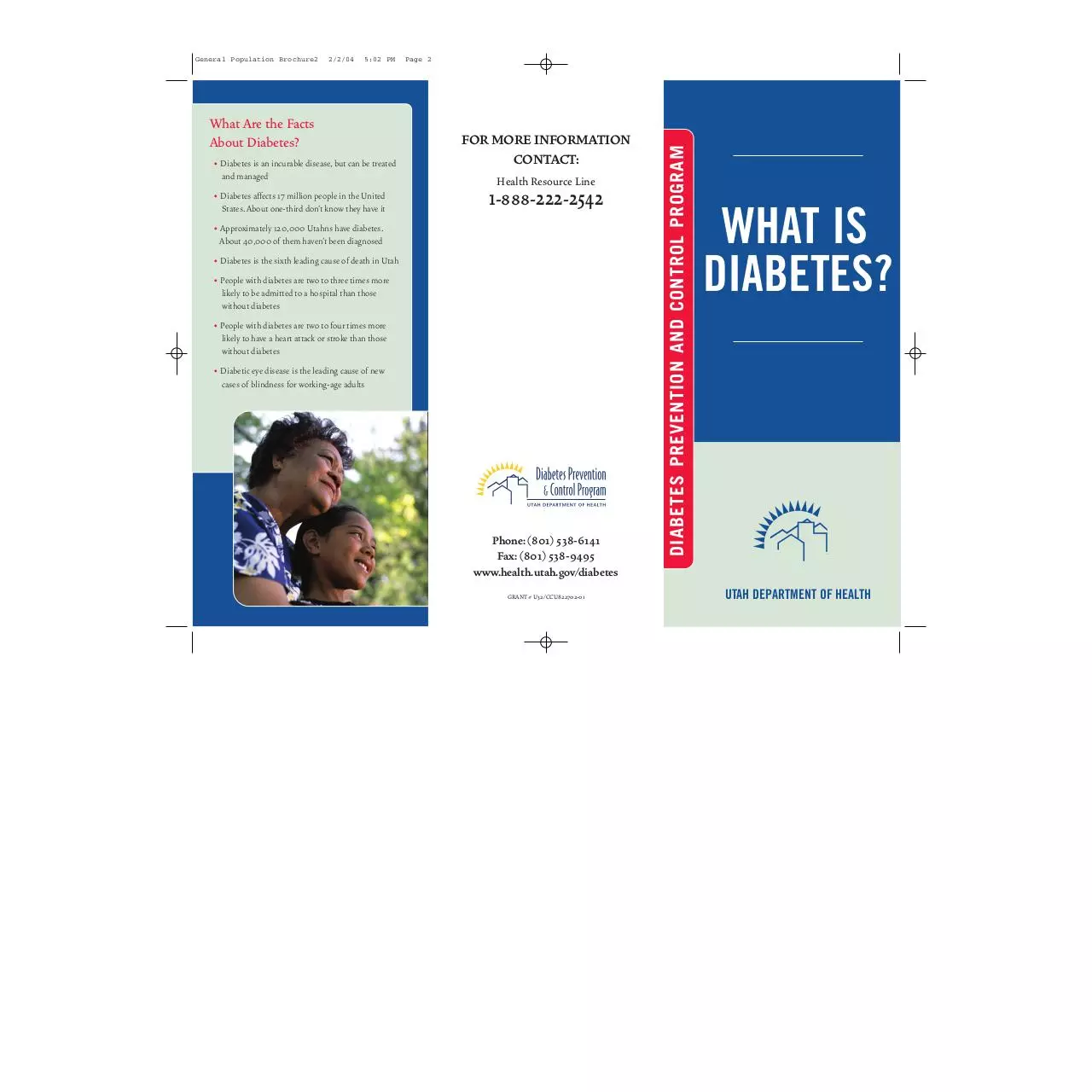
What Are the Facts
About Diabetes?
• Diabetes is an incurable disease, but can be treated
and managed
• Diabetes affects 17 million people in the United
States. About one-third don’t know they have it
Page 2
FOR MORE INFORMATION
CONTACT:
Health Resource Line
1-888-222-2542
• Approximately 120,000 Utahns have diabetes.
About 40,000 of them haven’t been diagnosed
• Diabetes is the sixth leading cause of death in Utah
• People with diabetes are two to three times more
likely to be admitted to a hospital than those
without diabetes
• People with diabetes are two to four times more
likely to have a heart attack or stroke than those
without diabetes
• Diabetic eye disease is the leading cause of new
cases of blindness for working-age adults
Phone: (801) 538-6141
Fax: (801) 538-9495
www.health.utah.gov/diabetes
GRANT # U32/CCU822702-01
DIABETES PREVENTION AND CONTROL PROGRAM
General Population Brochure2
WHAT IS
DIABETES?
UTAH DEPARTMENT OF HEALTH
�
 Historical archive . public document