S
ew ib
li
m ng Pl
ed s u
ic re s
c un
o
lu it
m ed
n
is
t
N
From business
exec to
deployed doctor
Page 4
�
Mid-life surgeon
Page 4
15
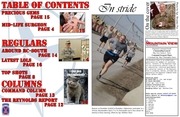
Capt. Douglas “Doc” Powell, brigade surgeon assigned to Headquarters and
Headquarters Detachment, 1st Brigade Combat Team, 4th Infantry Division,
left his job as a business executive for Burton Snowboards at the age of 40 to
attend medical school and become a doctor for the U.S. Army. Powell, a native
of Middlebury, Vt., is now working as a medical doctor on the front lines of
Operation Enduring Freedom in Kandahar, Afghanistan.
Regulars
Around RC-South
Page 14
Latest LOLs
Page 16
The
Mountain
View
magazine
Regional Command South
Commanding General
Maj. Gen. James L. Terry
Command Sergeant Major
Command Sgt. Maj. Christopher Greca
4
The Mountain View is an authorized
publication for members of coalition
forces. Contents of The Mountain View
are not necessarily official views of,
or endorsed by, coalition governments.
All editorial content of The Mountain
View is prepared, edited, provided and
approved by the Regional Command South
Public Affairs Office.
Top Shots
Page 8
Editorial Staff
RC-South PAO Lt. Col. Web Wright
RC-South PAO NCOIC
Master Sgt. Tami Hillis
Command Information OIC
Ensign Haraz N. Ghanbari
Managing Editor Sgt. Matthew Diaz
Columns
Command Column
Page 13
The Reynolds report
Page 12
2
On the cover
precious gems
Page 15
In stride
Photo by Sgt. Breanne Pye
Table Of Contents
16
Runners on Kandahar Airfield in Kandahar, Afghanistan, participate in a
24-hour ultramarathon April 17 to 18. Participants ran to raise money for
charities of their choosing. (Photo by Sgt. Matthew Diaz)
Media queries please contact RC-South
Public Affairs at 10thmtnpao@gmail.com
Contributing Units
TF Kandahar
TF Lightning
TF Raider
TF Spartan
TF Thunder
CT Uruzgan
CT Zabul
NTM-A
16th MPAD
�
Story and photos by Sgt. Breanne Pye
Task Force Raider Photojournalist
Anatomy of an old dog
mastering new tricks
A combat surgeon’s journey from
the trenches of big business to the
front lines of Afghanistan
4
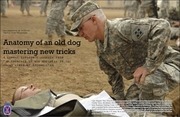
Capt. Douglas “Doc” Powell, brigade surgeon assigned to Headquarters and Headquarters Detachment, 1st Brigade
Combat Team, 4th Infantry Division, assesses a casualty during a medical training exercise April 16, 2010 at the
Joint Readiness Training Center Fort in Polk, La. Powell, a native of Middlebury, Vt., attended the training in
order to prepare for his current deployment to Kandahar, Afghanistan, in support of Operation Enduring Freedom.
Powell left his job as a business executive at Burton Snowboards at the age of 40 to attend medical school and
become a doctor for the U.S. Army. He is currently serving at Camp Nathan Smith in order to oversee operations
at the Troop Medical Clinic there.
�
CAMP NATHAN SMITH, Afghanistan -- Flip
through history’s pages and you will find countless stories
of men and women who have taken incredible journeys and
become celebrated heroes. If you’re looking for a modernday hero, you won’t have to look any further than a 49-yearold combat surgeon who’s known as “Doc” throughout Task
Force Raider.
A former business executive for Burton Snowboards,
Army Capt. (Dr.) Douglas Powell is the brigade surgeon for
the 4th Infantry Division’s Headquarters and Headquarters
Detachment, 1st Brigade Combat Team. His mission here
is quite different from that of the design team he’d led with
Burton, as he serves on the front lines of Operation Enduring
Freedom in Afghanistan.
Powell, a native of Middlebury, Vt., said his journey
to becoming an Army surgeon began when he enlisted as
a medic in the Vermont National Guard after graduating
from college. He competed as part of the Vermont Guard’s
winter biathlon team for five years, and was hired by Burton
Snowboards as a project manager.
“Doug was an asset to our company,” said Jake
Burton, the company’s founder. “He was a hard worker who
always gave me everything he had, never quit, and always
led by example.”
Though he thoroughly enjoyed his work at Burton
Snowboards and the environment that kind of work provided,
Powell said, he continued to feel as if something important
was missing from his life.
“After eight years at Burton, I started feeling a strong
desire to get away from business and start doing something
that would have an impact on people’s lives,” he said. “At
that point, I began volunteering at a hospital in Burlington,
Vt.”
Within a month of working in the hospital’s cancer
ward, Powell determined that he needed to have some form
of medical service in his career.
When Powell told Burton he was leaving to pursue
a career in medicine, Burton said it seemed late to be trying
something so ambitious. Even so, he said, Powell’s great
intentions and drive, coupled with a little stubbornness, are
aspects of his personality that make him the kind of man
who is capable of extraordinary things.
“Doug was never a guy to act impulsively,” Burton
said. “Clearly, his decision was well thought out, so as much
as I hated to see him go, I never considered talking him out
of his decision.”
Powell said after working in a business environment
for so long, his volunteer work in the
cancer ward was one of the most trying,
yet rewarding, experiences of his life.
Throughout his time there, he said, he felt
the call to practice medicine become stronger
and more important in his life.
6
“While working full-time and volunteering at the
hospital, I signed up for night classes to begin knocking out
the pre-med classes I needed to complete before applying to
medical school,” he said.
The process was arduous, he recalled, as his earlier
education was in English and history, so he had to take
multiple classes to qualify as a medical school applicant.
“I had a lot of ground to make up if I wanted to make
it into medical school, so I set a goal for myself,” Powell
said. “I would take one class, (such as) biology, and if I got
an ‘A,’ I would continue taking classes.”
He maintained that standard throughout the pre-med
program.
After pre-med, Powell said, he knew he had a long
way to go before he could practice medicine, so he continued
to work for Burton and spent all of his free time volunteering
in the cancer ward.
“There were a lot of patients and experiences that
began to weave the fabric of the epiphany of my wanting to
practice medicine,” he said. “But there was one patient in
particular who made it all happen.”
During his time as a volunteer, Powell explained,
he worked with a woman who had terminal breast cancer.
Every day, the woman would bring her husband and young
daughter to sit with her as she went through chemotherapy.
Powell said the woman never focused on the treatment she
knew would not work. Instead, he said, she focused on
interacting with her family and giving them memories and
joy that would last a lifetime.
“There was something about the woman’s drive and
passion for life that both inspired and humbled me,” Powell
said. “She had the most positive attitude as she interacted
with her family and doctors in the ward. Even after she died,
I never stopped being affected by her enthusiasm.”
Though his first application to medical school was
denied, he said, the memory of the woman and her family
convinced him to continue his efforts to become a medical
practitioner.
“Throughout my career, one of the best pieces of
advice I ever received was from a medical colleague of
mine,” Powell said. “That colleague told me, ‘Whenever
you have doubt about the path you are on, go and spend
time with the patients. They will always pull you through.
They will always inspire you, and they will always remove
doubt.’”
Powell said that advice has proven true in every stage
of his medical career, and is as meaningful now as it was in
the beginning. He said it wasn’t just about spending physical
time with the patients, but also reflecting on his experiences
with them that gave him inspiration along his journey.
Continued on page 10
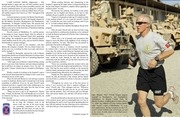
Capt. Douglas “Doc” Powell, brigade surgeon
assigned to Headquarters and Headquarters
Detachment, 1st Brigade Combat Team, 4th
Infantry Division, conducts physical fitness March
23, within the confines of Camp Nathan Smith’s
walls. Powell, a native of Middlebury, Vt., is an
avid outdoorsman, having competed on the U.S.
Army’s winter biathlon team in Vermont, as well
as the Army 10-miler team at Joint Base LewisMcChord, Wash.
�
S
T
O
H
P
S
O
T
8
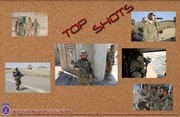
“TOP SHOTS” ENTRIES ARE OPEN TO ALL READERS.
ALL “TOP SHOTS” SUBMISSIONS MUST BE IN BY THE FRIDAY BEFORE PUBLICATION DATE. SEND SUBMISSIONS TO 10THMTNPAO@GMAIL.COM
�
But the denial of his first medical school application
did plant some doubt in his mind, Powell said.
“I went out to California to work for a friend of mine
in the snowboard industry,” he said, “and really thought I
would be continuing in the business.”
But on his way back to the East Coast for a final
interview for a position in the private sector, he recalled, he
ran into a woman in the airport who had a cast on her arm. He
stopped to help her with her bags, and in their conversation
he learned the woman was on her way to say goodbye to her
best friend, who was dying of breast cancer.
On his flight, Powell said, he began reflecting on
his own experience with his favorite cancer patient and her
family.
“I began writing an essay about my experiences in
working with and eventually (having) to say goodbye to that
incredible woman,” he said. “I wrote her whole story in one
take. It was one of those rare times you get the whole story
out perfectly, on the very first draft.”
Powell said when he re-read the essay as he got
off the plane, he knew without a doubt he would apply to
medical school again.
“I used that essay as my entrance essay on the
medical school application,” he said. “After an anxious wait,
I was accepted into 10 different medical schools across the
country.”
Powell chose to attend Wake Forest University
School of Medicine in Winston-Salem, N.C. At the time of
his post-graduate enrollment, Powell was 40 years old.
Walk through the halls of any American university and
you expect to see the bright, young faces of eager students,
fresh out of high school, ready to write the first solo chapter
in their personal “book of life.” But as those young students
prepared for their first lecture, they found themselves sitting
next to a jovial, white-haired, former business executive they
may have mistaken for the professor.
As he started this new stage of his journey, Powell
found himself with a much different set of challenges from
those his bright-eyed counterparts faced.
“What was tough, very tough, was to be thrown
into medical school with young, smart students fresh out of
science-based majors,” he said. “As a liberal arts major in
my undergraduate degree, learning science was something
new that I had to undertake to enter medicine.”
With only two years of medical classes, taken at
night while volunteering and working a full-time, highlevel, private-sector job, it was incredibly
challenging to become comfortable with
the new subject matter he was studying,
Powell said.
The challenge for Powell came in
trying to keep up with his classmates
academically after years of navigating the
10
twists and turns of business. Many of his classmates were
fresh out of four-year programs and had a significant amount
of lab research experience.
“There were many times during my first and second
year when I doubted I was smart or resilient enough to get
through the next exam,” he said. “I wondered whether I
should have chosen another medical school, a less arduous
profession, or even if I should have continued my career in
business.”
But the discrepancy leveled off when his classes
transitioned from class work to working with patients.
“It was much easier to apply science to the care
of patients than it was to get good grades on standardized
exams,” Powell said. “But as I got better and better with the
former, I continued to struggle with the latter.”
It was a battle, Powell said, but he made it through
one test and then another, one class and then another, one
year and then another, and finally walked across the stage at
the end of his four-year program to receive his diploma as a
medical doctor. He had finally made it.
“I attribute a lot of my ability to endure those trying
times to my background as an aerobic athlete,” Powell said.
“No matter how busy or overwhelmed I felt, I got out for a
run or a long bike ride to recharge my batteries enough to
face the next challenge head-on.”
The next challenge was medical residency - practicing
medicine under the supervision of a fully licensed physician
in a hospital or clinic. Powell chose to complete his residency
in internal medicine at Madigan Army Medical Center at
Joint Base Lewis-McChord, Wash.
During his residency, Powell competed on the Army
10-miler running team made up of combat arms officers and
noncommissioned officers, most who’d served on the front
lines in Iraq and Afghanistan.
“Spending time with teammates from my 10-miler
team really inspired me to want to practice medicine in a line
unit,” Powell said. “Hearing their stories and experiences
reignited my original passion to engage in public service.
I absolutely knew, without a doubt, that I had to serve in a
combat arms unit.”
Shortly after completing his residency at Madigan,
Powell accepted his first assignment as a medical professional
as brigade surgeon for the 4th Infantry Division’s 1st Brigade
Combat Team “Raiders.”
Army Lt. Col. David Meyer, the brigade’s executive
officer, said Powell is an inspiration.
“I can’t imagine having the guts and determination to
change careers at 40,” he said. “I wouldn’t even know where
to start.”
But Powell always knows exactly where to start,
Meyer added. Whether it’s turning one career in for another
or figuring out how to train hundreds of Afghan soldiers and
police who can’t read to how to administer advanced medical
aid on the battlefield, Powell always figures out a way to get
the job done, he said.
Figuring out how to overcome seemingly impossible
odds is exactly the sort of challenge that inspires Powell to
continue his journey as a medical professional in the Army.
“Being a doctor on the front lines gives me an
opportunity to effect the care, well-being and medical
readiness of a more diverse population of people,” he said.
“It’s an incredibly rewarding, interesting and challenging job.”
The brigade has established a medical footprint
throughout Afghanistan that extends across some of the
most dangerous and geographically challenging terrain in
the country, he added.
“To be able to deliver health care in an area that didn’t
previously have an effective health care system in place
gives me an incredible feeling of hope and accomplishment,”
Powell said.
During his deployment he had helped to design and
implement a comprehensive medical training program for
the Afghan security forces that will be saving lives long after
the last American boots leave Afghan soil.
When he deployed, Powell said, he realized the Afghan
forces never would have access to the medical equipment
U.S. forces routinely carry with them. He and his team began
to put together a training manual that uses common items the
Afghan forces would find on the battlefield. Because a large
percentage of the Afghan population is illiterate, Powell and
his team used step-by-step pictures so Afghan forces would
understand it and be able to pass the training on without the
help of U.S. forces.
The manual now is a standard for medical training
for Afghan forces across Afghanistan.
After all the success Powell has helped bring to Raider
Brigade during his time in Afghanistan, it’s hard to imagine
how he could possibly find a way to challenge himself further
as he transitions to the next step of his incredible journey.
In June, Powell will begin a fellowship program in
critical care medicine at Walter Reed Army Medical Center
in Washington, D.C.
“This fellowship is an opportunity for me to learn
from, and work with, some of the best trauma and burn
physicians in the world,” he said. “It’s also an opportunity
for me to teach new resident doctors and medical students
critical care medicine.”
Meyer said Powell has an exceptional ability to
teach.
“He easily identifies how people learn, and without
passing judgment, is able to create an environment of
knowledge for them,” he said.
In the meantime, Powell said, he doesn’t plan on
slowing down his efforts to continue expanding his brigade’s
medical footprint in Afghanistan any time soon.
“My goal right now is to continue to make sure
Raider Brigade is prepared for any medical contingency that
might come up,” he said. “Experiencing success with the
programs we’ve already implemented here only makes the
last few months of this deployment vital to creating even
more progress.”
Reflecting on the end of his time as a brigade surgeon
and the steps it took to get there, Powell said he is just as
inspired to continue his work in public service as he was
when he first volunteered at the cancer ward in Vermont in
1999.
“Twelve years after I began my journey, I am
still discovering and still experiencing rewards that are
indescribable,” he said. “This calling is as strong and
motivating to me now, as it was the day I began my work in
the medical field.”
But the doctor won’t tell you his story is special or
unique.
“I think when people consider taking a long journey
like I have done, they see the beginning and the end,” he said.
“They don’t realize there is a great amount of life experience
collected along the way.
“Each place I traveled throughout this journey has
brought great friends and experiences with it,” he continued.
“When I reached my destination, I looked up and I had less
hair and it was all white, but I knew I had done it, without
giving up life to get it done.”
Still, he added, it’s not possible to start an epic
journey like this and get to the end without help.
“You make it to the first fork in the road, then up the
pass and through the mountains, then down into the valley,”
he said. “Ultimately, it’s about linking all the little sections
together to get to the end.”
Capt. Douglas “Doc” Powell, brigade surgeon assigned to Headquarters
and Headquarters Detachment, 1st Brigade Combat Team, 4th Infantry
Division, looks over an X-ray March 23 at Camp Nathan Smith’s Troop
Medical Clinic with Spc. Dustin Howard, X-ray technician assigned to
Company C, 1st Brigade Support Battalion, 1BCT, 4th Inf. Div.
�
Pfc. Matthew P. Reynolds
10th MTN HHBN- HSC
RC(S) Role 1
Cultural
Considerations:
The family is the single most important unit
in the Afghan culture. Men and women’s
roles are much more defined along traditional
lines. Women are generally responsible for
household duties, where as men will be the
bread winners. In the cities professional
women do exist. Families commonly arrange
marriages for their children. Factors such as
tribe, status, network, and wealth are the
major factors forming any choice. Families
traditionally live together in the same walled
compound, known as the kala. When a son
gets married he and his wife begin their
married lives in a room under the same roof.
As with much of the Muslim
world, the family is sacred and
as such, is highly protected.
As a result, probing about the
family is not advised.
12
Soldier In The Spotlight
Name: Spc. Nicholas K. Pollock
Unit: C/1-502D INF REGT
Hometown: Manchester, N.H.
Quote: Doing what needs
to be done to take care of
the people of Now Ruzi!
While flying his Raven, Spc. Pollock
spotted what appeared to be IED making
materials. He did another pass and with his
personal camera took a picture of his screen.
Then he had his co-pilot show it to his chain
of command. This was enough evidence to
launch QRF in the area that resulted in finding
bags of fertilizer, nuts and bolts, as well as
other IED making materials.
A short helicopter flight from Kandahar Airfield, it is clearly
apparent by the greenery of the pomegranate groves and poppy fields
that spring has arrived in southern Afghanistan.
Our winter operations were very successful, as we continued
to gain and hold ground in areas formerly controlled by the insurgents.
As insurgent fighters attempt to return to these same areas they
previously controlled, Afghan and coalition forces are in these
previously held positions, and it is clear that the insurgents are no
longer welcome. Thanks to numerous security improvements achieved
during the past several months, I am confident that collectively, we will
maintain security in these areas, and thereby win the support of the
local population.
The Washington Post’s Rajiv Chandrasekaran noted in a
recent article that, “For the first time since the war began, the Taliban is
commencing a summer fighting season with less control and influence
of territory in the south than it had the previous year.”
The gains mentioned by Mr. Chandrasekaran simply would
not have been possible without your dedication to the mission. For
those of our comrades who have made the ultimate sacrifice and
those who have been injured – you are constantly in my thoughts and
prayers. For those living and fighting at the various SPs, COPs, and
FOBs in Regional Command South, there isn’t a day that goes by that
I am not humbled to be your commanding general.
The Afghans continue to take a leading role in the day-today military operations. ANSF continue to improve, their success
is what will allow us to transfer to a supporting role and will lead to
eventual transition. When I visit with Afghans, I am heartened by their
dedication and determination to see their country succeed. They too
have sacrificed greatly and we should be proud of our partnership and
collective efforts.
This is a critical time in our nation’s commitment to creating
peace and stability in Afghanistan. I encourage you to take time to
reflect on your accomplishments as well as review your goals and
objectives for the remainder of your deployment. You are helping the
Afghans shape their country’s history, and when you look back on this
time on your life you should be proud. You should also take time to
consider the sacrifices made back home by friends, family and loved
ones who allow you to serve. They are the “silent soldiers,” who ask
for little, but give much and we should save no effort in thanking them
for their contributions.
During the next few months, we will conduct several transfers
of authority within our area of responsibility. I would like to thank those
who have served so nobly; Task Force Strike and Task Force Destiny.
And then welcome our two newest brigades; Task Force Spartan and
Task Force Thunder.
I look forward to seeing you in the field.
Climb to Glory!
Maj. Gen. Terry
Taking up a Musical Instrument
during a Deployment
CORNER
As most of you know, the heat has arrived. With the heat comes sweating and smelling.
Therefore, this month’s topic is bodily hygiene. Being un-hygienic isn’t only distasteful
for the others around you, it can also be detrimental to your own health. Staying clean
can lead to reduction in rashes, bacterial infections, and fungal growths that can take
root in your body. Personal hygiene consists of taking showers, washing laundry, and
cleaning your living spaces. By making personal hygiene a priority, you are making
your health and your roommates’ sense of smell a priority. Taking care of yourself
will improve your health and keep you out of the aid station. This is Pfc. Reynolds
saying, stay clean RC-South. Climb to Glory.
COMMAND COLUMN
Spc. Don W. Ellen
The Don Says ...
The Reynolds Report
CHAPLAIN’S
By Chaplain (Maj.) Steve Cantrell
“Praise Him with stringed instruments
and flutes!” (Psalm 150:4 NKJV)
During this deployment to Afghanistan,
perhaps you’ve thought about learning to play
an instrument. I believe that one of God’s richest
blessings is the gift of music and the ability to learn
to play an instrument. With musical instruments,
you have many options and many price ranges.
I’m one of those guys who can play many musical
instruments. I’d like to share with you enough to get
you started on an instrument during this deployment.
Let me review a few basics. You will need an
instrument to practice on. To buy an instrument online,
be sure to do the Internet research, check out product
reviews, and talk to musicians in your unit. Also, look at
buying an instructional CD and music booklet. Ask around
to see if you have someone in your unit who could show
you a few pointers. Now I’ll cover the harmonica and the
guitar. Perhaps one of these will nab your interest.
The harmonica wins the contest for the most
compact instrument. It will fit easily into your pocket.
During my deployment to Iraq, my father sent me several
Lee Oskar harmonicas in different keys. You can check
out the Lee Oskar website and his line of harmonicas
with replaceable parts. To play the harmonica you will
practice blowing and drawing into the sound holes. Using
an instructional booklet and CD, you will make progress.
One of the most thrilling insights will be when you first
learn how to bend notes to play the blues. So give the
harmonica a shot. Learn to play simple tunes, folk song
melodies, or even make up your own tunes.
The guitar wins the contest for the most popular
deployment instrument. The USO on Kandahar Airfield
has a number of Taylor guitars that you can sign out to
practice on. You can usually find a guitarist around who
will give you some pointers and tell you how he or she
learned. Once you start learning your first tunes and
playing chords and scales, you will develop sore finger
tips. This is a time when folks are tempted to quit. However,
the sore spots will become tough calluses over time. The
nylon string classical guitar is much easier on the fingers.
Remember that the Holy Bible teaches “whatever
you do, do all to the glory of God” (1 Corinthians 10:31
NKJV). The same general principles of play for the
guitar also apply to other stringed instruments like the
bass guitar, banjo, mandolin, or ukulele. Other wind
instruments like the Irish tin whistle or the ocarina may be
just right for you. Whatever instrument you choose, the
market is loaded with accessories, instructional materials
as well as free Internet resources. “Go confidently in the
direction of your dreams. Live the life you’ve imagined.”
– Thoreau
�
Sisters reunited in Afghanistan
Story and photo by Maj. Robert Hoover
Combined Team Zabul Public Affairs Officer
ZABUL, Afghanistan - With increased focus on supporting military families by First Lady Michelle Obama and Dr.
Jill Biden, our families can even be found among our service members here in Afghanistan. Two sisters had a brief, six-hour
reunion at Forward Operation Base Lagman, April 18, after not seeing each other in more than four years. Maj. Veronika
Reynolds and Spc. Raven Fitzgerald from Portland, Ore., said they were grateful for the time they got to spend together.
Reynolds serves as an aviation officer for Combined Team Zabul in the 2nd Stryker Cavalry Regiment. She plans and
coordinates all air movement in the province. Reynolds deployed from Vilseck, Germany, and was a prior enlisted Soldier
in the aviation field. She fell in love with helicopters during a routine maintenance flight and went on to become a UH-60
Blackhawk pilot. This is her second deployment and first one to Afghanistan. She has been in the military for 19 years.
“I really enjoy the military and being a Blackhawk pilot. I am living the dream and having this opportunity to see
my sister so many miles from home makes this reunion even more special,” said Reynolds.
Fitzgerald is in 3rd Brigade, 101st Aviation Regiment as a flight operations specialist and deployed out of Fort Campbell,
Ky. Fitzgerald said she enjoys her job and has to verify each pilot has an evasion action plan in case of emergencies and
tracks all flight hours. Fitzgerald is based out of Tarin Kot at Camp Cole with Combined Team Uruzgan and joined the Army
more than four years ago.
“This is my first deployment. I joined the Army because of my sister and you can say that she inspired me to go into
the aviation field,” said Fitzgerald.
“I am really lucky to be at Tarin Kot, because it is spacious and surrounded by mountains. It is really very beautiful. I
think that Lagman is pretty crowded and small. It makes me appreciate Tarin Kot more. I wasn’t expecting a room to myself
and was prepared for much worse,” continued Fitzgerald.
The daughters of Phillip and Linda Huddleston, who have been married for 48 years and still live in Portland, are part
of a large family of 12 with five sisters and five brothers. Their father is a retired chief warrant officer 3 meteorologist.
The sisters caught up on family and common interests such as their children. Both have sons. Reynolds has a son,
Bobby, who is 19 months old and Fitzgerald has a son, Anthony, who is three years old. They also talked about their favorite
NBA team, the Trailblazers. The reunion was short but a welcome reprieve from the daily operations of deployed life.
The sacrifices made by many service members doesn’t just include women sacrificing their time taking care of
children, but also women deployed away from their children. Military families don’t fit into a standard mold and sometimes
mothers deploy leaving their husbands to take care of the children. If both spouses are in the military, both can be deployed
at the same time causing parents to create a plan to leave their loved ones with their grandparents or other family members.
It is just part of the sacrifices that all military families have to make to be heroes on the home front.
14
Deployed sisters, Maj. Veronika Reynolds and Spc. Raven Fitzgerald are having a little fun catching up after four years at a six-hour
reunion on Forward Operating Base Lagman April 18.
Kandahar Sapphires
Story and photos by Petty Officer 1st Class Thomas Coffman
Regional Command South Photojournalist
and Sri Lanka including Thailand and Cambodia. In the U.S.
the states of Montana and Minnesota are famous for their
sapphire mines, according to the University of Minnesota
KANDAHAR AIRFIELD, Afghanistan - Buying - Duluth. Sapphires are highly sought after and marketed
precious stones or gems on the boardwalk at Kandahar in Afghanistan, so they are easily mistaken to originate in
Airfield can be an exciting yet daunting adventure for a Afghanistan. Sapphires are actually an aluminum oxide
deployed service member or civilian in a combat zone.
called corundum. In its pure state, it is colorless, but may be
The stories of people buying gems in Afghanistan red, pink, blue, green, purple, black, orange or yellow. Gem
and turning over a sizable profit in the states pass around quality red corundum is referred to as ruby, with all other
like rumors, but somebody always knows that relative in sapphire.
the jewelry business. But, there is also the risk of synthetics
For thousands of years, Afghan gems have adorned
being tossed into the mix. Not to be confused with heat crowns or taken their place as the crown jewels of monarchs
treatment, this is used to bring out the color in some stones or have been reserved for royal families dating back to
such as rubies or sapphires.
Alexander the Great and the Pharaohs. Lapis was at one
A customer walks into the store
time limited to possession of royalty and
for the first time and asks, “How do you
was a criminal offense to have it in your
know which ones are the good ones?
position.
“It depends on what you like,”
Ayoub said when he embarks on a
says Ayoub, the store owner and buyer
buying trip, it may include places such
for the business.
as Africa, India, Pakistan and Thailand.
Everybody has a different taste,
Recently he traveled to Thailand on a
that’s why there are so many shapes,
week-long buying adventure to include
sizes, cuts and colors.
a two-day course on new treatments for
A customer asks if the rubies are
sapphires and rubies and how to identify
manmade.
the treatments, ranging from laser and
“They are enhanced, by a process
glass fill, similar to the resin that is
of heat treatment that brings out the color
injected into the crack in a windshield.
in the gem,” says Ayoub. “Afghanistan
Ayoub says that whether you are buying
doesn’t have the modern facilities to cut
gems as a business or as a consumer,
gems as well, in comparison to Thailand
you need to know what you are buying
and India.”
and if it has these new methods of
The
Russian-Afghan
war
enhancements. He said he also invested
shifted everything to Pakistan, Ayoub
in the necessary equipment to establish a
said. Beginning with the Russian invasion, Afghan gem gem lab on site and intends to employ certified gemologist.
merchants left their homes, similar to Cuban cigar makers
During Ayoub’s latest trip to Thailand, after the
moving to South America, but Afghan gem merchants are classes and equipment buying was completed, he joined with
now returning to Afghanistan.
a group of buyers he met up in Bangkok for their three-hour
“With 30 years of war, the gem trade, what was southeasterly trip to the border with Cambodia. Chataburi,
beginning to develop but has not had time to establish due Thailand is considered the capital of gem buying and is
to the invasion, still finds a way to maintain a market,” said where all the precious and semi-precious gem stones end up
Ayoub.
to be cut or sold in large quantities in Southeast Asia. The
Afghan gem merchants who remain in the country labor is cheap and has been the focal point for many years.
run the risk of Taliban or corruption at the borders, but are The two dozen or so buyers from mostly Asian countries
aware of the reemergence of the market and want to bring would have the entire trip arranged by a Bangkok dealer
back the reputation of Afghanistan as a leader in precious who would facilitate the expedition. After arriving at the
gems.
hotel, the buyers prepare for a three-to-four-day marathon
Ruby, emeralds, tourmaline, aquamarine, kunzite and of meetings with hundreds of gem cutters from the region.
lapis lazuli all have origins in Afghanistan, but when it comes
to sapphires, they originate in the Cashmere region of India
Continued on page 17
�
THIS JUST IN!
FROM THE INTERNET
Soldier’s Board
S!
U T OU
O
T
H
S
What decoration has George
Washington’s picture on it?
The Purple Heart
12
16
Here is your chance to say hi to
your friends and family. Contact
the RC-South Public Affairs
Office to put in your shout out
request at
10thmtnpao@gmail.com
Beginning with a conference room in the hotel, the
buyers would place signs on the front of their tables indicating
what they are there to buy, then it begins. Nothing fancy, no
champaign and hors d’œuvre, just business and thousands of
precious and semi-precious gems, cut or rough. If they are
cut, then they do not expect to pay a tariff when leaving the
country, but if they are un-cut, then they expect that the gems
will be cut by other gem cutters and will not generate further
local income.
Ayoub described the three days as exhausting gem
buying, which involves hours of peering through a loop to
examine the degree of inclusions (foreign objects trapped
in the gem stone), or the tiny imperfections that run like
fractures through the gems. In fact they are solid crystal
inclusions consisting of calcite, quartz or fluorite, but are
expected because they are part of the natural process of their
creation. You would expect to find these little fissures that
resemble lighting bolts or feathers created under temperatures
exceeding 1500 to 1800 degrees Celsius. If these are absent,
then you should suspect that the gems are possibly synthetic
and warrants further investigation. There is also the degree
of cloudiness, which is a byproduct of heat enhancement.
But some cloudiness is to be expected in a natural gem. The
majority of rubies and sapphires sold today are heat treated
to enhance the color and clarity.
Heat treating was implemented by the gem industry in the
1920’s but has been around dating back several thousand years.
Retailers should tell a buyer if the stone is enhanced,
but ultimately, the consumer needs to know something about
what they are buying in direct proportion to the amount of
money they are about to spend. Buying as an investment,
you want to look for stones that are untreated and as clear
as possible. But if you are buying for glamour, then the
enhanced gems may be what you are looking for as they will
present the characteristic color the public will identify with.
Ayoub recommends doing some research and have
a reputable place to appraise the gems for a fee. Look for
a professional who is disinterested in buying your gem or
selling their gems and is providing an appraisal for a fee
only. Buy a few gems that you are interested in after you
figure out what you are doing. Ayoub said to concentrate on
something that has a good return.
When buying gems in Afghanistan, you are basically
establishing yourself as the middle man and are cutting out
the majority of the markup. The markup comes from the
multiple change of hands and you are basically paying for
the contact and work that goes into the gems. Gems could
basically start out at a fraction of the cost you will expect to
see in the west or Europe. If you are buying for pleasure or
for establishing an investment portfolio, you need to look
into having your gems properly certified by a company such
as the Geological Institute of America. They will charge $150
per stone evaluation and will laser etch the serial number on
the edge of the stone for you. It will be certificated and placed
on their website for insurance or to certify your portfolio.
Why do people buy Afghan gems? According to
Ayoub that answer is twofold, “buying precious gems on
deployment adds to the excitement and story value when
giving as a gift to a loved one or as a conversation piece in a
collection. They also believe that by buying Afghan they are
essentially helping out the small businesses and economy of
the Afghan people.”
Mike Vrawink, a civilian pilot deployed to Kandahar Airfield, Kandahar,
Afghanistan, examines precious stones and gems at a shop at the bazaar,
April 16.
Become a friend and check in often for the latest news, pictures and video from RC-South.
FACEBOOK
www.facebook.com/ISAF.RCSouth
TUMBLR
The Mountain View Magazine wants your input!
www.ISAF-RCSouth.Tumblr.com
We are looking for cartoonists, columnists,
TWITTER
sports fanatics and many more to contribute.
www.twitter.com/ISAF_RCSouth
If interested, contact the RC-South Public AfYOUTUBE
fairs Office at 10thmtnpao@gmail.com.
www.youtube.com/user/ISAFRCSouth
DVIDS
www.dvidshub.net/units/RC-S
RC-South Social Media Director: MC1 Thomas Coffman
�
 Historical archive . public document