SMILE IMPLANT CENTER
100 BA YVIEW CIRCLE, SOUTH TOWER
6TH FLOOR, SUITE 600
NEWPORT BEACH, CA 92660
(888) 259-5727
SMILElMPLANTCENTER.COM
�
Implant
Dental
Implants Crown
$899 $799
Consequences of Non- realmenl
Implant
AepIacea
Missing
Toom
r-.::~fti ii~ ;_.B.~call
Thousands of
Satisfied
Dental Implant
Patients
Third Largest
Dental Implant
Facility in the
United States
Get the
Smile You
Have Alway
Dre med 0
State of the
Art Laboratory
and In-House
Services
'"--------------
Todayflf imL1
-2-
�
Experience the Benefits and Value
Smile Implant Center makes the dental implant process easy to understand.
During your initial visit to Smile Implant Center, you will receive:
NO CHARGE CT Scan Bone Density Analysis
NO CHARGE Full Mouth Set of Radiographs
NO CHARGE Oral Sedation
NO CHARGE Consultation
NO CHARGE Treatment Plan
Most offices charge between $750 to $1200 for all initial diagnostic procedures.
At Smile Implant Center these all are FREE. Smile Implant Center also offers free
second-opinion consultations.
During your consultation, Smile Implant Center will take a CT scan and full
mouth set of radiographs, and assess your dental condition to evaluate
your needs and potential treatment alternatives, including dental implants.
Following a review of your goals and appropriate treatment options, Smile
Implant Center will provide information about the expected costs of treatment
and explain Smile Implant Center's financing options and payment plans. In
many cases, patients can start treatment the same day as the consultation!
At Smile Implant Center, the implantologist, prosthetic dentist and dental
implant lab are all "on-site:' As a result, we are able to conveniently offer the
highest quality dental care, treating our patients in a gentle, professional and
caring manner in the shortest amount of time.
-3 -
�
Table of Contents
Are Dental Implants Right for You
6
8
10
10
The DentallmplantTeam
11
Your Role on the DentallmplantTeam
11
Look and Feel of Implants
12
Percentages
13
What Can I Expect After Treatment
Treatment Options
15
15
15
17
18
21
Single Tooth Implant
22
Several Missing Teeth
28
33
44
55
59
60
61
61
62
63
64
66
Before and After Pictures of Patients
What is a Sinus Lift
What is a Dental Implant
The Success Rate
The Cost of Implants
Implant Immediate Placement
Diagnosing Bone Loss
All Teeth Are Missing
AII-On-4 Procedure
How Bone Attaches to Implants
Other Procedures
Post-Surgical Side Effects
Post-Surgical Care
The Restorative Phase
Tooth Replacement Options
Homecare - After Implant Surgery
Glossary
Zirconium Technology
�
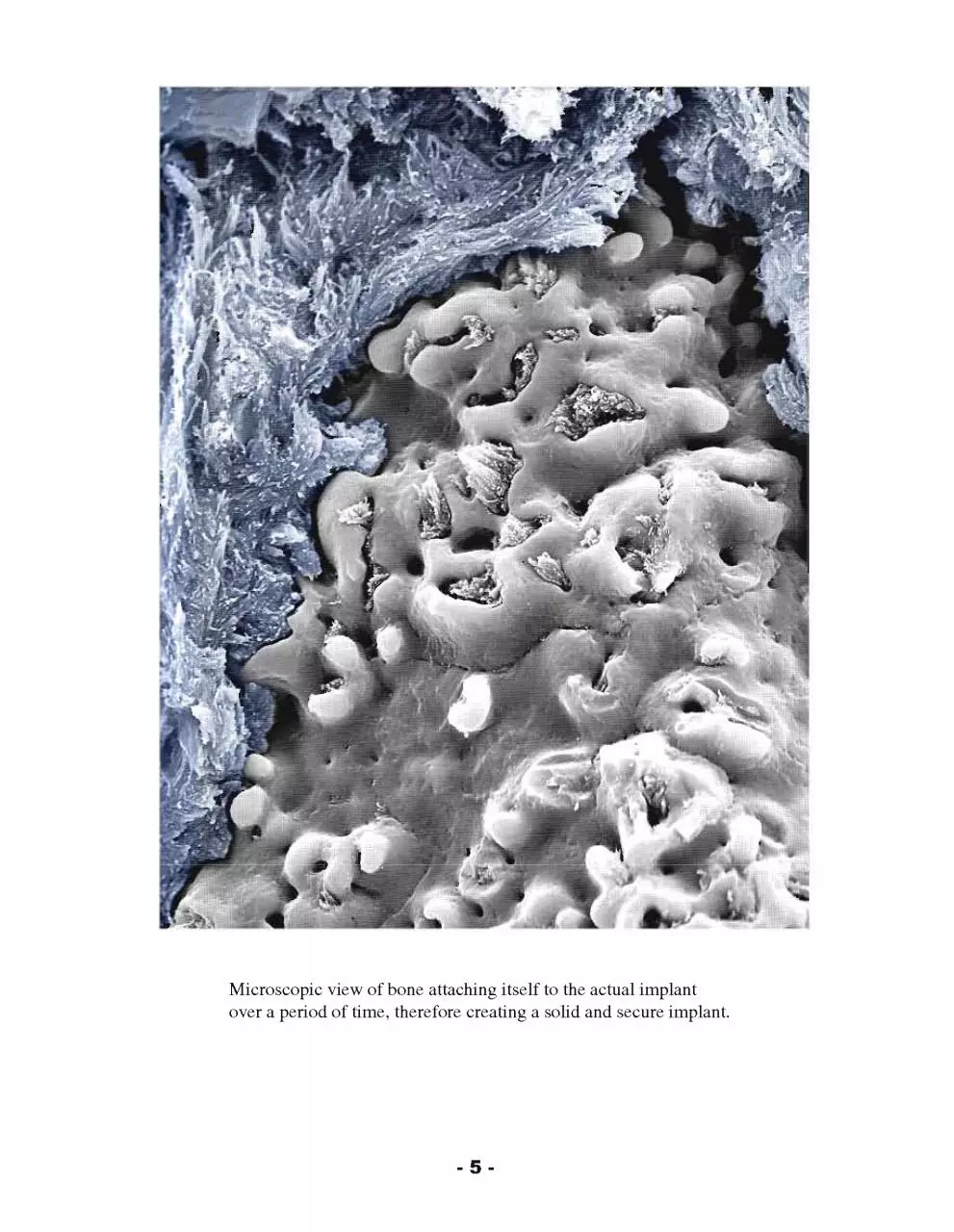
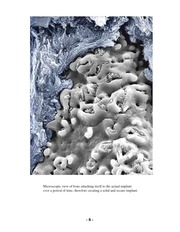
Microscopic view of bone attaching itself to the actual implant
over a period of time, therefore creating a solid and secure implant.
-5 -
�
Before
After
..
Before
-
, -.'~C.' -,~.
111·, ~ ~.Jl
,
- 6-
After
�
Before
After
Before
- 7-
After
�
Sinus Lift With Implant Placement - Brochure
Sinus Lift With Implant Placement
'.
1) If teeth are missing from
the Posterior Maxil]';; Gaw)
there is no stimulation to keep
the bone from experiencing
atrophy_ The area-atrophie s
becau se there is a' sl ightly
higher pressure in the sinus
and the sinus ·enlarges with
time.
co
4) This bone acts like a matrix
and encourages bone to grow in
~-~".;':;~:~l~:x!·'·'';
'J ,~" -:.:;. ;.~(.~r.'--;,,
.t;:!,;~~,~,"(-:-"".
. ';.:!9.}', ...~\:..,.~1;
:~.~'!'NJ.,,-!~?!A'''!.'
~(.y.:, ~/'!··
.;[.....
..
.~~~t.V:J'i,~lt/r
~ . 't.I..;; i1il;~
between the spaces. It is also
reabsorbed and replaced with
the patients own bone. With
certain bovine bone substitutes
as much as 70% of the bone is
replaced in ,7-9 months.
2) The 'si nus lift' procedure
involves: 0) Lifting the gum b)
Making an opening in the
bone c) Lifting the membrane
that lines the Sinus and
with time. With time the bone will
raising itto the desired level.
reabsorbable material.
5) The bone area becomes
more and more like the original
become 100% the· patients own
bone unless we used a non
Usual ly it is raised to the
original ·size or slightly
greater.
::::-....
~:
3) The sinus is then filled with
a bone substitute. This can be
synthetic bone. freeze dried
demineralized human bone
or bone from .animals such-as
6) Note that the sinus is repaired
to the state itwas before it's
expansion. We are not 'fillin g up'
the sinus we are returning it to
it's original state.
the cow (bovine bone). The
patients own bone can also
be used from another
location.
-.
-.~
�
-9 -
�
What is a Dental Implant?
A
dental implant is a post, usually titanium, which is surgically placed in the jawbone at the site of the missing
tooth. A metal cap, called the abutment, is affixed on top of the post and sits above the gumline. A temporary
prosthesis, or crown, may be placed on the abutment. Over a period of time, through a process called osseointegration, the implant fuses with the jawbone to provide a stable foundation that may be compared to the roots of
your natural teeth in terms of their strength and effect on the jawbone. Once the site has healed and osseointegration is complete, a permanent prosthesis that looks and functions like your own original tooth is cemented on the
implant.
Dental implants are available in many sizes, shapes and surfaces to meet the specific needs of each patient. Your
Oral and Maxillofacial Surgeon will work with your restorative dentist to select the implant that is right for you.
Are Dental Implants Right for You?
W ith the exception of growing children, dental implants can benefit people of all ages, even those with existing
health concerns:
Medical conditions. If you can have routine dental treatment, you can generally have an implant placed. While
precautions are advisable for certain conditions, even patients with such chronic diseases as high blood pressure
and Diabetes are usually successful candidates for dental implant treatment.
Gum disease or problem teeth. Almost all implants placed in patients who have lost their teeth to gum (periodontal) disease or decay have been successful.
Currently wearing partial or full dentures. Dental implants can replace removable bridges or dentures, or they may
be used to stabilize and secure a bridge or full denture, making it much more comfortable and functional.
Smokers. Although smoking can lower the success rate of implants, it doesn't eliminate the possibility of getting
them.
Bone loss. Bone loss is not uncommon for people who have lost teeth or had gum disease. Oral and Maxillofacial Surgeons are trained and experienced in grafting the bone necessary to safely and permanently secure the
implant.
- 10 -
�
The Dental Implant Team - Planning for the Procedure
D ental implant placement is a smooth procedure that involves the cooperation of you and the oral healthcare team
that will provide you with a beautiful, natural looking and functioning replacement tooth.
Your dental implant team is composed of you, your restorative dentist, and the Oral and Maxillofacial Surgeon who will
place the implant.
The process begins with a thorough examination in the oral and maxillofacial surgery office that includes a complete
medical history to determine whether there are any preexisting health issues or allergies that must be considered and
what medication you are currently taking. Your surgeon may take several x-rays and other diagnostic tests, such as aCT
scan, to determine essential information about the jawbone and its anatomy and to assist in the development of your
dental implant plan. You are a key member of the team, and all aspects of your case will be discussed with you before
the procedure is scheduled.
Once everyone is comfortable with the plan and preparations are in place, surgery is scheduled.
Your Role on the Dental Implant Team
As
the patient, you have a vested interest in achieving the best possible outcome for your dental implant procedure.
Depending on your specific needs, the dental implant process, from start to finish, can take from several months to a
year to complete. Your commitment and support are essential to the process. For best results, you should:
- Floss, brush and maintain good oral hygiene throughout the implant process.
- Continue to schedule regular dental check-ups with your family dentist.
- Keep all appointments with your Oral and Maxillofacial Surgeon and your restorative dentist.
- Practice meticulous oral hygiene according to the instructions provided byyour dentist and hygienist. Abutment
posts, beneath the prosthesis, artificial teeth, and gum tissue must be kept clean. Home care aids, such as special
brushes and fioss holders, will help you accomplish this. If you do not keep your implants and prosthesis clean, your
implants mayfail.
- Smoking and excessive alcohol consumption as well as chewing hard foods like ice or hard candy may damage your
implants or cause them to fail.
- Contact your surgeon or dentist if you experience problems.
- 11 -
�
Implant-supported replacement teeth look,
feel and function like natural teeth.
Crown -~,
Gum
---+-Single tooth implant wi th crown
Tooth Root ---;
.{'O;J,T Dental Implant
Jawbone ------""
Final result of single looth case
Bone forms a bond with dental implants
- 12-
�
A dental implant is an excellent treatment for replacing
missing teeth. A root form implant is the most common
kind of dental implant. It is a small, titanium post that
replaces the roots of a missing tooth. A custom-fitted
artificial tooth, called a restoration, is secured to the
implant, which holds the restoration firmly in place.
Implant post
Full arch implant denture
Single tooth
implant
An implant can support a variety of restorations, such
as a single crown, multi-unit bridges, and full arch
dentures. Some restorations, like a single crown and
most bridges, are not removable. Others, like many
full-arch dentures, can be removed for sleeping and
cleaning.
Multi-unit bridge
An implant has several benefits. Like the roots of natural
teeth, it stimulates the jawbone when you chew. This
preserves the jawbone and keeps it healthy. An implant
is strong, comfortable, and secure. When the restoration
is in place, the implant looks and feels much like natural
teeth.
With careful homecare and regular checkups and
cleanings here in our office, an implant can be an
excellent long-term solution for missing teeth.
Depending on the situation, placing an implant
involves several phases, and treatment times can
widely vary. First we determine if an implant is right
for you. We discuss your health history and treatment
goals and perform a comprehensive examination
to check the health of your gums and jawbone. We
determine if you need any additional procedures, such
as bone grafting or gum surgery.
To begin the procedure, a channel is shaped in the
jaWbone, and then the implant is placed into the
prepared space. At this point, it may be possible to
place a temporary restoration. Over the course of the
next few months, the implant will become securely
fused to the bone. The last step is to attach your
beautiful final restoration to the implant.
- 13 -
�
Close to 70 percent of adults ages 35 to 44 have lost at least one permanent tooth.
I f you have experienced tooth loss as a result of gum disease, tooth decay, or through an
injury or accident, you are not alone. Close to 70 percent of adults ages 35 to 44 have lost
at least one permanent tooth. Like many of these people, you may be searching for a way
to replace your missing teeth, but find the many replacement options confusing. Which
solution is best for you?
Many people are tempted to do nothing, particularly if the missing teeth were located in
a less noticeable spot, like the molar region. While at first this may appear to be the least
expensive option, its implications for your long-term oral health can be devastating.
Missing teeth compromise your bite as well as your ability to chew and speak clearly. In
an effort to compensate for the loss, adjacent teeth may attempt to take over the function of the missing tooth, which may lead to headaches and muscle pain in your jaws. In
time, you may experience tooth movement, gum recession and jawbone erosion in the
open area, all of which may complicate a later decision to replace the missing tooth.
Further, the density of the jawbone is preserved and maintained by the presence of your
natural teeth. When one or more teeth are lost through gum disease, tooth decay, an
accident or other incident, the bone thins and weakens over time. Fixed bridges and
removable dentures rest on top of the gumline and do nothing to maintain or preserve
the jawbone. As bone loss occurs, the fixed bridge or removable denture no longer fits
properly. Patients with fixed bridges may encounter hygiene problems commonly associated with these prostheses, while patients with removable dentures, may be beset by
clicking noises and slipping dentures.
- 14-
�
What Can I Expect After Treatment?
A fter your dental implant procedure is complete, Smile Implant Center will work closely with you and your restorative dentist to develop a care plan that works for you. Follow-up visits will be scheduled to monitor your implant,
teeth and gums to make sure they remain healthy.
Dental Implant Success Rate
W hile success rates do vary depending on the individual patient, implants have an overall 95 percent success
rate. In fact, most of the first dental implants placed about 20 years ago in the United States are still in use and performing well. Compare this with fixed bridges, which have an 85 percent success rate for 10 years and 66 percent
success rate for 15 years. Furthermore, your dental implants can last a lifetime, while fixed bridges generally need
to be replaced every 7 to 15 years.
The Cost of Dental Implant Surgery
B efore proceeding with your dental implant treatment plan, your implant team will provide you with a cost
estimate covering all necessary aspects of the surgical and restorative procedures relating to your case. These estimates should include diagnostic tests and work-up, bone and tissue grafting procedures, implant placement, temporary restorations, impressions, and fabrication costs for the final prosthetic crown, and the office visits required
to ensure a good fit, proper bite and esthetic appearance.
Your oral and maxillofacial surgery and restorative dental offices will assist you in reviewing your insurance or thirdparty reimbursements and other payment options. In the long - and short-run, dental implants are a cost-effective
option for replacing your missing teeth. Unlike conventional dentures and bridges which must be replaced every 7
years on average, your dental implants should continue to function will for 20 years or more. Clearly something to
smile about!
- 15 -
�
- 16-
�
Implant
Placement
When a tooth must be extracted, we can sometimes
place an implant in the socket immediately after the
tooth has been removed.
Although each case will be different, placing the
implant immediately after an extraction generally
involves two phases, placing the implant in the socket
and securing a restoration, such as a crown or bridge,
onto the implant.
An immediately placed implant has several advantages.
Extraction and implant placement can occur during the
same procedure. The implant stops the bone loss that
normally occurs when a tooth is lost, and it prevents
the surrounding teeth from shifting into the space. And
unlike repla cing a tooth with a traditional bridge, there
is no need to reduce the size of neighboring teeth. The
implant with its restoration looks and feels like your
natural teeth when you chew and talk.
With proper homecare and regular checkups,
your implant can be a long-term solution for a
natural-looking smile.
..
, ,
First we make sure the area is completely numb, and
then we remove the tooth. We reshape the extraction
site and place the body of the implant into the
prepared socket. In many cases, we add bone grafting
material to the socket to help the jawbone heal tightly
around the implant.
A healing cap or an extension is attached to the
implant. We then close the gums. Over the next several
months, the implant will become fused securely to
the bone. During this time, we may place a temporary
replacement tooth.
Implant post
on model
The next phase includes a series of appointments to
create your final restoration. Though some of the steps
might be different in your case, they usually include
removing the temporary and making impressions of
your mouth.
Implant with
immediate crown
placement
The lab uses the impressions to make an accurate
model of your mouth, including the implant. They use
the model to create a restoration that precisely fits the
implant and your bite.
When your beautiful new restoration is ready, we check
the fit and your bite and then secure it to the implant.
- 17-
�
Loss
Diagnosing
One of the keys to the success of your implant is
healthy jawbone. When bone in the jaw has been lost,
it may not have enough height and width to securely
hold an implant. Diagnosing the health of your
jawbone is an important step in planning for stable,
secure implants and maintaining a beautiful smile.
Bone in the jaw can be lost for a number of reasons.
These can include:
Periodontal disease destroys the jawbone
around the affected teeth.
Development of a cyst or abscess creates a hole
in the jawbone.
Jawbone loss
Removal or accidental loss of teeth sometimes
can injure jawbone.
Missing teeth do not stimulate the jawbone
through chewing, causing the jawbone to
shrink.
Jawbone loss
Implant in healthy jawbone
To determine whether your jaw has enough healthy
bone to secure an implant. we do a thorough
examination. First. we typically take x-rays, which can
show us the height of the bone. In some cases, we
may need additional, specialized x-rays, such as a CT
(computerized tomography) scan, to provide more
detail about your jawbone and the location of nerves
and blood vessels in the jaw.
Then we perform a visual exam to look at the shape
of the jawbone, and we may use a periodontal probe
to check the height of bone around any neighboring
teeth. Sometimes, we may also find defects in the
jawbone while we are performing implant surgery.
If we discover that you have lost bone in your jaw, we
will discuss the variety of techniques we can use to
replace it.
- 18 -
�
-{ Facial Structure
)r - - - - - - - -
SMILE IMPLANT CENTER
100 BA YVlEW CIRCLE, SOUTH TOWER
6TH FLOOR, SUITE 600
NEWPORT BEACH, CA 92660
(888) 259-5727
- 19-
�
Tooth Replacement: Tooth Loss leads to Bone Loss
Bo ne loss is t he end result of tooth loss unless t he tooth root is repl aced by a dental implant.
Preserve bone w ith dental implants - the tooth replacem ent as close to natural teeth as poss ible.
Single Missing Tooth
'li
Anterior teeth in place
Missing tooth root leads to bone loss
Bone melts away where too t h is
missing, leaving a visible defect
Several Missing Teeth
•
Posterior teeth in place
Bone begins to deteriorate where
Bone loss over time can be significant
posterio r tee th are missing
All Missing Teeth
Teeth in place in lower jaw
Complete tooth loss causes the
Significant bone deterioration leads to
jaw to shrink
facial structure collapse
SMILE IMPLANT CENTER
I ()() BA YVIEW CIRCLE, SOUTH TOWER
6TH FLOOR, SUITE 600
NEWPORT BEAC H, CA 92660
(888) 259-5727
·20·
�
Treatment Options
Single Missing Tooth
Removable partial denture
Tooth-supported fixed bridge
Implant-supported crown
Removable partial denture
Tooth-supported fixed bridge
Implant-supported fixed bridge
Removable fu ll denture
Overdenture to be seated on
ball attachments
Fixed bridge on implants
Several Missing Teeth
All Missing Teeth
SMILE IMPLANT CENTER
100 BA YYlEW CIRCLE, SOUTH TOWER
6TH FLOOR, SUITE 600
NEWPORT BEACH, CA 92660
(888) 259-5727
·21 .
�
Considering a
1m lant
Single
When a tooth is missing, a dental implant can be a
great choice for replacing it. An implant is a small
titanium post that replaces the roots of a missing tooth
and supports a custom-made crown.
A missing tooth can cause a chain reaction of
problems, including loss of bone in the jaw, shifting
teeth, difficulty keeping teeth free of plaque and
bacteria, grinding and clenching, and pain in the jaw
joints.
Teeth transmit chewing forces through their roots
to the jawbone. This provides the stimulation bone
needs to stay healthy, so when a tooth is missing, the
jawbone around the area begins to shrink, along w ith
the surrounding gums.
A missing tooth also changes the biting forces on teeth
around the space. Neighboring teeth begin to shift,
and the opposing tooth begins to extrude out of its
socket.
These changes create places around the teeth that
are hard to keep clean, so plaque and bacteria quickly
accumulate. This accumulation can cause tooth decay
and periodontal disease.
Changes in the bite also put improper chewing forces
on the shifted teeth. This may lead to grinding and
clenching, as well as painful problems with your jaw
joint, the TMJ.
Single tooth implant
Finished implant
To determine if an implant is right for you, we do a
thorough examination. The examination includes
recording your medical history in which we discuss any
condition that may interfere with healing. We perform
a visual examination to check the health of your teeth
and gums. To check the health of your jaWbone, we
take panographic x-rays and possibly CT (computerized
tomography) scans. We take impressions and bite
registrations to create an accurate model of your
mouth.
When we have thoroughly studied these records, we
will be able to discuss which implant treatment options
may be best for you.
An implant fined with a crown effectively replaces
a missing tooth. The implant is held firmly in the
jawbone, so it feels much like your natural teeth when
you talk and chew. The crown is custom crafted to
match or enhance your smile. A dental implant is
a great way to keep your jawbone healthy, to stop
neighboring teeth from shifting, and to maintain a
stable bite.
- 22 -
�
Placing a
Implant
Single
When a tooth is missing, a dental implant with a crown
is an excellent treatment for replacing it.
Although each case will be different, placing an
implant generally involves two phases, surgically
placing the implant and restoring the implant with a
crown.
.,.
An implant restored with a crown has several
advantages. The implant stops the bone loss that
occurs when a tooth is lost, and it prevents the
surrounding teeth from shifting into the space. Unlike
replacing the tooth with a traditional bridge, there
is no need to reduce the size of neighboring teeth.
The crown with implant also looks and feels like your
natural teeth when you chew and talk.
For the surgical placement of the implant, your mouth
is thoroughly numbed. An opening is made in your
gums, and then a channel is shaped in the bone to
receive the implant.
Next, we place the body ofthe implant into the
prepared channel. Sometimes a cover is placed onto
the implant and the gums are stitched closed. This
method is called a two-stage procedure. In other cases
that allow a single-stage procedure, an extension is
attached to the implant at the time of surgery.
With proper homecare and regular checkups,
your implant can be a long-term solution for a
natural-looking smile.
Healing may take several months as the implant
becomes fused securely to the bone. During this time,
we may place a temporary replacement tooth.
Imp/ant post
If the first phase included closing the gums over the
implant, the second phase starts with surgical reexposure of the implant. Another incision is made in
your gums, and a small extension is placed to bring the
implant above the gum line.
Implant abutment
(extension for
Then we start a series of appointments to create
the final crown. Though some of the steps might be
different in your case, they usually include removing
any temporary and taking impressions of your mouth.
attaching a tooth)
The lab uses the impressions to make an accurate
model of your mouth, including the implant. They
use the model to create a crown that precisely fits the
implant and your bite.
Implant placed
When your beautiful final crown is ready, we check
the fit and your bite, and then secure the crown to the
implant.
- 23 -
�
Single Tooth Replacement
Implant-Supported Crown-The Treatment Steps
2
1.
Before the procedure
&;
Preparing the site
placing the implant
Abutment in place
3.
The Beautiful Results
Single Tooth Loss
SMILE IMPLANT CENTER
100 SA YVIEW C[RCLE. SOUTH TOWER
6TH FLOOR, SUITE 600
NEWPORT BEAC H, CA 92660
(888) 259-5727
- 24-
�
•
- 25-
�
Options For
Single Tooth Replacement
Removable partial denture
Tooth-supported fixed bridge
Impla nt-supported crown
SMILE IMPLANT CENTER
100 BAYV IE W CIRCLE, SOUTH TOWER
6TH FLOOR, SUlTE 600
NEWPORT BEACH, CA 92660
(888) 259-5127
- 26-
�
Single Tooth Replacement
Tooth -Supported Fixed Bridge-The Treatment Steps
1.....--..........---.
2 .....---
Bridge tried-in for fit
Prepare the adjacen t teeth
3. ~
Tile Beautiful Results
Single Tooth Loss
SMILE IMPLANT CENTER
100 BA YVTEW CfRCLE. SOUTH TOWER
6TH FLOOR, SUITE 600
NEWPORT BEACH, CA 92660
(888) 259-5727
- 27-
�
Options For
Several Missing Teeth
Removable partial denture
Tooth-supported fixed bridge
Implant-supported fixed bridge
Several Missing Teeth
SMILE IMPLANT CENTER
100 SA YVlEW CIRCLE, SOUTH TOWER
6TH FLOOR, SUITE 600
NEWPORT BEAC H , CA 92660
(888) 259-5 727
- 28-
�
Several Missing Teeth
Tooth-Supported Fixed Bridge-The Treatment Steps
2.
1.
Prepared adjacent teeth
Before the procedure
Worn & discolored bridges
Try-in on left quadrant
3.
The Beautiful Results
SMILE IMPLANT CENTER
100 BA YVIEW CIRCLE, SOUTH TOWER
6TH FLOOR, SUITE 600
NEWPORT BEACH , CA 92660
(888) 259-5 721
- 29-
�
Bridge
Placing an
When several neighboring teeth are missing, an
implant-supported bridge is an excellent treatment for
replacing them.
Although each case will be different, placing an
implant-supported bridge generally involves two
phases. The first phase is the surgical placement of the
implants. The second phase is restoring the implants
with the bridge.
'r,,-,
..
, ,
Implants restored with a bridge have several
advantages. The implant stops the bone loss that
occurs when a tooth is lost, and the bridge prevents
the surrounding teeth from shifting into the space.
Unlike a traditional bridge, there is no need to reduce
the size of neighboring teeth. A bridge retained by
implants looks and feels like your natural teeth when
you chew and talk.
With proper homecare and regular checkups,
your implants can be a long-term solution for a
natural-looking smile.
For the surgical placement of the implants, your mouth
is thoroughly numbed. Small openings are made in your
gums, and a channel is shaped in the bone to receive each
implant.
Next we place the bodies of the implants into the prepared
channels. Sometimes covers are placed on the implants,
and the gums are stitched closed. This method is called
a two-stage procedure. In other cases that allow a singlestage procedure, extensions are attached to the implants
at the time of the surgery.
Healing may take several months as the implants become
fused securely to the bone. During this time, we may place
a temporary replacement bridge.
Implant
If the first phase included closing the gums over the
implant, the second phase starts with surgical re-exposure
of the implant. Small incisions are made in your gums, and
an extension is placed on each implant to bring it above
the gumline.
Implant
abutments
Then we schedule a series of appointments to create your
final bridge. Though some of the steps might be different
in your case, they usually include removing a temporary
bridge and taking impressions of your mouth.
Final bridge
The lab uses the impressions to make an accurate model of
your mouth, including the implants. They use the model to
create a bridge that fits the implants and your bite.
Depending on the circumstances, we may have you try
in the bridge framework, or we have you try in the final
bridge. When everything is right, we secure your beautiful
new bridge to the implants.
- 30 -
�
for a
Considering
Partial Arch
When several teeth are missing, dental implants can be
a good choice for replacing them. Implants are small
titanium posts that replace the roots of missing teeth
and support custom-made crowns and bridges.
Missing teeth can cause a chain reaction of problems,
including loss of bone in the jaw, shifting teeth,
difficulty keeping teeth free of plaque and bacteria,
grinding and clenching, and pain in the jaw joints.
Teeth transmit chewing forces through their roots to
the jaWbone, and this provides the stimulation bone
needs to stay healthy, so when teeth are missing, the
jawbone around the area begins to shrink, along with
the surrounding gums.
Missing teeth also change the biting forces on teeth
around the space. Neighboring teeth begin to shift,
and the opposing teeth begin to extrude out of their
sockets.
These changes create places around the teeth that
are hard to keep clean, so plaque and bacteria quickly
accumulate. This accumulation can cause tooth decay
and periodontal disease.
Changes in the bite can put improper chewing forces
on the shifted teeth, and this may lead to grinding and
clenching and painful problems with your jaw joint, the
TMJ.
Implant posts for bridge
To determine if implants are right for you, we do a
thorough examination. The examination includes
recording your medical history so we can discuss any
condition that may interfere with healing. We perform
a visual examination to check the health of your teeth
and gums. To check the health of your jawbone, we
take panographic x-rays and possibly CT (computerized
tomography) scans. We also take impressions and
bite registrations to create an accurate model of your
mouth.
When we have thoroughly studied these records, we
will be able to discuss which implant treatment options
may be best for you.
Implant post
Bone loss
A dental implant fitted with a crown or a bridge
effectively replaces missing teeth. The implant is held
firmly in the jaWbone, so it feels much like your natural
teeth when you talk and chew. The crown or bridge
is custom-crafted to match or enhance your smile. A
dental implant is a great way to keep your jawbone
healthy, to stop neighboring teeth from shifting, and to
maintain a stable bite.
- 31 -
�
Several Missing Teeth
Implant-Supported Fixed Bridge-The Treatment Steps
1.
2.
Before the procedure
Implants placed
3.
4.
Removable bridge vs Implant·supported fix ed bridge
The Beautiful Results
Several Missing Teeth
SMILE IMPLANT CENTER
100 SA Y VLEW CfRCL E, SO UTH TOWER
6TH FLOOR , S UITE 600
NEWPORT BEACH, CA 92660
(888) 259-5727
- 32-
�
Options For
All Missing Teeth
Overdenture
AU-on-Four- fixed bridge
Implant-supported fixed bridge
Implant-supported
(Procera· Implant Bridge)
(Teeth.in-an-Hourj
SMILE IMPLANT CENTER
100 BA YVIEW CIRCLE, SOUTH TOWER
6TH FLOOR, SUITE 600
NEWPORT BEACH , CA 92660
(888) 259-5721
- 33-
�
All Missing Teeth
Overdenture-The Treatment Steps
2.
1.
Before the procedure
Placing the implants &. attachments
Delivering the overdenture
3.
The Beautiful Results
SMILE IMPLANT CENTER
100 BA YVIEW CIRCLE, SOUTH TOWER
6TH FLOOR , SUITE 600
NEWPORT BEACH , CA 92660
(888) 259-5 721
- 34-
�
Placing
Overdentures
If you have a loose, uncomfortable denture, stabilizing
it with mini-implants can be an excellent solution.
The denture is held in place by narrow implants that
have been placed in the jaw. The denture snaps onto
the implants in your jaw, keeping the denture secure
in your mouth, but allowing you to remove it when
necessary.
Mini-implants are often used where there is not
enough jawbone for conventional implants, or to
temporarily stabilize a denture while conventional
implants are healing.
Mini implants for overdentures
i
J1
Although each case will be unique, placing a miniimplant retained denture generally involves several
steps. First, we check your denture to confirm that it is
suitable for use with mini-implants.
Next, we completely numb the area to make you
comfortable. We make a shallow channel in the jaw fo r
each implant, and then we guide the implants through
these channels into the jawbone.
We modify your denture by adding attachments that fit
over the implants. Last, we snap the denture into place,
check the fit and your bite, and your denture is ready
for use.
Mini-implants have several advantages. They make
dentures much more stable in the mouth, so you can
chew and talk more easily. They are generally ready
for use in just one or two appointments. We can often
modify your existing dentures to fit over the implants.
And the dentures are removable for easier cleaning
and checkups.
With proper homecare and regular checkups, your
mini-implants and denture can provide a secure and
natural-looking smile.
- 35 -
�
,
All Missing Teeth
AI/·on·Four· Fixed Bridge-The Treatment Steps
2
1.
i
Before the procedure
Placing the implanu
Attaching the bridge
3.
The Beautiful Results
SMILE IMPLANT CENTER
100 BA YVIEW CIRCLE, SOUTH TOWER
6TH FLOOR , SUlTE 600
NEWPORT BEACH, CA 92660
(888) 259· 5721
- 36-
I
�
All Missing Teeth
Implant-Supported Fixed Bridge-The Treatment Steps
2.
1.
Bridge tried-in for fit
Placed implants
3
The Beautiful Results
All Missing Teeth
SMILE IMPLANT CENTER
100 SA YVlEW CLRCLE, SOUTH TOWER
6TH FLOOR, SUITE 600
NEWPORT BEACH, CA 92660
(888) 259-5127
- 37-
�
Placing
Overdentures
When all the teeth in an arch are missing, an excellent
treatment for replacing them is a denture secured with
implants.
Depending on your situation, the denture may snap
onto the implants in your jaw, or it may clip to a bar
that is attached to the implants. These systems keep
the denture secure in your mouth, but allow you to
remove it when necessary.
Although each case will be different, placing an
implant-retained denture generally involves two
phases. The first phase is the surgical placement of the
implants. The second phase is fitting the dentures over
the implants.
Implant overdenture
with abutment for
attaching overdenture
,
Implant with bar
for attaching
overdenture
Upper dentures retained by implants have several
advantages. The implants slow or stop the loss of
jawbone that occurs when teeth are missing. The
dentures are stable in the mouth, and often they
can be shaped so they don't cover the palate. This
makes it easier to talk, chew, and taste your food. And
the dentures are removable for easier cleaning and
checkups.
With proper homecare and regular checkups, your
implant-retained denture can provide you with a secure
and natural-looking smile.
For the surgical placement of the implants, your mouth
is thoroughly numbed. Small openings are made in
your gums, and then a channel is shaped in the bone
to receive each implant.
Next, we place the bodies of the implants into the
prepared channels. Covers are placed on the implants,
and the gums are often stitched closed. During the
healing period, you might wear a temporary denture,
or your own denture may be modified to fit over the
implants. Healing may take several months as the
implants become fused securely to the bone.
The next phase starts with a series of appointments to
create your final denture. Though some of the steps
might be different in your case, they generally begin
with gently exposing the implants. Then we take
impressions and bite registrations of your mouth.
The lab uses these records to make an accurate model
of your mouth, including the implants. They use the
model to create a final denture that preCisely fits the
implants and your bite. After the denture is complete,
we place it onto the implants, check the fit and your
bite, and you have your beautiful final denture.
- 38 -
�
Placing
Overdentures
Lower Jaw
When all the teeth in an arch are missing, an excellent
treatment for replacing them is a denture secured with
implants.
Depending on your situation, the denture may snap
onto the implants in your jaw, or it may clip to a bar
that is attached to the implants. These systems keep
the denture secure in your mouth, but allow you to
remove it when necessary.
Although each case will be different, placing an
implant-retained denture generally involves two
phases. The first phase is the surgical placement of the
implants. The second phase is fitting the dentures over
the implants.
Implant posts
on model
Implant
abutments
(attachment
extensions)
Dentures attached to implants have several advantages.
The implants slow or stop the loss of jawbone that
occurs when teeth are missing. The dentures are stable
in the mouth, which makes it more comfortable to talk
and chew. And the dentures are removable for easier
cleaning and checkups.
With proper homecare and regular checkups, your
implant-retained denture can provide a secure and
natural-looking smile.
For the surgical placement of the implants, your mouth
is thoroughly numbed. Small openings are made in
your gums, and then a channel is shaped in the bone
to receive each implant.
Next, we place the bodies of the implants into the
prepared channels. Covers are placed on the implants,
and the gums are often stitched closed. During the
healing period, you might wear a temporary denture,
or your own denture may be modified to fit over the
implants. Healing may take several months as the
implants become fused securely to the bone.
The next phase starts with a series of appointments to
create your final denture. Though some of the steps
might be different in your case, they generally begin
with gently exposing the implants. Then we take
impressions and bite registrations of your mouth.
The lab uses these records to make an accurate model
of your mouth, including the implants. They use the
model to create a final denture that precisely fits the
implants and your bite.
After the denture is complete, we place it onto the
implants, check the fit and your bite, and you have
your beautiful final denture.
·39·
�
All Missing Teeth
Teeth-in-an-Hour"-The Treatment Steps
1
Before the procedure
2.
I
Computer-based patient planning
Patient receives a CT·scan
5.
3
Surgical template in place
The bridge
The Beautiful Results
_i n just one houri
SMILE IMPLANT CENTER
100 BA YVIEW CIRCLE, SOUTH TOWER
6TH FLOOR , SUlTE 600
NEWPORT BEACH , CA 92660
(888) 259-5 721
- 40-
�
Improving Existing Teeth
1 ...---....-..., 2
Old PFM crowns
(Porcelain-Fused-to-Metal)
Note gray lines at base of teeth
Remove the PFM restorations &. replace
The Beautiful Results with Procera·
with Procera- Ceramic Crowns
metal-free, long-lasting esthetics
PFM crown
light cannot shine through
Procera- Ceramic Crown
Translucent-like your natural teeth
SMILE IMPLANT CENTER
100 BA YVlEW C lRCLE, SOUTH TOWER
6TH FLOOR, SU ITE 600
NEWPORT BEACH, CA 92660
(888) 259-5727
- 41 -
�
Improving Existing Teeth
1 ..-------
2
Prepare the adjacent teeth
Before the procedure showing
3-unit PFM bridge
Bridge tried -in for fit
3.
The Beautiful Results
SMILE IMPLANT CENTER
100 SA YVlEW CIRCLE, SOUTH TOWER
6TH FLOOR, SU ITE 600
NEWPORT BEAC H, CA 92660
(888) 259-5727
- 42-
�
Beautiful Teeth Now'M
•
" For years I had a yellow tooth and a bad crown.
Now they have both been replaced ... 1just can't
stop sm iling. " - Rachel
•
"My new teeth feel like a natural part of me. " - Gun-Britt
•
" I was overwhelmed with the way they turned out. " - Dan
•
" Dental implants made me sm ile aga in." - Alice
•
" I just wa nted to have my smi le back, I truly feel
they fixed it just the way it was before. Rig ht after
having my new teeth, I stepped into a photo booth
to get my picture taken." - Birgitta
SMILE IMPLANT CENTER
100 BA YVlEW ClRCLE, SOUTH TOWER
6TH FLOOR, SU ITE 600
NEWPORT BEAC H, CA 92660
(888) 2S9-5727
- 43-
�
PROCEDURES
&: PRODUCTS - SMILE IMPLANT CENTER
- 44-
�
- 45-
�
ho , t..n _pod ., ","xl m" tho , _ " ..... bIo bo"" .nd ., .Ie.. 10 , Im mod.to
',""00". "'log oo~ foo.., "" pO o" ~ .don"""" ;OW,, tho " ltOn .. ,.,,,d_togo" 'ho bonof»of ....., tho po_""
,,"pO oUo prrNd. . " '''K• • nd o pOmoi p"'*""'" ' '-'Pf'O~ 10, .
tmgo, ..., wtO ,",0""",,, bo"" ", ~mo .
Tho A ~ oo _' <I~ " . I
,, ~ tioo
f<O""",,
Tho AII-Dn-4 clinical >olution can "" p" rformod in t"", way"
P=""_
;to""".",
Al I_,"_, "'log <o~'~ ", 1 flop
w ",
tad-.. I pIo o ~"9'''''
AI_N'"
Cud. f". pood " .. bIo.nd opOffio l po''''''1og of
"'" Implo o".
AI_. 0_' w ,tO N.b~Cu;; ," "'log f ~pIo "
Iocho""" <o mp' ....-bo,.,j pio""log.nd.
'";tom.'" s... '9 ". 1T"," pOlo to ''''''''''" d , I I
.nd PO ' "'' "'" Implo o".
_ 46_
�
o
•
•
•
•
- 47-
�
Treatment Planning
The AII-on-4 clinical solution has been developed to maximize the use of available bone and to allow for Immediate
Function'~. When planning an AII-on-4 treatment using a flap technique, be sure to consider the following factors:
General Considerations:
• Ability to achieve primary implant stability
(35 - 45 Ncm insertion torque).
• No severe parafunctions.
• Indicated for totally edentulous maxilla with a minimum bone width of 5 mm and a minimum bone
height of 10 mm from canine to canine.
• Indicated for totally edentulous mandible with a
minimum bone width of 5 mm and minimum bone
height of 8 mm in between the mental foramina.
• To diminish the cantilever, tilt the posterior
implants to a maximum of 45°.
• If the angulation is 30° or more, it is necessary to
splint the tilted implants.
• For tilted posterior implants, plan the distal screw
access holes to be located at the occlusal face of
the 1st molar, 2nd pre-molar or 1st pre-molar.
• The AII-on-4 treatment does not require a wider
opening of the mouth than a normal straight position of the implants due to the angulation of the
posterior implants.
• If there are extraction sites, clean them thoroughly.
It is advisable to place implants between extraction
sockets.
Specific Considerations - Implants:
• If possible, the posterior implants should be 0 4.0 or
o 4.3 mm. Note: The 30° Multi-unit Abutment is only
available for Regular Platform (RP). The 1r Multi-unit
Abutment is available for Narrow Platform (NP) and
Regular Platform (RP)
• When placing posterior implants with an internal
connection, make sure that one of the tri-channel
lobes on the implant is pointing distal or slightly
buccal.
Specific Considerations - Prosthetics:
• No extensions over one-tooth on each side for the
immediate all-acrylic bridge, which should have a
maximum of 12 teeth.
• If the patient's removable prosthesis is in good condition, it may be used to fabricate the immediate
all-acrylic bridge.
• For proper esthetics and function, the final bridge
should have 12 teeth.
- 48-
�
Step-by-Step Clinical Procedures for an Edentulous Mandible
The following step-by-step instructions outline the main procedures used to treat totally edentulous jaws using the
AII-on-4 treatment. Note: The images show NobelSpeedy" Groovy RP implants.
1. Position AII-on-4 Guide
• After making an incision for flap elevation, make
an osteotomy of approximately 10 mm in the
midline using a 0 2 mm Twist Drill.
• Place the AII-on-4 Guide in the mid-line osteotomy.
2. Posterior Site Preparation
• Drill to appropriate depth, using a 0 2 mm Twist
Drill tilted to a maximum angle of 4SO.
Note: It is important to identify the mental foramen
and exiting inferior dental nerve. The final position of
the implant should be in front of the foramen avoiding
the nerve loop.
• Check for correct angulation with the AII-on-4
Guide.
• Enlarge the site according to the type of implant
used and the density of the bone. Install an
implant.
• Use a Bone Mill to correctly seat the abutment,
if applicable (Note: Only intended for Branemark
System' and NobelSpeedy" Groovy implants).
• Place a 30° Multi-unit Abutment. Tighten to 15
Ncm using the Unigrip·· Screwdriver Machine
and Manual Torque Wrench Prosthetic.
• Perform the same procedure for the opposite
posterior site.
- 49-
�
S ~_by_S"'1'
Clin ical rroredure, bran Edentubm Mandible
l. Ant«ior Silo Pnp ,ntion
• P"'P'''' t...., o"lom r ~ 0' lor 'port /rom ""'~
0_" I"' ...... ibWOlg 0 ,,10 d;"'romm Ol>o
• P'" o j Ol>o I" "",",,, "'plants.
• u,., _. M;I to co .... tIy ""t tho .w.mootj,
I 'ppk.bIo. <HOC, . Orlfitt_ ('" l i I _
",,,<rtf"
<NK1 Nobtl5ptq" ~ mpItJ~_
• POe. ""'oghtor 17"
~lti--unit
,_10, _ _ _
~of
AboJlmorru om
Ol>o 1""'_ 0: _
.
• T<j hlow 17" M"lti- unit Abutm ont, b 15 Ncm
"'"'9 tho Un;9(,1'" Icrow d,i.. r M.cr.;n" om
MIIIl uol 1orq"' wr. nm Pro<tIl .ti o
• T'11t.n ltr.oghtMJ I\"'na .obJtm .nt< b lS Ncm
"'"'9 u.. S..--Min, Modi;. , Multi-"nhoo
M", uol 1orq"' wr. nm Pro<tIl .\i o
.. T,'. on Impno,,;oo
•_ ""'"""ng. oonnoct tho MuiU-<J n l
Impno""'"
(op;ng' Opoo Troy b tho M<Jt;_uni\ Abutm..,t,.
• To .. ,n
"'P"""'. u"'9 ..,,,. " It putIJ ...Ioro l
,00 , CIIltomi<.o:l opoifllA)r.
-~-
�
 Historical archive . public document