STRESS
The Definition of Stress:
Any condition or circumstance that harms the body-mind; that breaks down
or causes the death of a few or many cells. Examples: overwork, lack of
sleep, poor nutrition, bacterial/viral attack, anxiety, lack of exercise;
situations that are or seem to be unrelenting; exposure to pollutants.
All forms of stress increase the need for protein, Vitamins A, C, and B
complex, zinc, and magnesium.
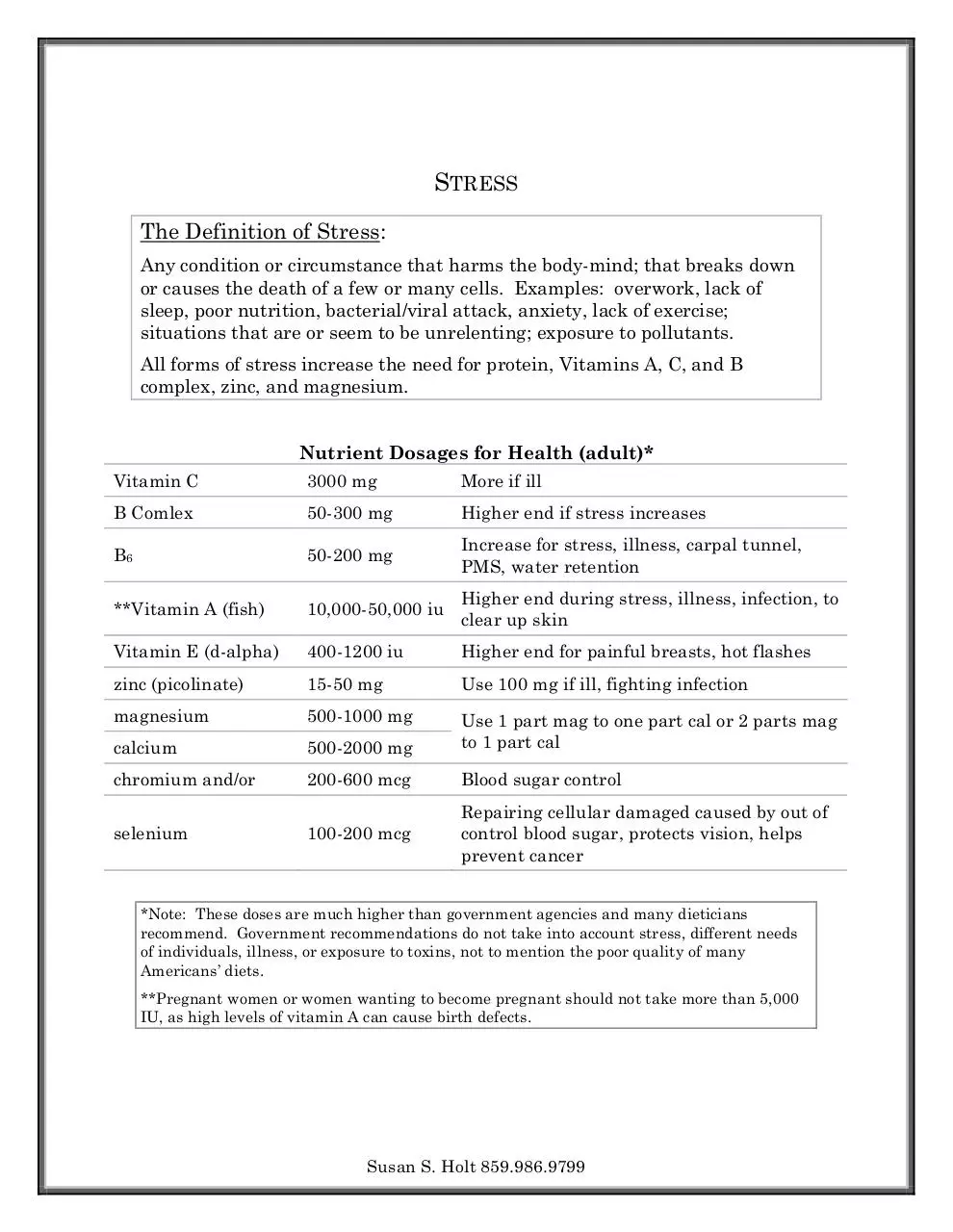
Nutrient Dosages for Health (adult)*
Vitamin C
3000 mg
More if ill
B Comlex
50-300 mg
Higher end if stress increases
B6
50-200 mg
Increase for stress, illness, carpal tunnel,
PMS, water retention
**Vitamin A (fish)
10,000-50,000 iu
Higher end during stress, illness, infection, to
clear up skin
Vitamin E (d-alpha)
400-1200 iu
Higher end for painful breasts, hot flashes
zinc (picolinate)
15-50 mg
Use 100 mg if ill, fighting infection
magnesium
500-1000 mg
calcium
500-2000 mg
Use 1 part mag to one part cal or 2 parts mag
to 1 part cal
chromium and/or
200-600 mcg
Blood sugar control
selenium
100-200 mcg
Repairing cellular damaged caused by out of
control blood sugar, protects vision, helps
prevent cancer
*Note: These doses are much higher than government agencies and many dieticians
recommend. Government recommendations do not take into account stress, different needs
of individuals, illness, or exposure to toxins, not to mention the poor quality of many
Americans’ diets.
**Pregnant women or women wanting to become pregnant should not take more than 5,000
IU, as high levels of vitamin A can cause birth defects.
Susan S. Holt 859.986.9799
�
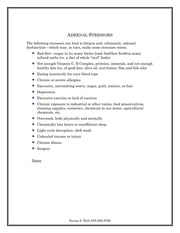
ADRENAL STRESSORS
The following stressors can lead to fatigue and, ultimately, adrenal
dysfunction—which may, in turn, make some stressors worse.
Bad diet—sugar in its many forms /junk food/fast food/too many
refined carbs (vs. a diet of whole “real” foods)
Not enough Vitamin C, B Complex, proteins, minerals, and not enough
healthy fats (ex. of good fats: olive oil, real butter, flax and fish oils)
Eating incorrectly for your blood type
Chronic or severe allergies
Excessive, unremitting worry, anger, guilt, anxiety, or fear
Depression
Excessive exercise or lack of exercise
Chronic exposure to industrial or other toxins, food preservatives,
cleaning supplies, cosmetics, chemicals in our water, agricultural
chemicals, etc.
Overwork, both physically and mentally
Chronically late hours or insufficient sleep
Light cycle disruption: shift work
Unhealed trauma or injury
Chronic illness
Surgery
Notes:
Susan S. Holt 859.986.9799
�
 Historical archive . public document