Proceedings of the International MultiConference of Engineers and Computer Scientists 2008 Vol I
IMECS 2008, 19-21 March, 2008, Hong Kong
Using User Sessions for Test Case Generation and
Execution
Izzat Alsmadi, and Kenneth Magel
Abstract—the goal of software testing is to detect bugs
using the sources available to the project. This paper
presents utilizing user sessions for test case generation
and execution. User sessions can be gathered from the
application in business environments and represent user
stories or scenarios. Rather than rerunning user sessions
for test automation, as in capture/reply tools, this
research focuses on abstracting requirements from those
sessions to make it independent of the scripting language
or the tool that created them. This approach is expected
to improve the utilization of user sessions from being
copied and reused in the same original format, which
makes it complex to edit and inflexible, to a format that
can be used and utilized in different applications and
platforms. The suggested approach abstracts user
sessions to make them more independent and reusable.
Index terms—Software testing, Graphical User
Interface (GUI), user sessions, and test automation.
I. INTRODUCTION
The potential usefulness of the user-session based
testing technique is on being able to exactly reproduce
and execute a particular user session. User session data
can also provide effective partitioning or coverage,
together with using these sessions as input data that
can be transformed into test cases [1]. The test cases
generated from the user sessions do not replace those
developed by testers. For better coverage, both
alternatives should be considered.
The advantage of using session data in testing is that
since it represents authentic user behavior it would be
more realistic and more likely to expose actual
scenario bugs [2]. Another advantage is the utilization
of users’ sessions for testing and hence, using the
application users as testers. User session data can help
produce effective test suites with very little expense
[3].
Capture/replay tools such as IBM Rational Robot or
WinRunner capture user sessions in a format that can
be later replayed automatically during regression
testing [4].
Manuscript received January 18, 2008. Izzat M Alsmadi is a PhD
student in software engineering at NDSU, department of computer
science, 258 IACC North Dakota State University, Fargo, North
Dakota
58105,
phone:
701-293-1841,
email:
Izzat.alsmadi@ndsu.edu.
Kenneth Magel is a professor in the department of computer
science, NDSU. He is currently the department associate chair.
IACC 258A21, department of computer science, 258 IACC North
Dakota State University, Fargo, North Dakota 58105, phone: 701231-8189, email: kenneth.magel@ndsu.edu.
ISBN: 978-988-98671-8-8
We can utilize some of the features in capture
replay tools to do more than just replaying an identical
copy of user sessions. In this research, the suggested
use of user session’s goes beyond replaying the same
saved copy (recorded manually through a user), user
sessions guide, by abstraction, the test generation
algorithms in order to get more realistic test cases. One
problem with the capture/replay tools is in dealing
with the complex generated scripts. The fact that the
script is rigid and any GUI change requires editing the
script or generating a new one can be relieved by
abstracting the script. Information like the sequence of
the controls in the script and the events is that matter
and needed to be extracted. This allows the script to be
used in different applications and not only in its
specific scenario and scripting language. An
application is developed to extract specific information
from the recorded script. The execution is done using
some API’s to simulate user actions which replace
using the script for execution in the capture/replay
tools.
II. RELATED WORK
In order to use user actions or sessions, they have to
be formally described or modeled. Several models are
suggested to model the users’ tasks’ descriptions.
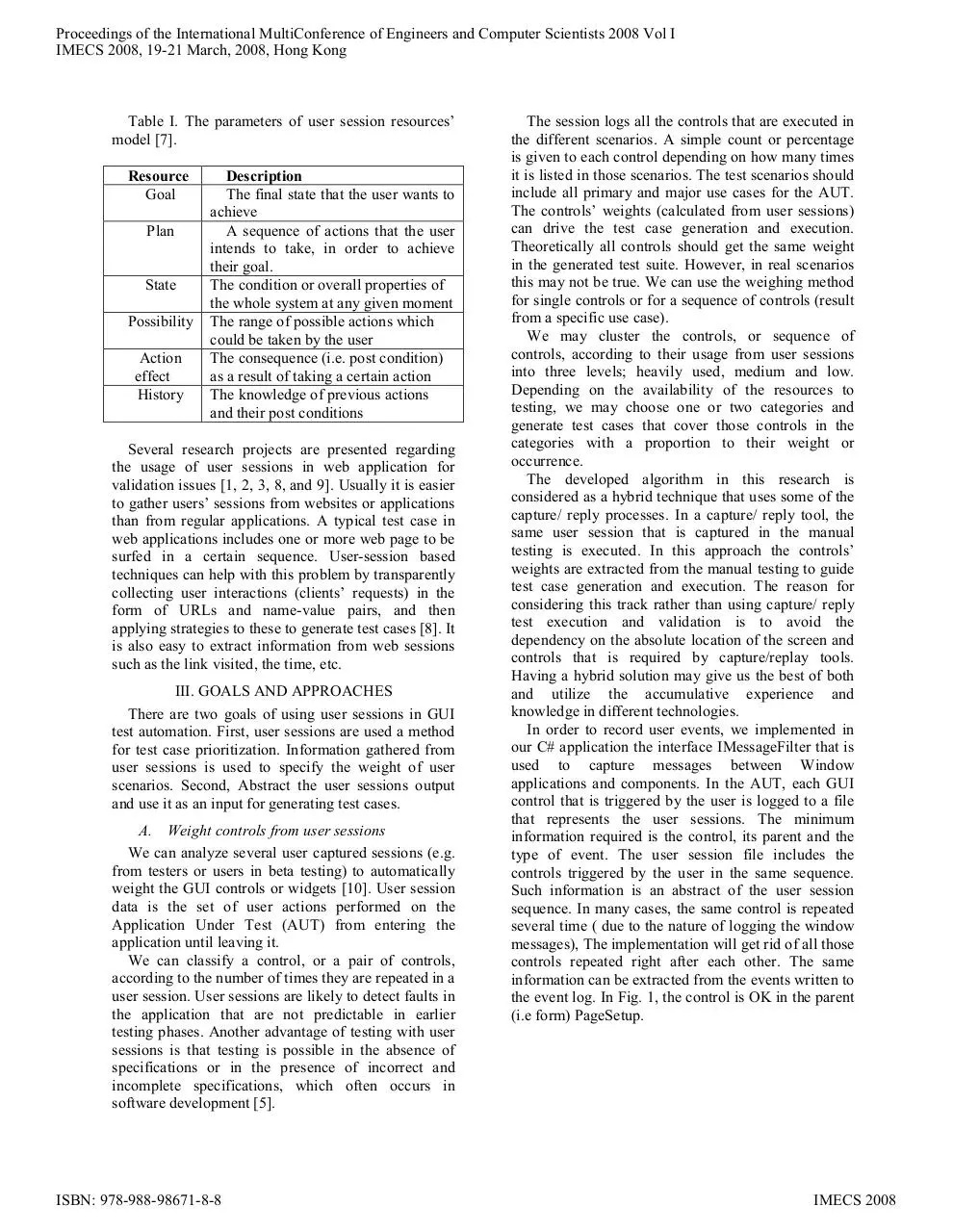
Table I shows the resources required for every user
action in a user session model. Norman’s executionevaluation model presented a similar model for human
information processing [6]. Users actions can be
described in three levels; goals, tasks and actions.
Actions maybe directly related to the specific function,
however, users may take other actions which are not
motivated by tasks during interaction. User actions are
often based on a predefined list. Actions that are not
listed maybe considered irrelevant to that specific test.
An automated extracting process may not be able to
distinguish actions related to tasks from actions that
are not.
Capture/replay tools are widely used in testing for
test automation. Users are required to perform the
initial tests; a recording tool records the script and
replays it whenever it is required. In principle, this is
utilizing testers’ sessions for testing. The re-played
session is an exact copy of the one manually executed;
there is no data extracting or information processing
involved. Usually any change in the user interface
requires those scripts to be edited and modified.
IMECS 2008
�
Proceedings of the International MultiConference of Engineers and Computer Scientists 2008 Vol I
IMECS 2008, 19-21 March, 2008, Hong Kong
Table I. The parameters of user session resources’
model [7].
Resource
Goal
Plan
State
Possibility
Action
effect
History
Description
The final state that the user wants to
achieve
A sequence of actions that the user
intends to take, in order to achieve
their goal.
The condition or overall properties of
the whole system at any given moment
The range of possible actions which
could be taken by the user
The consequence (i.e. post condition)
as a result of taking a certain action
The knowledge of previous actions
and their post conditions
Several research projects are presented regarding
the usage of user sessions in web application for
validation issues [1, 2, 3, 8, and 9]. Usually it is easier
to gather users’ sessions from websites or applications
than from regular applications. A typical test case in
web applications includes one or more web page to be
surfed in a certain sequence. User-session based
techniques can help with this problem by transparently
collecting user interactions (clients’ requests) in the
form of URLs and name-value pairs, and then
applying strategies to these to generate test cases [8]. It
is also easy to extract information from web sessions
such as the link visited, the time, etc.
III. GOALS AND APPROACHES
There are two goals of using user sessions in GUI
test automation. First, user sessions are used a method
for test case prioritization. Information gathered from
user sessions is used to specify the weight of user
scenarios. Second, Abstract the user sessions output
and use it as an input for generating test cases.
A. Weight controls from user sessions
We can analyze several user captured sessions (e.g.
from testers or users in beta testing) to automatically
weight the GUI controls or widgets [10]. User session
data is the set of user actions performed on the
Application Under Test (AUT) from entering the
application until leaving it.
We can classify a control, or a pair of controls,
according to the number of times they are repeated in a
user session. User sessions are likely to detect faults in
the application that are not predictable in earlier
testing phases. Another advantage of testing with user
sessions is that testing is possible in the absence of
specifications or in the presence of incorrect and
incomplete specifications, which often occurs in
software development [5].
ISBN: 978-988-98671-8-8
The session logs all the controls that are executed in
the different scenarios. A simple count or percentage
is given to each control depending on how many times
it is listed in those scenarios. The test scenarios should
include all primary and major use cases for the AUT.
The controls’ weights (calculated from user sessions)
can drive the test case generation and execution.
Theoretically all controls should get the same weight
in the generated test suite. However, in real scenarios
this may not be true. We can use the weighing method
for single controls or for a sequence of controls (result
from a specific use case).
We may cluster the controls, or sequence of
controls, according to their usage from user sessions
into three levels; heavily used, medium and low.
Depending on the availability of the resources to
testing, we may choose one or two categories and
generate test cases that cover those controls in the
categories with a proportion to their weight or
occurrence.
The developed algorithm in this research is
considered as a hybrid technique that uses some of the
capture/ reply processes. In a capture/ reply tool, the
same user session that is captured in the manual
testing is executed. In this approach the controls’
weights are extracted from the manual testing to guide
test case generation and execution. The reason for
considering this track rather than using capture/ reply
test execution and validation is to avoid the
dependency on the absolute location of the screen and
controls that is required by capture/replay tools.
Having a hybrid solution may give us the best of both
and utilize the accumulative experience and
knowledge in different technologies.
In order to record user events, we implemented in
our C# application the interface IMessageFilter that is
used to capture messages between Window
applications and components. In the AUT, each GUI
control that is triggered by the user is logged to a file
that represents the user sessions. The minimum
information required is the control, its parent and the
type of event. The user session file includes the
controls triggered by the user in the same sequence.
Such information is an abstract of the user session
sequence. In many cases, the same control is repeated
several time ( due to the nature of logging the window
messages), The implementation will get rid of all those
controls repeated right after each other. The same
information can be extracted from the events written to
the event log. In Fig. 1, the control is OK in the parent
(i.e form) PageSetup.
IMECS 2008
�
Proceedings of the International MultiConference of Engineers and Computer Scientists 2008 Vol I
IMECS 2008, 19-21 March, 2008, Hong Kong
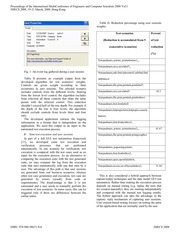
Table II: Reduction percentage using user sessions
weights.
Test scenarios
(Reduction is accumulated from 5
consecutive scenarios)
Percent
of test
reduction
(%)
Notepadmain, printer, printerbutton1,,,
Notepadmain,save,savelabel7,,
Fig. 1: An event log gathered during a user session.
Table II presents an example output from the
developed algorithm for test scenarios’ weights.
Controls are given weight according to their
occurrence in user sessions. The selected scenario
includes controls from the different levels. Starting
from the lowest level control, the algorithm excludes
from selection all those controls that share the same
parent with the selected control. This reduction
shouldn’t exceed half of the tree depth. For example if
the depth of the tree is four levels, the algorithm
should exclude controls from levels three and four
only.
The developed application extracts the logging
information in a format that is independent on the
application. We used this output as an input to the
automated test execution process.
B. Semi test execution and user sessions
In part of a full GUI test automation framework
[11], we developed some test execution and
verification
processes
that
are
performed
automatically. In one scenario for verification, test
execution is compared with the test cases used as an
input for the execution process. As an alternative to
comparing the execution suite with the test generated
suite, we may compare the log from the execution
suite that runs automatically with one that runs by a
user. The advantage of this path is that user sessions
are generated from real business scenarios, whereas
other test case generation and execution, test case are
generated by testers (usually from code or
requirements). The disadvantage is that it is not
automated and a user needs to manually perform the
execution of test scenarios. In some cases, this can be
triggered only if there are differences between the
earlier suites.
ISBN: 978-988-98671-8-8
Notepadmain,edit,find,tabcontrol1,tabfind,find
tabbtnnext
Notepadmain,file,print,printtab,printlabel7,
Notepadmain,save,savelabel5
65.1
Notepadmain,file,print,printtab,printlistbox1
Notepadmain,font,fontlabel2
Notepadmain,helptopicform,helptopics,search,
button1
Notepadmain,font,fonttextbox2,,
Notepadmain, printer, printerbutton2,,,
41.67
Notepadmain,file,print,printtab,printgroupbox
1
Notepadmain, pagesetup,printer,
Notepadmain,font,fontlistbox2,,
Notepadmain,open,openfilelabel4,,
Notepadmain,saveas,savefilecombobox2,
51.56
This is also considered a hybrid approach between
capture/replay techniques and the data model GUI test
automation. Rather than making the execution process
depends on manual testing (e.g. replay the tests that
are created manually), they are running independently
and compared with the manual test logging results.
The hybrid approach can take the advantage in the
capture/ reply mechanism of capturing user sessions.
User session-based testing focuses on testing the parts
of the application that are normally used by the user.
IMECS 2008
�
Proceedings of the International MultiConference of Engineers and Computer Scientists 2008 Vol I
IMECS 2008, 19-21 March, 2008, Hong Kong
The advantage of this path over the already adopted
capture/replay process is that the tests are object based
rather than position based. This overcomes the main
disadvantage of using a capture/replay tool in
execution and validation as a slight change in the
screen properties, changing the display resolution, or
changing the control location causes the tests to fail. In
the data model, the control is captured through its
name and parent. As a result, any changes in the above
listed characteristics will not affect locating the
control.
IV.
[9] Yaya Wei; Chuang Lin; Fengyuan Ren; Dutkiewicz, E.; and
Raad, R. Session based differentiated quality of service
admission control for Web servers. Page(s): 112 – 116.
ICCNMC2003.
[10] Alsmadi, I, and Kenneth Magel. GUI Path Oriented Test
Generation Algorithms. In Proceeding of IASTED (569)
Human-Computer Interaction. 2007.
[11] Alsmadi, I, and Kenneth Magel. An Object Oriented
Framework for User Interface Test Automation. MICS07.
2007.
CONCLUSION AND FUTURE WORK
Utilizing user session for GUI test automation is
discussed in principle in this research. An application
is developed to extract user session information in a
format that is independent of the tool that gathers
them.
The two areas explored were using user sessions for
test case prioritization and for test case execution and
verification. In future, we will collect actual user
sessions’ data from different applications. It will be
useful to compare the test effectiveness from this
technique with other techniques. User sessions
represent actual user scenarios, and hence they reflect
the application requirements. This makes them as
requirements that can be verified automatically.
REFERENCES
[1] Elbaum, Sebastian, Srikanth Karre and Gregg Rothermel,
Improving web application testing with user session data, in
proceedings of the 25th international conference on software
engineering. Oregon, USA. Pages: 49 – 59. 2003.
[2] Alshahwan, Nadia. Automatic regression testing of web
applications.
<http://www.dcs.kcl.ac.uk/staff/mark/PastMScProjects2004/N
adiaAlshahwan.pdf>. 2005.
[3] Offutt, Jeff, Ye Wu, Xiaochen Du, and Hong Huang. Bypass
testing of web applications. In proceedings of the 15th
international symposium on software reliability engineering
(ISSRE'04) - Volume 00. Pages: 187 – 197. 2004.
[4] Hicinbothom, J. H., and W. W. Zachary. A tool for
automatically generating transcripts of human-computer
interaction. In proceedings of the human factors and
ergonomics society 37th annual meeting, volume 2 of special
sessions: Demonstrations. Page 1042. 1993.
[5] Sreedevi, Sampath. Cost effective techniques for user session
based testing of web applications. Phd dissertation. University
of
Delaware.
<128.4.133.74:8080/dspace/bitstream/123456789/168/1/sampath.dissertation06.pd
f>. 2006.
[6] Norman, Donald. The psychology of everyday things. Basic
books, 1988.
[7] Chen, Eva. Resource-based user interface design. Phd thesis.
The
university
of
York.
<www.cs.york.ac.uk/ftpdir/reports/YCST-2005-04.pdf>. 2005.
[8] Elbaum, Sebastian, Srikanth Karre, Gregg Rothermel, and
Mark Fisher. Leveraging User-Session Data to Support Web
Application Testing. IEEE Transactions on Software
Engineering. Pages: 187 – 202. 2005.
ISBN: 978-988-98671-8-8
IMECS 2008
�
 Historical archive . public document