STEVEN COX
the Cause + Affect behind Vancouver’s Pecha Kucha Night
Reaches over 100,000 monthly readers
vancouverobserver.com
�
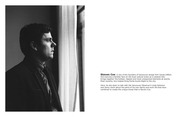
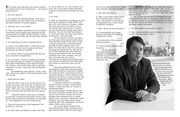
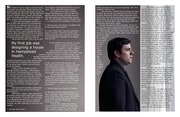
Steven Cox
is one of the founders of Vancouver design firm Cause+Affect.
He’s become a familiar face on the local cultural scene as a catalyst who
brings together the hottest, hippest and most unexpected elements at events.
Most recently, he’s helped bring Pecha Kucha Night to the city.
Here, he sits down to talk with the Vancouver Observer’s Linda Solomon
and Jenny Uechi about the parts of his own family and work life that have
combined to create the unique brand that is Steven Cox.
�
LINDA:
I’m interested in
your Winnipeg beginnings. It’s a mystery to a lot of us, that city. If you had
to sum up Winnipeg to an alien, what
would you say?
STEVEN:
Well, Winnipeg
has lots of beauty and lots of ugly. A
very ugly core, a dead downtown -classic dead downtown -- core. It also
has some wonderful parks, gardens
and neighborhoods as well.
L: When did it die?
S: I think it died in, like, 1910.
L: The neighbourhood never ...
S: At the turn of the century, Winnipeg was one of the hubs of North
America. Trade was going east-west
and it was gonna be the same size as
Chicago. Then all that stopped, the air
took over, people flew around Winnipeg, trade went north-south. Nobody
cared anymore. It sort of hit a stall.
It’s basically the same size now as it
was then. It’s like 750,000 people.
L: Let’s talk about you. How many
kids in your family?
S: Myself and my sister, she’s two
years older.
L: You went to public schools?
S: Went to public schools, pretty
normal. My mom was a teacher. She
taught in high school and then moved
into teaching special needs and troubled youth in high school.
L: What was the family “trademark”,
in terms of what your family told you
over and over? What is life? How did
they explain the world to you?
S: They explained it by doing, not as much by
telling. So I watched my parents, who had very
strong mor-als and they believed very much
in personal relationships. Both being teachers didn’t sort of leave our home with an air of
smartness. But as a teacher, you get a much
more intimate knowledge of people and this sort
of led us to have good relationships that were
more informed than other kids.
L: No generation gap?
S: No. It made it harder to fool them.
L: What kind of kid were you?
S: I was a good kid. I was a
very athletic kid, a big hockey
player. In Winnipeg, it is
impossible to grow up not
playing hockey.
L: What happens if you don’t?
S: In some ways, nobody knows who you are.
You end up being the weird kid. You miss out
on a friend-ship base as for a while, your entire
social sphere was built around hockey.
L: So was yours?
S: Absolutely. As a kid, until I was about 15
and started to think that missing the junior high
dance and other stuff for a hockey game was
kind of dumb, because there were girls there. So
then you start to question how much time you
are spending on that, and the dreams of getting
into the NHL start to seem a little bit ridiculous.
L: What did you do in the summer?
S: Everybody leaves Winnipeg in the summer,
it’s a ghost town. We had a cottage on an island
in Ontario on Lake of the Woods. The island was
originally purchased by my great-grandfather
and has been in the family ever since.
See, we kind of have a famous family
history: My great-grandfather was a
guy named Charles Gordon, who wrote
books under the pen name Ralph Conner. He was, at the turn of century,
one of the world’s best-selling authors
and in turn one of the wealthier men
in Canada. At the same time he was
the found-ing minister at the United
Church of Canada. Then he lost all his
fortune during the times around the
war and great depression. Lost it all.
Many of his congregations had lost
their money as well. He spent the next
10 to 20 years of his life trying to write
more books to pay back people and
keep many of his assets.
One of his treasures was their house
in Winnipeg, now called Ralph Connor
house, recently declared a Canadian
Heritage Site, I believe. In it was a
huge family with seven kids, staff and
all the extras that came with wealth
and that time.
L: Did they manage to hold on to that?
S: In the end, they lost everything
but the island. We have maintained
this wonderful island on Lake of the
Woods. which has now been in the
family for over 100 years.
L: That’s where you spent summers.
You went swimming?
S: Yeah. All those classic summer activities. Swimming,
fishing, badminton, cards, etc. We chose to not have electricity on the island and only recently have implemented a
fairly robust solar system. Being off grid never seemed that
strange to me.
L: What is your sister’s name, what is she doing?
S: Her name is Jen. She is married with two kids and living
in Winnipeg. Married to Hugh McFadyen, who is the former
leader of the provincial Conservative party in Manitoba. That
makes for interesting family dinners (laughs).
L: Is she conservative? A member of Conservative Party?
�
S: I wouldn’t say that she is an overly conserva-
on, so we were 21, 22. I am 38 now. As a
tive person but it’s one of the things ... she kind of team, life is just easier. Making decisions
is easier, as someone else always has your
married into it.
back.
L: Are your parents?
L: So lucky.
S: My parents are ultimate liberals. They live in
River Heights, the only Liberal seat in Manitoba ... S: After we completed our degrees, we had
that classic decision to make. Which city:
the liberal hotbed of Canada (laughs).
New York, San Francisco, Chicago, London.
We knew one person in London, an AusL: Did they ever run for office?
sie girl that Jane worked with in VancouS: They were always interested, but not involved. ver. And at that time, London was kind of
booming. The dot.com stuff had started
They did do some lengthy door knocking for the
to come to Eu-rope and there was a lot of
Conservatives on Hugh’s behalf, however. I think
that showed that family was stronger than political money there. This was 1998.
So we moved to London, we spent
lines.
our first year in that typical horrible basement flat with mould on the walls. It was
L: It sounds like you had an amazing family ...
a couple of blocks from Arsenal football
grounds in North Islington and it was
S: I had a very stable home. I would call it nice,
great. The plan was to stay for a year, and
wholesome, loving. Lots of support, all those
we ended up staying for five. We moved
things that you take for granted.
out of that basement flat and ended up
sharing a two-bedroom flat with another
L: In all your years of young adulthood, did you
couple for four years. Imagine, two couhave a moment of awakening?
ples, one bathroom, four years.
This was kind of where the evolution startS: No, not really. I lived in a pretty good bubble,
ed, because we both kind of moved away
even going through my Masters of Architecture,
from what our educa-tion told us to be
there was a little feeling of just going through
doing.
the motions. I don’t think there was a particular
Jane was supposed to be an intemoment in my life; it was more like one big slow
rior designer, which was what she started
evolution.
with. She worked for a big interior design
My awakening really started, I think, when
Jane, who is my partner in life and business, came firm called Gensler, a big American firm. It
went from being in a firm of 80 when she
into my life.
started to like 300 in a couple of years. Big
corporate headquarters and great parties
L: When did you meet?
and all that kind of stuff.
I started working for a Canadian
S: We met when I was in my second year in uniarchitect living in London, named Alison
versity. She was in her first year. It was kind of a
Brooks. I mainly did work on a house in
classic thing. She was in the interior design program, which every year usually has about 30 new Hampstead Heath.
And we both stayed in these jobs for like
women and two guys and both guys are usually
two years, and then we both moved. Jane
gay.
moved out of interior design into a more
I shouldn’t admit it, but there’s a hotbed
strategic and marketing role in a small
of cute girls coming into the faculty and as a guy,
agency and I moved to a design firm called
there’s always this kind of checking out that goes
Softroom. We were doing more interior
on. Jane happened to be one of those girls.
branding stuff. Like restaurants, museums,
hotels, retail environ-ments.
L: Once she came along, what happened? The
So we both spent another three
evolution in your life ...
years doing those things, and then we began thinking about what the next stages
S: In many ways, we became a team very early
of our lives were going to be. I had
also proposed. She had accepted.
S: Well, it was really totally cliché,
but it seemed great at the moment. I proposed in a private box
on Valentine’s Day in the London
Symphony Orchestra.
I rented the box, bought the other two tickets
out. It was funny, because Jane said: ‘ Oh, it is so
weird that all the other boxes are full and we have
the only box for us, that’s great!’ and I was like, yeah,
that’s so great.
So, we got married back in Winnipeg because
we wanted to be close to everybody. And we ended
up getting married at my great-grandfather’s mansion
house. It is sort of a tradition in our family, not a big
wedding, maybe 100 people.
L: Wow. What was the production?
L: You still stayed in London for a while?
S: It was basically love songs,
playing everybody from Bach to
Tchaikovsky I think.
S: Yeah, we had another year in London. We married
in 2002 we came back in 2003.
L: How did you propose?
L: At what point of the program
did you propose?
S: I don’t know, it was all a blur.
A big blur.
But we were both
convinced that the music
adjusted to the moment ...
and then you get the sense
that the whole place is
looking at you.
L: You said there was
an evolution in London.
I was wondering what
impact London had on
you guys. All of a sudden you went from
Winnipeg to London.
You were in the
big world. What
impact did that
have on you
two?
�
S: I think for some reason we both found
rior designer but beyond the first couple of
years, never really did interior design.
ourselves very naturally fitting into the meYou realize you’re just a creative,
tropolis style. We were both super hungry for
design-focused
person. You can talk intelnew, interesting, cool stuff. We were going to
ligently
about
all
kinds of things and you
lectures, fashion shows, bands and all that
just start soaking all those things around
stuff. I had this great office in the middle of
you. You just became a sort of creative hub
Soho. It was pretty super cool ( laughs).
... in a dynamic and constantly moving city.
I think that the biggest thing for us
was to learn that there are no boundaries
L: Did you go to any shows or exhibits that
to what you do. Meaning that you are not
turned your head around?
your job description. I’m was a registered
architect. I became a registered architect in
S: I don’t think that it was any particular
London but then I never actually did architecture. Well, perhaps a little bit, but mainly show or exhibit, I think for me the interI did other stuff. I worked on music videos, I esting thing was that I got put in all kinds
of uncomfortable situations in my design
designed restaurants, airplane interiors.
Same goes for Jane, who was an inte- business life.
In the middle of the project, my boss
My first job was
went on maternity leave for
three months. It was a learn-ordesigning a house
die situation. It was a modern
house andI only really knew design
in Hampstead
detailing stuff from Canada, stuff that I had
learned in school. Luckily, my boss thought that
Health.
modern wood exterior cladding was completely appropri-
ate. Well, people in Hampstead Heath thought it was the
weirdest thing they ever saw, because that
house was brick. Anyway, the house endS: No. I got to sit in the mockup. But
ed up being really unique, and winning a
Kate Moss wasn’t there. I guess I just had
bunch of awards.
weird experiences which I wouldn’t have
I had a bunch of these sort of
got I if I had just stayed in Canada doing
strange foreign scenarios. I had another
work. I think if I had done that, I would
one where I was designing an art gallery
have ended up as a bitter architect.
for the Devon Guild of Craftsmen. Imagine
You see, architecture is tough. It’s
this 28-year-old kid who looks like he’s 22
undervalued, it’s hard, it’s actually quite
with an American accent. He goes to the
misleading, as it’s not a lot of design, it’s
countryside in Devon and tells a bunch of
actually not that creative, a very mislead65-year-old craftsmen how to turn their
ing profession in general. At least in my
200-year-old mill into a modern gallery
experience.
(laughs).
We started off incredibly adversarial
L: Tell me about your return to Canada.
but in the end, they just sort of thought I
was hilarious.
S: We knew we were always going to re
After that, I spent a year working on
turn to Canada. It was the decision about
the design of the upper-class cabin interiors
either Montreal or Van-couver, but neither
for Virgin Atlantic. It was the first time they
of us speak French very well, so it was
were implementing flat beds. As opposed
because of that that Vancouver
to British Airways, who had the business
became the place.
traveller, we were catering to rock stars and
And we were never interested in
models.
Toronto. Both of us had spent time there
L: Did you ride in one?
and it seemed a little bit, in our minds,
that it lacked a certain culture and the
times we spent there we were never like: ‘Oh, this
is where I want to be.’
But we knew nobody here in Vancouver, back
in 2003. We did the very typical thing. We moved
in to the West End, which is what everybody does
when they move to Vancouver. We had an awesome
apart-ment; we were at the very end of Nelson
Street on Stanley Park in this ‘50s tower called the
Silhouette apartments. Great!
I started working for Arthur Erickson. It was really not that inten- tional, but all the architects that
I wanted to work for didn’t hire me, so I was kind
of a little bit lost, and that’s when Arthur called and
asked for an in-terview. Well, Arthur didn’t call, his
assistant called.
But it was still
one of those
weird moments you
go through in
your
career
when
you’re
like,
‘Oh
yeah,
Arthur
Erickson
is going
to call
you’
(laughs).
But really, when you’re working for Arthur Erickson, you’re really
working for Nick Milkovich, who was
real-ly the man behind the man. They
had this really weird and slightly dysfunctional relationship. But it was good
for both of them. I did some good stuff
with them. Nick is a fantastic person.
I also kind of gave up on architecture at that time as well. I had
worked on an addition to the Evergreen building. A five-storey addition.
During the process of city approvals,
there were a lot of backroom deals and
eventually the project was squashed.
There was all kinds of nastiness and
horrible stuff going on and this was
the moment where I was kind of done
with architecture. It was slow, it was
boring, it was bureau-cratic ... and for
me it didn’t result in any interesting ….
The same time I was doing that,
Jane was bouncing around from companies doing consulting work. I guess
she was always a little bit too senior
to be hired full-time. We had these
conversations at dinner. I told her,
you know, you’re just going to have to
start your own thing. No choice. You’re
unemployable (laughs).
So she did.
We met, well she met, a women
who ran the Home Show. Which was at
the time a big, quite nasty thing at BC
place, with all the brooms and mops
and slicers and dicers ... and through
this personal relation-ship, she was
telling us: ‘You guys seem totally hip
and cool, you should help me get
some design ele-ment back into this
event.’
So we said sure.
At the time, we spent the year
kind of becoming aware of all the interesting designers in Vancouver. We
realized there were tons of interesting
designers, and no one really knows
about them and no one knows each
other, there was no community, and
we thought, let’s do an exhibition.
So we started this exhibition
called Movers and Shapers and we
�
featured all kind of designers/designs. It was
not only architectural, there was jewelry designers, product designers, furniture people.
We focused on 10 designers and we designed
this very modern, white, very London (laughs)
sort of ... exhibition. In the middle of the home
show.
possibilities.
When you get to America, you get into
strong silos ... North America lives specialization. Right? You do one thing and you do it
better than anybody else. In Europe, it’s the
total opposite. In Europe, you’re more interesting because you do that and you do that, you
do many things at a time. It makes your work
richer. Canada and the States are really susL: You broke out of the box.
pect of that. I think the message we are tryS: Yeah, kind of a diamond in the rough, so to ing to get out is: “because we are doing more
things, we are more interesting, because they
speak.
We got huge attention, we got the front are each informed by the other.”
So if you want specialization, you are
page of one of the sections of the Sun or
going
to
get exactly what everyone else does,
something ... and we also developed all these
but
you
going
to get low risk, probably not that
friendships, friendships that we still have today. The best way to meet people is to have an expensive, and you know what you are going
to get before it starts.
exhibition feature people (laughs).
But that’s not what you are going to get
This project also meant that we had to
with us. We didn’t want you to know what you
name our company. I still remember writing
are going to get.
down the name “Cause + Effect” on a piece
of paper while I was sitting down at my desk
L: It sounds like you wanted to engage in a
in Nick Milkovich’s office. And I thought, but
creative process where something amazing
it’s not Cause and effect, action and reaction.
It’s cause and affect, which is action with pur- that you didn’t expect happens.
pose.
It was also at a time when “cause”
wasn’t the loaded term as it is now. Cause is a
term that has become loaded, from everything
from social justice to sustainability. We didn’t
really mean it that way. That really wasn’t the
intention. The intention was, we want to do
more as a company rather than just be the
design people at the end of a process.
For design, especially in Canada, most
of the process and decisions have already
been made by the time the designers come on
board the project. Then the designer would be
told what to design and they would go ‘OK, I’ll
do that’. If the designer goes, ‘well that’s kind
Like the analogy: You go to a coal comof dumb’, the client would say, “too late! alpany for energy solutions. It’s likely they are
ready decided.”
going to recommend coal. We didn’t want to be
So I would be thinking, how did you dethat. We wanted to be the company that gives
cide to do that? They’d answer, well my neighyou a solution that you never heard of. Cause
bour’s husband told me, or my daughter’s best
and Affect was trying to say, ‘we are not just
friend said we should. It was just that usuan ”affect” company, we are also the front end.
ally the decision-making process to reach the
To do that, we had to build a company
design component was really uninformed. And
that had variety so you could solve the probit’s that stage where all the innovation could
lem in a bunch of dif-ferent ways. Then we
happen, in the process before the designer
became this kind of weird group and nobody
was hired.
knew what we did. You know, we cre-ated an
I think we were aware of that because
exhibition, then we did some graphic design,
of the stay in London. We have seen more
then we created an event series.
S: That’s right. We
wanted to solve a
problem without defining how we are
going to solve that
problem.
C+A started to become interesting when
we started working for the Vancouver Art Gallery and they said, we want to improve our
awareness. People walk by the building, they
don’t know what it is, how to get in etc.. So
we said lets start with signage. At the time,
VAG had a big sign over by the stairs and they
had a green canopy that came out one door. It
looked like you were entering a funeral home.
L: I remember that.
S: So we started doing really basic things.
Like, we put really big banners up at the entrances. Stuff that for us was like Step 1 in
a 30-step process on how to improve. But
anyway, they were so excited with the simple
stuff that we did. But just to get those banners up on a heritage Class A building was so
much bu-reaucracy. So we finally changed the
thing from green to red, put up some banners,
added some addi-tional signage out on the
sidewalk, with flexible signage that could be
replaced with what was happening inside. We
brought the gallery out to the community a bit
more.
The next thing they asked was, how to
get the younger audience?
At the time, they had a very old membership, very old audience. So they said, ‘Why
don’t you guys design some
cool posters?’ and we said that
cool posters aren’t going to do it.
You have to change the way people
think of the gallery, you have to
totally change the perception. The only way to
do that is to get to them to experience the gallery in a different way.
And so we convinced
them to do ‘Fuse’. With Fuse,
the idea was to turn the
gallery into a social space,
a party space. I remember
that we said people might
come to the gallery and not
look at the art and that’s
okay. The staff at the VAG
were pretty uncomfortable
with that idea.
They said, wait a
minute. Why would we want
people to come in here and
not look at the art?
�
We
want to increase
their appreciation of art,
we don’t want them to
just come in here and
have beer and ogle each
other.
So we said, let’s do three
events. So we had agreement to do three parties.
L: You put on the party?
You put out a mailing list?
S: No, we helped ...
we helped. They knew
people, we created the
concept, named it and
designed the graphic
identity for it. We curated
the event itself, brought
in the DJ, brought in the
entertainment. Came up
with the concept of how it
would work, how people
would move through the
gallery.
L: So you weren’t designing, you were curating an
event.
Cause+Affect office space
S: Yes, well that’s
where design comes
from. We understand
the physical experience and know how
to create something
that people can get
engaged with, and
it’s also about how to
communicate that.
That’s really where we
began growing as a
brand and marketing
company. We didn’t
just create the idea,
we named it, we sold it
to the general public,
we branded it.
L: How did you connect with the people
you wanted to get?
S: Well they were
hoping to get 250 and
1,200 showed up.
It was a total nightmare, they sold out
everything, there
wasn’t even a leaf of
lettuce left. It was
like a hurricane had
gone through. Staff
there were totally
overwhelmed. It was
amazing, it was great.
Then we did two
more for them, which
were huge successes.
Everyone thought it
was a great thing, and
then the VAG was like,
OK, I think we can
take it from here. And
they have run with it. I
think it’s gone through
its its ups and downs.
But it has the trump
card, right? It has the
venue.
�
L: did it create a young audience for
them?
S: Absolutely. I would argue it’s the
single most important thing they did as
an organization with regard to audience
participation. They have improved their
curatorial drastically since Kathleen took
over, but it was that event that made
them cool.
We learned a couple of things from
that event. We learned that people want
social activities with cultural significance.
In London, every cultural event was
social. Drinking is part of everything. It
didn’t matter if you went to the opera ...
because drinking is a significant thing ...
and it’s fun. Here, there is a real separation between the cultural events like lectures, art openings. Things were not that
fun, kind of, but not that fun. Then there
are the fun things like bands and movies or Canucks games, which is fun, but
you didn’t walk away from it smarter. And
I think what we did with Fuse, we gave
people the ability of engaging in a social
thing, where they might actually walk
away from it and feel like culturally richer.
Concept Condo, Photo credit: Adam Blasberg
S: It was a couple years until Pecha Kucha happened.
We did the home show and then we did this funny project we called Concept Condo at a
competitor’s de-sign show, which has now become the IDS West. We designed this
little bronze-clad, free-standing condo unit that a guy lived in it for five days. 325
square feet. Trying to show that a small space can be nice if it’s
designed properly.
That project lead to EPIC, our first big
comprehensive brand project. The Globe
Foundation had seen some of our work in
the trade show world and they
said “OK, we want to
launch a consumer
show about sus
tainability, but
we’re experts in
B-to-B organi zation.
L: Did you guys want to do that?
S: Fuse gave us another thing. It gave
us the confidence to talk to clients about
anything. We were able to talk to clients about branding, which is eventually
what we became, a branding company.
We didn’t set out for that, it just kind of
happened. I think we’re a more authentic
branding company because we kind of
backed into it.
Most branding companies are
graphic design companies that are trying to expand their services, or marketing companies that are trying to be taken
more seriously. But we just started providing services and suddenly people were
like, “what do you do”? And we were like,
“I don’t know, we do this and this and
this. What do you need?” I guess that’s
... branding. But it was never our goal.
L: so how long until PK happened?
So this was like 2005. Sustainability was just starting to be a mainstream issue, at least the relationship
between sustainability and consumer
products. It was also the time that
sustainability was hitting its peek in
this kind of cliche symbolism.
Working closely with the folks at
the Globe Foundation, we created this
brand called EPIC, which stands for
Ethical Progressive Intelligence
Consumers.
�
It was all about not being the typical green thing. No
frogs or raindrops, no green anywhere. The language was all
intellectual. It was challenging, honest, intellectual language
and it wasn’t about guilt. It was about desire. The tagline was:
‘You can buy a better future’.
It was pretty much saying that if you buy, buy well, but
educated. Educate yourself and buy properly. That show is
still alive today, six years on. I feel like we were ahead of the
curve. Now that the curve is catch-ing up, they need to move
that brand forward again.
For us, it was that project that strengthened our ability.
We had named something, we marketed it, we designed the
interior of the show and we curated speakers. We were able to
say that we can be an expe-rience for a company from start to
finish.
From there, it just grew. Another job and another job,
we got more staff, more designers, different people, continued
to be picky about the things we do, and suddenly seven years
went by (laughs).
L: Can we talk about this whole idea of how design can actually define the future of Vancouver, has the potential to push
the city in a certain direction?
S: Yeah, I’d love to. At the end of the day, I am a designer.
This is how I define myself.
L: The question is, what do you design?
S:
What I have become is more of a
choreographer or a curator or
orchestrator. An art director. I actually rarely sit down at my desk
RWDV exhibition by Cause+Affect. Photo credit: Adam Blasberg
For example, recently we branded Modo, the car co-op. Great organization, bad
brand. Therefore little influence, and for an organization that has strong values and advocacy, this was unfortunate. Now they have a strong brand, good organization, more influence.
Bigger change.
L: Since the rebranding, have they seen business go up?
S: Yup. 40 per cent.
L: Wow. Congratulations that’s amazing.
and design these days. I now direct other designers. At
Cause+Affect, It’s more about designing systems for the
city, whether that means we design something small,
like an exhibition, or something larger, like a company’s
brand.
S: It is amazing, but for them it’s because they’re a great group. They just had a dysfunctional
brand.
JENNY: You probably talked with Trevor Boddy about Vancouverism, but do you think that design itself changes – not just bring out what is already there – but changes the way something
is?
S: It’s funny. Vancouverism, I’ll talk about that first.
Vancouverism was a term that was used in a specific context around a travelling exhibition that we de-signed and Trevor Boddy curated. It is a term used in the context of urban design focused on the down-town peninsula (of Vancouver). It is basically describing a planning
�
J: Is Vancouverism a romantic concept?
S: I think it could be. But currently, no,
I think not. The skeptic in me thinks if
I were a politician or real es-tate developer, Vancouver would be a pretty good
model. You develop thousands and
thousands of square feet of real estate.
You increase property values exponentially, stretching the gap between rich
and poor. And still people think you live
in best place on earth. That would be a
pretty good model to me.
There is still a concern from the outside that there
is a lack of a soul, however. I think Vancouver has
a soul, but it has done an absolutely terrible job at
communicating that soul to the world.
And it’s because Vancouver is
owned by the tourism
industry. The entire brand
of Vancouver is all about
tourism, all about beauty
and leisure, looking
outwards, all about the
mountains, the water,
walk along the seawall.
But you almost never see a
picture of the city itself, of
things that happen in
the city.
And what we have shown through Pecha
Kucha is that the city has that incredible wealth
of interesting things that happen in the city, and
people that most people don’t know about them.
If you were to travel, and people talk about
Vancouver, they say: ‘ Oh, Vancouver is so beautiful. I love Whistler, the mountains and the water
etc..’ Nobody says: ‘ Oh, I love your music venues and the small art galleries and oh my god the
food scene, the restaurants’. Nobody talks like
that.
Like if you go to Copenhagen or Amsterdam or Berlin … when you go to Berlin, you’ll tell
me stories about a weird little bar where you go
downstairs then you go upstairs again, and back
upstairs, it only opens at 4 a.m. ... That’s the
kind of experience you never had anywhere else
and you’ll never have it again.
If Vancouver had the ability to share those
moments with more people, we would have a
better under-standing of our own brand, and ourselves.
L: You mean have more of those moments or
share them?
S: I think we have them. I just think we don’t
share them.
L: So if we had the opportunity …
S: If we had the opportunity to
share those things internally,
meaning, the media might write
about them. Radio might talk
about them. Then we would
learn about ourselves and we
would grow our appreciation of
the city. And when we go travel,
we would go talk about those
things. Someone says, what’s so
great about Vancouver, then you
actually have something to say,
rather than falling back on the
propaganda that tourism industry gave you, which is that it’s so
beautiful, you can ski and play
golf on the same day.
So when I look at the
analysis of Vancouver by Monocle magazine, they’ve taken
a very surface view of the city
and haven’t seen much. There’s
nothing that’s making the really
unique parts of our city obvious.
So I feel with Pecha Kucha,
it’s starting to open that channel.
If I packaged our 20 shows and
gave you 250 speakers and audiences of almost 20,000 people,
there’s so much content there.
The city could liter-ally publish a
book and send it out to the world
and the world would go, wow,
Vancouver is so interesting. But
they don’t do that. That’s where
we’re missing opportunities.
J: What are adjectives you would
use to describe culture in Vancouver?
S: I think the most interesting
people in Vancouver have an understanding of what a live/work
balance is, they’ve understood
how both those pieces of them
can make each other interesting
and rewarding.
For example, I met a woman the other day
who said, “I don’t like Vancouver. I’m more of a
Toronto per-son.” She said, ‘I went surfing in Tofino
and it was awesome, but I’m more like Toronto, gogo-go.”
I thought, that’s interesting. You’ve yet to figure out
how to do those two things at the same time, which
is what I think the successful Vancouverite knows
how to do. It doesn’t mean everyone needs to golf
or hike or surf, but you develop an ability to know
that work doesn’t go from 8 in the morning to 8 at
night. You understand that life is more balanced and
you somehow are a more interesting person because of it. You are more open to change, you are
not so … directed.
Which is where innovation comes
from. I think that’s why we
are avery successful
entrepreneurial city
Entrepreneurism
tends to be more
creative and more
free ...
Design • Mindy Chapman
Photography • Ewa Chruscicka
model of high density, thin towers, balanced by substantial amenities
and outdoor space. The quality of those
amenity services could be ar-gued, but
people would say they’ve been
provided.
For me, Vancouverism represents
the dichotomy that is currently Vancouver. The city faces constant critiscm
from its citizens and in almost the same
breath, they remind you that we live
in the best place in the world. I think
that’s a funny thing. Our big question at
C+A is, “How do you turn a livable city
into a loveable city?”
When you look at other metrics
like Monocle Magazine, for example,
they have Vancouver slipping from
eighth to tenth to 15th to 20th ...wherever it is now. They measure more
unique cultural, influential things -- like
can I get a hot corned beef sandwich
at 4 in the morning? Do people know
the name Koolhaus on the streets, and
when is the last time a project of significant architectural quality was built.
They measure these things in terms of
cultural potency.
I feel like what I read between
the lines of what Monocle wants … is
that they want Vancouver to act its age.
Like: ‘Look, if you want to pretend to be
a global city, talk about being a global
city, then you have got to deliver things
that can happen in Vancouver and nowhere else. I feel like we do not do a
very good job of creating those kinds of
experiences, and we do an even worse
job of celebrating the ones that we do
have.
�
 Historical archive . public document