House of Commons
Health Committee
The Provision of
Allergy Services
Sixth Report of Session 2003–04
Volume II
Oral and written evidence
Ordered by The House of Commons
to be printed 12 October 2004
HC 696-II
Published on 2 November 2004
by authority of the House of Commons
London: The Stationery Office Limited
£20.50
�
The Health Committee
The Health Committee is appointed by the House of Commons to examine the
expenditure, administration, and policy of the Department of Health and its
associated bodies.
Current membership
Mr David Hinchliffe MP (Labour, Wakefield) (Chairman)
Mr David Amess MP (Conservative, Southend West)
John Austin MP (Labour, Erith and Thamesmead)
Mr Keith Bradley MP (Labour, Manchester Withington)
Simon Burns MP (Conservative, Chelmsford West)
Mrs Patsy Calton MP (Liberal Democrats, Cheadle)
Jim Dowd MP (Labour, Lewisham West)
Mr Jon Owen Jones MP (Labour, Cardiff Central)
Siobhain McDonagh MP (Labour, Mitcham and Morden)
Dr Doug Naysmith MP (Labour, Bristol North West)
Dr Richard Taylor MP (Independent, Wyre Forest)
The following Member was also a member of the Committee in the course of
the inquiry:
Mr Paul Burstow MP (Liberal Democrat, Sutton and Cheam).
Powers
The Committee is one of the departmental select committees, the powers of
which are set out in House of Commons Standing Orders, principally in SO No
152. These are available on the Internet via www.parliament.uk.
Publications
The Reports and evidence of the Committee are published by The Stationery
Office by Order of the House. All publications of the Committee (including press
notices) are on the Internet at
www.parliament.uk/parliamentary_committees/health_committee.cfm.
Committee staff
The current staff of the Committee are Dr J S Benger (Clerk), Keith Neary
(Second Clerk), Laura Hilder (Committee Specialist), Christine Kirkpatrick
(Committee Specialist), Frank McShane (Committee Assistant), Darren Hackett,
(Committee Assistant), and Anne Browning (Secretary).
Contacts
All correspondence should be addressed to the Clerk of the Health Committee,
House of Commons, 7 Millbank, London SW1P 3JA. The telephone number for
general enquiries is 020 7219 6182. The Committee’s email address is
healthcom@parliament.uk.
�
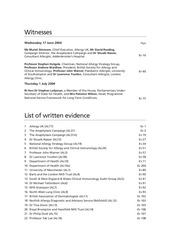
Witnesses
Wednesday 17 June 2004
Ms Muriel Simmons, Chief Executive, Allergy UK, Mr David Reading,
Campaign Director, the Anaphylaxis Campaign and Dr Shuaib Nasser,
Consultant Allergist, Addenbrooke’s Hospital.
Professor Stephen Holgate, Chairman, National Allergy Strategy Group,
Professor Andrew Wardlaw, President, British Society for Allergy and
Clinical Immunology, Professor John Warner, Paediatric Allergist, University
of Southampton and Dr Lawrence Youlten, Consultant Allergist, London
Allergy Clinic.
Page
Ev 10
Ev 60
Thursday 1 July 2004
Rt Hon Dr Stephen Ladyman, a Member of the House, Parliamentary UnderSecretary of State for Health, and Mrs Patience Wilson, Head, Programme
National Service Framework for Long-Term Conditions.
Ev 75
List of written evidence
1
Allergy UK (AL77)
Ev 1
2
The Anaphylaxis Campaign (AL31)
Ev 2
3
The Anaphylaxis Campaign (AL31A)
4
Dr Shuaib Nasser (AL72)
Ev 27
5
National Allergy Strategy Group (AL19)
Ev 34
6
British Society for Allergy and Clinical Immunology (AL24)
Ev 51
7
Professor John Warner (AL3)
Ev 57
8
Dr Lawrence Youlten (AL58)
Ev 58
9
Department of Health (AL10)
Ev 71
Ev 19
10 Department of Health (AL10a)
Ev 204
11 University of Manchester (AL1)
Ev 89
12 Barts and the London NHS Trust (AL4)
Ev 90
13 South & West England & Wales Clinical Immunology Audit Group (AL5)
Ev 91
14 Dr Michael Tettenborn (AL6)
Ev 91
15 NHS Grampian (AL7)
Ev 92
16 North-West Lung Clinic (AL9)
Ev 93
17 British Association of Dermatologists (AL11)
Ev 102
18 Norfolk Allergy Diagnostic and Advisory Service (NADAAS) (AL12)
Ev 103
19 Dr Tina Dixon (AL13)
Ev 105
20 Royal Brompton and Harefield NHS Trust (AL14)
Ev 106
21 Dr Philip Doré (AL15)
Ev 107
22 Professor Tak Lee (AL16)
Ev 108
�
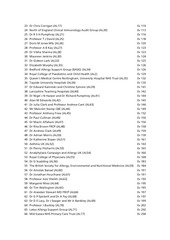
23 Dr Chris Corrigan (AL17)
Ev 110
24 North of England Clinical Immunology Audit Group (AL20)
Ev 113
25 Dr R S H Pumphrey (AL21)
Ev 116
26 Professor T J David (AL25)
Ev 118
27 Doris M Jones MSc (AL26)
Ev 120
28 Professor A B Kay (AL27)
Ev 123
29 Dr Vibha Sharma (AL28)
Ev 123
30 Maureen Jenkins (AL30)
Ev 124
31 Dr Gideon Lack (AL32)
Ev 125
32 Elizabeth Murphy (AL33)
Ev 126
33 Bedford Allergy Support Group (BASG) (AL34)
Ev 126
34 Royal College of Paediatrics and Child Health (AL2)
Ev 129
35 Queen’s Medical Centre Nottingham, University Hospital NHS Trust (AL35)
Ev 132
36 Tayside University Hospitals (AL36)
Ev 133
37 Dr Edward Kaminski and Christine Symons (AL39)
Ev 141
38 Lancashire Teaching Hospitals (AL40)
Ev 142
39 Dr Nigel J N Harper and Dr Richard Pumphrey (AL41)
Ev 144
40 Alan M Edwards (AL42)
Ev 145
41 Dr Julia Clark and Professor Andrew Cant (AL43)
Ev 146
42 Mr Malcolm Stamp CBE (AL44)
Ev 149
43 Professor Anthony Frew (AL45)
Ev 152
44 Dr Paul Cullinan (AL46)
Ev 156
45 Dr Mazin Alfaham (AL47)
Ev 156
46 Dr Rita Brown FRCP (AL48)
Ev 158
47 Dr Andrew Clark (AL49)
Ev 159
48 Dr Adrian Morris (AL50)
Ev 159
49 Dr Katherine Sloper (AL51)
Ev 161
50 Asthma UK (AL52)
Ev 163
51 Dr Penny Fitzharris (AL53)
Ev 165
52 Analphylaxis Campaign and Allergy UK (AL54)
Ev 166
53 Royal College of Physicians (AL55)
Ev 168
54 Dr G Scadding (AL56)
Ev 183
55 The British Society for Allergy, Environmental and Nutritional Medicine (AL59)
Ev 184
56 Dr Amolak Bansal (AL60)
Ev 191
57 Dr Jonathan Hourihane (AL61)
Ev 191
58 Professor Aziz Sheikh (AL62)
Ev 193
59 Margaret Moss (AL64)
Ev 195
60 Dr Tim Wallington (AL65)
Ev 195
61 Dr Alaisdair Stewart MD FRCP (AL66)
Ev 197
62 Dr G P Spickett and Dr A Fay (AL68)
Ev 197
63 Dr D E Lacy, Dr J Seager and Mr A Bardsley (AL69)
Ev 199
64 Professor J Buckley (AL70)
Ev 202
65 Latex Allergy Support Group (AL71)
Ev 202
66 Mid Sussex NHS Primary Care Trust (AL77)
Ev 204
�
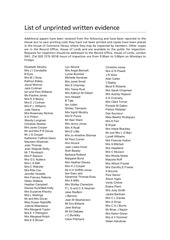
List of unprinted written evidence
Additional papers have been received from the following and have been reported to the
House but to save printing costs they have not been printed and copies have been placed
in the House of Commons library where they may be inspected by members. Other copies
are in the Record Office, House of Lords and are available to the public for inspection.
Requests for inspection should be addressed to the Record Office, House of Lords, London
SW1. (Tel 020 7219 3074) hours of inspection are from 9:30am to 5:00pm on Mondays to
Fridays.
Elizabeth Murphy
Mrs J I Constable
B Eyre
Mrs M J Stow
Kathryn Bailey
Joyce Morrow
Jack Codman
Ian and Pam Williams
Ms Pauline Jones
Mrs R S Beeny
Mrs D J Colman
Mrs P L Williams
Julie Owens
Mrs Rosemary Nichols
S A Prriton
Wendy Longman
Christine Skelton
Mrs Janet Cooper
Mr and Mrs P R Davey
Mr J G Cooper
Katherine Trafford-Owen
Maureen Wiseman
Joan Thomas
Joan Walpole Reilly
Mr T Rombach
Mrs P Ranson
Mrs G C Nullens
Mrs L A Bell
Mrs C Webster
Mrs Rita Cox
Jennifer Howells
Mrs Frances Rabone
Helen Wallace
Heather Campbell
Denise Hunt/Matt Kelly
Mrs Suzanne Khechy
Mrs L Wellings
Mr and Mrs Doran
Miss Susan Radcliffe
Joanne Meaneaux
Mrs Margaret Taylor
Mrs E Y Pilkington
Mrs Margaret Rolph
Mrs E E Brown
Lyn Allcock
Mrs Angel Bennett
Lynee Bucklow
Michelle Kershaw
Mrs Janet Small
Mrs E Charnley
Mrs Tessa Rust
Mrs Kathryn M Gilbert
Ann Hewlett
B Tate
Ian Julian
Shirley Tidmarsh
Mrs Ingrid Murphy
Mrs D Purvis
Mr Alan Ward
Mrs Jenny Jones
Mrs A Ryall
Mrs D Little
Mrs Jo-Ameline Shamas
Mr Paul Curran
Ann Alcock
Jean Lewis-Hood
Ruth Beeley
Barbara Rutland
Margaret Bond
Mrs Heather Davies
Mrs H J Cooper
Mr A H Griffith-Jones
Iain Esau and
Saramma Thomas-Esau
Mrs A Mills
Mrs Shirley Cleverdon
P L G and C A Hayman
Jane Redfern
J Benson
Jean M Stephenson
Mr Eric Birbeck
Jane Bishop
Mr Ed Debaes
J C Buckley
Clare Pritchard
Christine Jones
Mrs G R Powell
J R Winn
Alan Carter
V Bailey
Beryl E Roberts
Mrs Sarah Chapman
Mrs Audrey Rapson
A S Cromarty
Mrs Clare Turner
Pamela M Gallon
Patrick Webster
Des Seymour
Miss Beatriz Rodriguez
Mrs K Farr
B Wyatt
Mrs Hazel Brackley
Mr and Mrs L G Barr
Lynett Williams
Mrs Frances Hutton
Mrs S Mitchell
Mrs Headland
Mrs C Musson
Mrs Rhoda Noble
Marjorie Roff
Mrs Allison Frazier
Mrs Dorothy E Fowler
A Bourne
Paul Senior
Alison Inglis
Verity Chilver
Elaine Plant
Mrs Judy Smith
Jackie Banham
Mrs C L Davies
Mrs A Snow
Mrs C A J Burns
Mr Brian J Naylor
Mrs Karen Green
Mrs A V Hommel
Helen Handman
�
Mr R Williams
Mrs M Collier
Mr and Mrs Holt
E Margaret Gooneratne
Dr P E Williams
Muriel A Simmons
Mrs I M Wood
Gisele Cole
Miss Margaret J Reichlin
Mrs D Harrington
Joan Ingham
Miss Louise Hunt
Caroline F Miller
Mrs Diane Hibbert
G and A Owen
Jennifer Brown
Gillian Fox
Clare Gaen
Sheena Fisher
Mrs Shelagh Woolley
Mrs Elizabeth Pogson
Gail Peake
Bree Evans
Eric Jethro
Ivan Bexon
Phyllis Marian Torry
Mrs L Pillinger
Mrs Marion Hughes
Mrs Angela Kilmartin
Julian Berry
Mrs Angela Cox
Mrs Maxine Zeltser
Mrs Linda Tress
Martin O'Leary
Mrs C M Beaver
Mrs M H Talbot
Mrs Brenda Andrews
Janet Miller
June Mills
Doreen Thorpe
Miss Julie Barnham
Mrs T E Godfrey
Caroline Stephenson
J Reshelt-Thomas
Mrs C A Ashworth
Mrs Shiela Wheatcroft
John Rowley
Christine Fitzmaurice
Mr Keith Barnsley
Muriel Jones
Miss Denise Dolan
Mrs Stella Clark
Jeanette Fenner
Mr T Hughes
Mrs E Baker
Beverley Appleton
Mary Hill
D V Gawn
Lynn Macgill
Mrs Michelle Curtis
Mrs L Cope
Mrs Jane Hume
Mrs Donna E Scotter
Mrs Mieczyslawa Pascoe
Gill Dodsworth
Mrs C Rosen
John Telford
Mrs Z Clarke
Miss Susan J Tupper
Mrs Jean Atkins
Elizabeth Waldron
R F Howard
T Barrow
J Claydon
S Rawlinson
M McLaughlin
J Pope
J Rablin
M Murray-Palmer
C B Jordan
J Quipp
E M Taylor
C Monk
G Chegwyn
A Clarke
R Spencer
M Oliver
S Field
T Ryder
D Shilling
C Stokoe
M and J Armer
J E Sandall
C Hislop
L Clendon
J Gokcen
C Sadler
B Saul
S McCloskey
S C Baxter
A Clarke
V Dand
J Racle
E English
J Riches
L Swain
P Schmidt
A Marshment
J Coote
J Martin
P Williams
C Wilson
J Whelbourn
F M Pitchford
A Pargeter
J Parker
S Davies
J E and S E Phillips
A Jones
D and S Cox
R Cowley
N Clark
Dr G Scott
Dr M Lucey
A Franks
O Sanderson
J Hancox
S K Osborne
A Waghorn
C George
J and N Colesby
A M Clarke
H Green
A Andrews
D Barker
L Thomas
P Kissagizlas
P S Diver
N Le Jeune
S Moore
A Green
S Scarratt
S Lane
C Williams
L Smith
L John
N Freeman
L Castillo
S P Bell
E Yamson
M Riley
N Hillyard
J Tasker
�
H Legg
R A Ford
L Garner
A Hamilton
M Solk
M King
J Stevenson
Dr C Clifford
D G Gardiner
G Isaacs
M Le Resche
G R Lander
R Hedderman
J McIntosh
P L Williams
P Allen
J Scott
L M Hughes
C Orme
L A Robinson
A Pledge
V Fordham
A Keeling
B Shenyill
F M Murray
F Easey
D M E Gordon
J M Evans
I, V and L Newman
C Micallef and A Yenez
W J Cleghorn
B Huxley
D Horn
P M Whitaker
P J Lomas
A E E Russell
C d’Aboville
W D Sly
A McAllister
J K Davis
M Dixon
R Gibbs
E and S Colley
K Yule
D M and G Kelly
C S Leaver
W Smith
H Duncombe
C and C Phipps
S J Tomlinson
T Kettle
J Gibbons
J R Murray
E E Reeves
C Butler
P White
J Harbottle
B Graham
S Lefley
�
�
Health Committee: Evidence Ev 1
Oral evidence
Taken before the Health Committee
on Thursday 17 June 2004
Members present:
Mr David HinchliVe, in the Chair
Mr David Amess
John Austin
Jim Dowd
Dr Richard Taylor
Dr Doug Naysmith
Memorandum by Allergy UK (AL 77)
Introduction
1. Allergy UK is the operational name of The British Allergy Foundation a charity formed in 1991 to
provide information, advice and support for people with allergy and their carers.
2. In response to demand, Allergy UK also provides education and information to healthcare
professionals particularly aimed at Primary Care Health services. Education has been carried out through
Masterclasses and from September 2004 will be conducted via an e-learning European Diploma in Allergy.
3. 80,000 people are registered supporters of Allergy UK with the majority being suVerers from non-life
threatening allergies but whose lives are substantially aVected on a daily basis by the impact of allergy.
4. Through its helpline, telephone and internet services over 58,000 individual requests for assistance
have been dealt with during the last year and in excess of 250,000 fact sheets, leaflets and booklets issued.
The number of people seeking assistance from Allergy UK has for the last three years shown an average
annual growth of 21%.
5. In addition to the direct services shown above Allergy UK also provides support through its volunteer
network of 208 support contacts that provide practical advice and a listening ear to people with allergy
especially those trying to find suitable management techniques.
Problems Faced by Allergic Patients
6. Allergy UK believe that people with allergy should be treated with the same level of care as every other
patient within the NHS; currently this is not the case. Detailed below are reasons why people seek the
services of Allergy UK:—
7. Lack of knowledge and understanding of allergy by General Practitioners.
A high percentage of people contacting us report that their General Practitioners do not understand and
in a number of cases do not accept that the patient is suVering from an allergic reaction. Others report that
where allergy is the diagnosis there is little understanding of the impact on the patient’s life or the potential
seriousness of an on-going allergy problem.
In a survey for our 2003 report “Stolen Lives” we questioned 6,000 callers to our helpline. 74.8% stated
that they had never been asked by their Doctor or Nurse how their allergy aVected their quality of life.
8. Funding issues for testing.
Patients frequently complain that their GP has informed them that they have insuYcient funds to pay for
blood testing at the local hospital for more than a limited number of allergens. Patients are then regarded
as having been allergy tested when in fact given the limited knowledge of allergy at Primary Care level the
cause of the problem could well have been missed.
9. Inability to gain a referral to see an allergy specialist.
A high level of calls are received seeking advice on how to gain a referral to an allergy specialist. This can
on occasions be due to a lack of willingness on the part of the General Practitioner to provide a referral but
more frequently is that the General Practitioner does not know where to refer the patient and advised them
to contact us to obtain the necessary information.
10. Lack of allergy specialist service.
Advice is commonly sought from areas where there is no allergy service. Patients seek advice on how they
can obtain NHS funding to reach the nearest specialist and how they can obtain an appointment when they
are often a great distance from the nearest specialist.
�
Ev 2 Health Committee: Evidence
11. Inappropriate referrals.
Patients seek information and advice on how to manage their situation when they have been
inappropriately referred and have been informed by the specialist that help for their condition is not
available in that clinic. This is particularly common where people with allergy are referred to organ based
specialists who realise that the patient does not have a condition suitable to his speciality.
12. Complementary and Alternative Medicine.
An increasing number of calls are received from people seeking advice on complementary and alternative
medicine. Information is generally sought on where testing and treatment can be obtained, the validity of
the tests and treatments and the costs involved. The majority of callers for this type of information state that
they are being forced to turn to testing and treatment outside of the NHS and established treatments as they
are unable to obtain help from the NHS for their problems.
Allergy UK has a great concern regarding some of the alternative clinics who provide clinically unproven
tests and treatments at considerable cost to the patient and sometimes the NHS. The costs, when met by the
patient, often results in considerable emotional distress when the patient is no longer able to continue to
meet the costs involved.
13. Lack of Patient Information and Management Advice.
A very high percentage of calls received are from people seeking an explanation of their test results and/
or advice on how to manage their allergy within their daily lives. Where patients are referred by their GP
to have a hospital blood test for allergy they are frequently given the results in technical terms without any
explanation of what it actually means. Patients who are diagnosed with particular allergies are rarely given
a management plan to help them avoid the allergen concerned and thereby reduce their symptoms.
Recommendations from Allergy UK
14. As a very high percentage of people with non-life threatening allergy could be diagnosed and treated
at Primary Care level, education in allergy should be funded and provided for healthcare professionals at
Primary Care level.
15. Allergy clinics within Primary Care should be established with the patient able to easily identify the
person managing that clinic.
16. Primary Care Allergy Clinics should be equipped to use appropriate means of diagnosing and
managing allergy in the local centre without regard to cost.
17. Expertise and education to provide an ongoing support and management service for people with
allergy should be available at Primary Care level.
18. Specialist allergy services should be available to all patients with allergic disease and these services
should be clearly defined as allergy services able to treat the whole person and should not be part of an organ
based clinic.
19. Specialist allergy services should be available to patients within a reasonable travelling distance from
their home.
20. People with life threatening allergy should be appropriately referred after emergency treatment to an
allergy specialist as a matter of urgency.
21. On-going education on allergy for Secondary Care Health Professionals is highly recommended.
June 2004
Memorandum by the Anaphylaxis Campaign (AL 31)
Introduction to the Anaphylaxis Campaign
1. The Anaphylaxis Campaign is a national patient support group representing people who are at risk
from severe allergic reactions including the most extreme form, anaphylaxis.
2. During anaphylaxis the whole body is aVected. Symptoms include swelling in the throat and mouth,
severe asthma, a sense of impending doom, a dramatic fall in blood pressure and collapse and
unconsciousness. Extreme cases can be fatal. Causes include foods such as peanuts, tree nuts, egg, milk and
seafood; certain drugs; insect stings; and natural rubber (latex).
3. The Anaphylaxis Campaign is a registered charity (No 1085527) set up in 1994 to raise public
awareness of severe allergic conditions, inform and educate those aVected, and maintain dialogue with the
Government, food industry and health professionals. Main sources of income are membership subscriptions
and donations, and fundraising by volunteers.
4. There are no nationally agreed statistics for those at risk of anaphylaxis but experts have extrapolated
from individual studies, and their own experiences, to reach a conservative estimate of one million people
across the UK. About half of these are at risk of food-induced anaphylaxis.
�
Health Committee: Evidence Ev 3
Our Submissions
5. We have provided three papers for consideration by the Committee, and have included nine
testimonials from members of our organisation. We would like to thank the Committee for allowing us to
present these papers.
6. Most of the facts, quotes and experiences highlighted in our submissions feature people whose allergy
trigger is food. This is because the membership of the Anaphylaxis Campaign (7,746 people on 24 May 2004)
is made up primarily of people with food allergy problems. But we acknowledge that the other causes of
anaphylaxis are also important, resulting in a significant impairment of quality of life.
7. Peanuts and tree nuts figure prominently in our evidence because allergies to these foods are the ones
that most commonly cause fatal and life-threatening reactions. A recent study showed that the incidence of
peanut allergy has tripled in the last decade and now aVects one in 70 children across the UK (ref Grundy
J, Matthews S, Bateman B, Dean T, Arshad S H Rising prevalence of allergy to peanut in children: Data
from two sequential cohorts. Journal of Allergy and Clinical Immunology Vol 110 No 5 p 784–789).
8. Our three papers are attached:
i. Anaphylaxis: the burden of anxiety and the role of telephone helplines.
ii. The unmet needs of patients with anaphylaxis.
iii. Fatal and near-fatal anaphylaxis: some case studies.
1. Anaphylaxis: the Burden of Anxiety and the Role of Telephone Helplines
Summary
1. This note addresses the lack of availability of eVective information about anaphylaxis through the
NHS. In response to this unmet need, the Anaphylaxis Campaign runs a helpline and provides information
to those aVected. Helpline staV report an extreme burden of anxiety among these people caused by the
knowledge that anaphylaxis can kill. The message conveyed by helpline staV is that anaphylaxis is serious
but manageable. With high-quality information and guidance, those aVected can be empowered to manage
the condition and protect themselves from harm. In our experience, this is frequently impossible because of
the lack of availability of help through the NHS.
Background
2. There has been a dramatic increase in allergy in recent years. The incidence of allergy has risen, and
the nature of allergy has changed. Severe and potentially life-threatening allergies are common and a gulf
is growing between the need people have for eVective advice and the availability of professional services.
There is much suVering, often aVecting whole families.
Responding to an unmet need
3. The Anaphylaxis Campaign receives between 16,000 and 20,000 enquiries annually—just under half
of them coming via the telephone helpline and the rest via letters and email. All telephone calls are monitored
and relevant details written onto a monitoring record. The vast majority of enquirers are seeking
information about food allergy. Helpline staV frequently encounter deep anxiety among families aVected
by allergies, particularly where those allergies are potentially life-threatening. Lack of information is the
cause of this distress. It is common for patients to report that they have been unable to obtain adequate help
and information from the medical profession.
4. To meet this need, the Anaphylaxis Campaign sends out 140,000 leaflets and fact sheets per annum.
These are provided not only to patients and their families but also to schools, education authorities, colleges,
playgroups, youth groups, hospitals, doctors’ surgeries and the food industry. Most are distributed free,
although donations are sought. Training videos are produced for parents, schools and health professionals.
5. There is an Anaphylaxis Campaign website, which receives almost 4,000 hits per day.
6. Educational programmes are organised for allergic teenagers and for parents of allergic children.
Context
7. Witnessing a person suVering anaphylaxis is a frightening experience. There may be extreme swelling
in the mouth and around the eyes, severe breathing problems caused by asthma or swollen tissues in the
throat, and a dramatic fall in blood pressure leading to unconsciousness. It is not surprising that when a
person has suVered anaphylaxis, and is at risk of further reactions, an extreme burden is placed on the entire
family. This is particularly true where food-allergic children are concerned. The question never far from the
parents’ minds is: Will the next meal be the fatal one?
�
Ev 4 Health Committee: Evidence
8. There is some justification for this high level of anxiety. Every year, a minimum of 6-7 deaths from
food-induced anaphylaxis are reported, as well as 4-5 caused by insect stings and 9-10 caused by drugs. The
true figure is almost certainly higher because of misdiagnosis or misreporting1. Peanut allergy now aVects
one in 70 children in the UK2 and is the commonest food allergy to cause fatal or life-threatening reactions.
When tragedies or other serious incidents occur, the media reporting is frequently sensational and alarming.
Such reports add to the already heavy burden carried by families who, in many cases, have seen a loved-one
rushed to A&E.
9. A mother whose son suVered his first experience of anaphylaxis while on holiday wrote to the
Anaphylaxis Campaign saying: “My little boy suVered a very severe allergic reaction to a slice of cake in
a restaurant. The cake contained walnuts. I am terrified I will lose him. I feel we are living with a ticking
timebomb.”
10. Day-to-day issues such as confusing food labelling, the increasing prevalence of nut traces warnings
on food packets and a low level of allergy awareness in catering establishments exacerbate people’s anxiety.
Parents of food allergic children use phrases like “playing Russian roulette at mealtimes.” They often
genuinely believe that their child will not reach adulthood. They are unaware that anaphylaxis, whilst
serious, is manageable and that deaths can be prevented. Those aVected can be empowered to manage their
medical condition eVectively and minimise risk.
11. The anxiety linked with peanut allergy was quantified by a research study showing that children with
the condition are more anxious than children with insulin-dependent diabetes mellitus3. Children from both
groups completed “quality of life” questionnaires and recorded with a camera how their condition aVected
their lives over a 24-hour period. The results were then analysed.
12. In comparing the two groups, the researchers found that children with peanut allergy were more
afraid of potential hazards, more anxious about eating and felt more restricted regarding physical activities.
The researchers believe this anxiety may stem from the feeling that they have little control over their lives.
The team’s report said this high state of anxiety among allergic children was unjustified and did not have
to be permanent. With appropriate education about allergy management, children could be helped to
develop self-confidence and a positive attitude.
13. Appropriate education involves basic messages about avoiding harmful allergens, recognition of
symptoms, and self-treatment. It also requires a commitment to carrying prescribed medication at all times.
A key word here is “empowerment.” Those aVected can learn to take control of their medical condition and
minimise the risks in their lives.
14. Intramuscular adrenaline (epinephrine) is regarded as the most important treatment for a lifethreatening allergic reaction4. Studies suggest that most fatalities occur in cases where early injectable
adrenaline is not available or is given too late4. Patients can be reassured that prescribed adrenaline
injections such as EpiPen or Anapen will get them out of trouble if administered appropriately and
promptly. Importantly, they must receive basic guidance on how to use them. At least one study has shown
that patients have a low level of understanding about their use5.
15. There is evidence that the risks are reduced if the patient receives expert advice and assessment in a
specialist allergy clinic and participates in a management plan6. Where this happens, fewer patients have
further reactions and when these do occur, they are mostly mild. Furthermore, the presence of asthma in a
patient with allergy must be considered a significant risk factor, and the patient must be encouraged, with
plenty of helpful guidance, to keep the asthma well controlled7.
16. Starved of reliable information, people aVected by anaphylaxis frequently search the Internet.
Unfortunately many allergy websites provide information that is either inaccurate, confusing, out of date,
unnecessarily alarming, written in terms lay people cannot understand, or promoting questionable allergy
tests and treatments.
Deficiency in NHS allergy services
17. In our experience, much suVering is caused by the fact that people at risk of anaphylaxis are unable
to access information and advice from NHS allergy services. Not-for-profit organisations, through their
helplines and other information services, fulfil an important need that should be met by the NHS. Calls to
our helpline come frequently from people who have left their GP’s surgery with no help at all, or have met
barriers in their attempt to be referred, or have been referred but have found the service falling short of
their needs.
18. It is unreasonable for the Department of Health to expect that a charity should run a comprehensive
information and help service, because this depends to a very large extent on voluntary donations. Should
the economic climate change then the service might terminate at short notice. Given the expertise that now
rests with the Anaphylaxis Campaign, perhaps the Department of Health should consider ways in which it
might finance its continuation.
19. Evidence of the deficiencies referred to above is provided in our following paper, “The needs of
patients with anaphylaxis.”
�
Health Committee: Evidence Ev 5
References:
1. Pumphrey, R S H, (2000). “Lessons for the management of anaphylaxis from a study of fatal
reactions”. Journal of Clinical and Experimental Allergy 30:1144-50.
2. Grundy J, Matthews S, Bateman B, Dean T, Arshad S H. Rising prevalence of allergy to peanut in
children: Data from two sequential cohorts. Journal of Allergy and Clinical Immunology Vol 110 No 5
p784–789.
3. Natalie J Avery, Rosemary M King, Susan Knight, Jonathan O B Hourihane. Assessment of quality
of life in children with peanut allergy. Pediatric Allergy and Immunology. Volume 14 Issue 5 Page 378.
October 2003.
4. Resuscitation Council (UK), The Emergency Medical Treatment of Anaphylactic Reactions for First
Medical Responders and for Community Nurses Revised January 2002.
5. Blyth T P, Sundrum R. Adrenaline auto-injectors and schoolchildren: a community based study. Arch
Dis Child 2002; 86:26-27.
6. Ewan P W, Clark AT. Long-term prospective observational study of patients with peanut and nut
allergy after participation in a management plan. Lancet 2001; 357: 111-15.
7. Roberts G, Patel N, Levi-SchaVer F, Habibi P, Lack G. Food allergy as a risk factor for lifethreatening asthma in childhood: a case-controlled study. J Allergy Clin Immunol. 2003 Jul;112(1):168-74.
2. The Unmet Needs of Patients with Anaphylaxis
Summary
1. This note has been written to give the Committee a direct sense of what people with anaphylaxis want
from the health service and what they actually receive. Sadly many of the children, families and adult
patients we represent are not getting adequate care from the NHS and their reasonable expectations are not
being met. We are delighted that the Health Committee has decided to investigate this issue. We endorse the
2003 report of the Royal College of Physicians, “Allergy the Unmet Need”, as the most direct way of
building an allergy service within the health service. It is discouraging that the Department of Health and
NHS leadership have so far been unable to address directly either the problem or the proposals for action
set out by the College.
Examples of unmet need
2. The following is a selection of real-life quotes and reported experiences, taken from letters and
telephone calls to the Anaphylaxis Campaign from members living in England. All have been reported
during the last two years and many of them have been repeated in a similar form on many occasions.
— Letter from the mother of a child who had suVered an anaphylactic reaction to nuts: “I am going
out of my mind with worry and have been told I must wait three months before I see a consultant.
My GP knows very little and would rather say nothing. Please can you help me?”
— Reported quote from a GP to the family of a nut-allergic girl: “There’s nothing I can do. She will
just have to go away and avoid nuts.”
— Reported quote from a GP who was unconfident about diagnosing a boy with suspected peanut
allergy: “Try giving him some peanut butter at home and see what happens.”
— Reported quote from a GP who refused to prescribe adrenaline: “It’s more dangerous than the
symptoms it is meant to treat.” This reflects a common misunderstanding.
— Examples showing incomplete diagnosis: Two young women who died from allergic reactions to
nuts had received good asthma care from their GPs, but their families report that their food allergy
had never been considered.
— Example showing lack of diagnostic expertise: A GP who failed to recognise vomiting as a
symptom of allergy told the child’s parents, “He must have picked one of those bugs that are going
round.” A correct diagnosis of allergy was made by another doctor at a later date.
— Example of inadequate allergy care at secondary level: A family in North Devon spent many
months of anguish and uncertainty, worried about their little girl’s allergy, until finally being
referred to a hospital in London, where they received excellent care.
— Example of inadequate care at secondary level: A child aged six months had a severe reaction to
egg. It took ten months to see a consultant, but this was not an allergist. Subsequently the family
waited a month for allergy test results. When the test results arrived, the GP was unable to
understand them because they had not been explained by the consultant. Thus even in the case of
a child seen in hospital by a consultant running a clinic accepting allergy cases, the advice and level
of expertise was not adequate.
�
Ev 6 Health Committee: Evidence
— Example of inadequate care at secondary level: A five-year-old boy with severe food allergy was
referred to a skin specialist for his eczema and a paediatrician for his asthma. There was no referral
to an allergy specialist and therefore no holistic approach that took account of the full picture,
including his food allergies. This is a common experience.
— Example of a long wait to see a consultant: A severely food-allergic girl faced a six-month wait,
and suVered a serious reaction requiring hospitalisation between being referred and seeing the
consultant.
— Example of a long wait to see a consultant: A man who had a cardiac arrest as a result of
anaphylaxis waited six months to see an allergist. The cause was immediately identified and he was
shown how to protect himself, but during this wait he had been at risk of another lifethreatening reaction.
— Example showing emergency care hampered by poor understanding: A teenage boy was taken to
hospital by ambulance and admitted after suVering a life-threatening reaction to cashew nut.
Recovering in hospital he was oVered a risotto meal containing cashew nut. His mother spotted
the nuts and intervened.
3. We accept that the above cases and quotes reflect the worst end of the scale, and furthermore we do
not wish to criticise individual medical practitioners concerned. After all, GPs are hampered by the fact that
training in allergy is virtually non-existent, and staV at secondary care level are often burdened with a heavy
workload. It must be stressed, too, that good allergy care does exist. At a few centres, a thorough diagnosis
is given, plenty of high-quality advice and guidance are given to the family, training in emergency care is
provided for schools and anaphylaxis management plans are tailored to suit the individual patient. A
woman who had her first anaphylactic reaction to almonds at the age of 47 was treated at A&E, referred to
an allergy specialist, seen within a short space of time and given a full allergy diagnosis. She now avoids a
range of foods that were causing symptoms and there has been a huge improvement in her health and
well-being.
4. Lacking this level of care, some patients pay to go privately; others try unproven methods of diagnosis
and treatment oVered by commercial, alternative therapists. One mother reported: “We were able to access
allergy services successfully because our entry point was via the private sector and subsequently as a result
of a research programme.”
What the people with anaphylaxis and their families need and want
5. People want access to good primary care: contact at their local surgery with a doctor or nurse trained
in the diagnosis and management of allergy.
6. Where symptoms are serious or complex, people want access to specialist care, and they need to be
referred quickly, in their area, to a consultant allergist who provides a dedicated service and covers the full
range of allergy.
7. People want continuity of care based on a personal allergy plan, which supports the day-to-day control
and management of their allergy and empowers them to take control of their lives. This requires from the
health service adequate time to be set aside for full and open discussion of an avoidance regime, symptoms
and treatments.
8. People want good emergency care—they need to know that during and after an emergency those
responsible for their care know what to do, based on approved emergency allergy management protocols.
Afterwards they need referral to an allergy specialist.
9. To make this happen we want local health authorities to invest in training their primary care workforce
in the management of allergy and the Government to commit to the establishment of a core of new allergy
specialists to give leadership to a modern allergy service. We believe that central direction will be essential
before there can be meaningful progress at a local level.
10. We have been directly involved in the work of the Royal College of Physicians, including the
discussion of possible ways forward. We totally endorse the recommendations of the College’s report,
Allergy the Unmet Need*, and are confident that these measures will begin to give the people we represent
the best chance of receiving an eVective and appropriate health service.
11. We recognise that improvements may take some time and it is necessary to be patient. But people
have already been waiting for a long time and asking for help. And there are things that the Department of
Health could do now.
12. What we cannot accept is indecision by Department of Health Ministers and attitudes that are
divorced from the realities of need and care.
13. We include with this report a selection of signed testimonials from members of the Anaphylaxis
Campaign who have agreed to outline the allergy care that they received under the NHS.
*Allergy—the unmet need: a blueprint for better patient care, published June 2003 by the Royal College of
Physicians.
�
Health Committee: Evidence Ev 7
3. Fatal and Near-fatal Anaphylaxis: Some Case Studies
Summary
1. This paper provides evidence that severe allergy presents a very real risk and not a theoretical one.
2. Information about cases where severe allergic reactions have occurred comes from the following
sources:
— The Anaphylaxis Campaign’s register of fatalities.
— Reports from our files.
— Detailed monitoring of people’s allergic reactions over a six-month period.
3. We present our conclusions about how those at risk can protect themselves, and we contend that risk
management depends on help from the NHS that is rarely available. A good management plan, which
requires accurate diagnosis, advice on avoiding allergens and the appropriate emergency medicines, has
been shown to reduce the risk. This is exactly what a specialist allergist provides. But most patients do not
get this. The health service fails these people.
4. Finally the paper records examples of serious mistakes made by food companies that have put allergic
consumers at risk. The intention here is to illustrate that life can be hazardous and unpredictable for people
with severe allergies, strengthening the need for good allergy services so that people can treat themselves
eVectively when reactions occur.
5. It is important to remember that there is no cure for anaphylaxis: self-protection must depend on
avoidance of allergens and treatment of symptoms when things go wrong.
Deaths from food allergy
6. As stated elsewhere, a minimum of six to seven deaths from food-induced anaphylaxis are reported
annually, as well as four to five caused by insect stings and nine to 10 caused by drugs.
7. Example one: A 13-year-old girl from Buckinghamshire died after eating a small amount of curry sauce
made with peanut butter. There was some mention in her doctor’s notes about peanut allergy, but there had
been no proper diagnosis and no prescribing of adrenaline. Her family had no idea that she was at risk of
a fatal reaction.
8. Example two: A Liverpool girl collapsed and died during a formal dinner at university after she ate a
dessert that—unknown to her—contained nuts. She knew she had nut allergy and had asked her GP for
help. Her GP had said: “Nothing can be done—just avoid nuts.” There had been no proper allergy diagnosis
or advice and no prescribing of adrenaline.
9. Example three: A Hertfordshire girl died after eating a chocolate containing nuts. Her asthma had been
investigated by at her local surgery, but her food allergy had not.
10. Example four: A British holidaymaker died after being stung by an insect in the Mediterranean. He
knew he was allergic to wasp venom, but had not been prescribed appropriate rescue medication.
11. The number of deaths reported annually (see point 5 above) is likely to represent an incomplete
picture. The true number of those who die from allergic reactions is almost certainly higher because of
misdiagnosis or misreporting1.
How deaths can be prevented
12. Deaths from food-related allergic reactions generate huge media interest. Unfortunately, reporting
is often inaccurate and it is diYcult for the reader to reach the correct conclusion about exactly what went
wrong. However, studies of deaths have been undertaken thanks to an association between the Anaphylaxis
Campaign and Dr Richard Pumphrey, of the North West Region Immunology Service. Our register of
fatalities draws clear conclusions about the circumstances under which people with food allergies usually
die. We deduce that most deaths are preventable. We contend that good medical management and an
understanding of allergen avoidance is crucial for lives to be saved. In many cases, the victim had not
received adequate medical advice.
13. Fundamentally our register of deaths is designed to formulate advice to help people with food
allergies to protect themselves. The aim is to save lives.
14. Dr Pumphrey obtains a large amount of information from coroners’ oYcers. This includes details of
the patient’s previous medical history, the circumstances leading to the fatal reaction, any treatment given
and information from the autopsy report. Increasingly pathologists work in close consultation with him.
Patient confidentiality is honoured at all times.
15. Conclusions reached by this project include the following:
— Nearly all those who died from their food allergy were asthmatic. Many had poorly controlled
asthma when they had the allergic reaction that proved fatal. We conclude that good daily control
of asthma is an important factor for saving lives from food allergy, a conclusion supported by
�
Ev 8 Health Committee: Evidence
another recent UK study2. Patients with allergy must obtain guidance on good asthma control
from their GP and this must be supplemented with advice and guidance relating to the patient’s
other allergic conditions, such as food allergy. In our experience this holistic approach to allergy
is lacking from many allergy centres, where there is a tendency to specialise in one area of allergy
(eg skin disorders or ENT).
— In 22 cases out of 54 that were studied in some depth and published in the medical literature, the
patient had never been prescribed emergency adrenaline3. We believe this may also have been the
case for others in the group, but information to confirm this is not available. In some cases,
adrenaline had been prescribed but was not being carried on the day of the fatal reaction. What
was lacking here was patient education. Getting young adults to “own” and manage potential risk
is a challenge that can be met only by a proper diagnosis and a thorough risk assessment.
— Well over half of the 54 food-related deaths reported in the published study1 involved people aged
15-30. Special eVorts need to be made to target this age group.
— Three-quarters of the reported deaths occurred when food was bought in catering establishments,
such as restaurants, hotels and takeaways. Education about severe food allergy should include
special advice about eating out.
— In some cases where the victim had asked for a meal without nuts, the person serving (and in
several cases even the caterer) had not been aware that the food contained nuts. In other cases, the
request for nut-free food had either been misunderstood or forgotten. This shows that some
highly-allergic patients know they need to be extremely vigilant at mealtimes, but mistakes still
occur. These cases highlight the importance of prescribing rescue treatments for “at risk” allergy
patients and educating them about their use.
16. Dr Pumphrey stresses the importance of an allergy management programme for each patient,
including the need for extreme care and vigilance, and good control of asthma. The allergic person must
always be prepared to treat reactions triggered by accidental exposures. On a few occasions the adrenaline
injection was not eVective. Dr Pumphrey believes there are two reasons why this may happen: the patient
has not been trained how to use it; or the patient has been accustomed to over-using his or her reliever
inhaler, which may dampen the beneficial eVects of adrenaline.
17. The messages are clear. Patients at risk of anaphylaxis need good diagnosis, must be prescribed an
appropriate rescue treatment, and must be well educated about their allergy. This education includes
recognition of symptoms and training in the use of the adrenaline injection by a medical professional, such
as an allergy consultant, GP, practice nurse, or school nurse. This has been shown to be eVective in studies
of large numbers of people with serious nut allergies over many years after they had received appropriate
advice from a specialist allergist3.
Potentially fatal and other serious reactions
18. The following cases, describing near-fatal or potentially fatal allergic reactions, are taken from the
files of the Anaphylaxis Campaign. This is just a small sample of the severe reactions reported to the
Campaign. The intention is to show that many serious incidents take place outside the public’s knowledge,
unreported by the media. The risks are not simply theoretical.
19. Chris, a boy in his early teens living in Cambridge, is severely allergic to milk. He took one bite of a
pre-packed apple pie and suVered anaphylaxis. An investigation by his mother revealed that the pie
contained 0.006% milk protein. He was under the care of an allergist and had an emergency treatment plan,
so was able to be treated eVectively immediately.
20. A young man ate a chocolate bar carrying a retailer’s own-label. He suVered anaphylactic shock.
Tests by the public analyst showed the presence of peanut, which was the result of cross-contamination on
the production line. There was no warning on the label to indicate cross-contact with peanut.
21. Rachel, a woman in her 20s, reported a severe reaction requiring hospitalisation following a meal in
cafe in Guildford. Rachel told the Anaphylaxis Campaign that the dessert menu had nut logos on some
dishes, and asked about the tiramisu, which did not have a logo. The staV checked and checked again and
Rachel was served the tiramisu. She began to have a reaction, which became severe, and was taken to
hospital. The restaurant double-checked the box and found that the tiramisu she had eaten contained
hazelnut crumb.
22. Gemma, a Surrey schoolgirl, suVered a reaction in her school after touching a friend’s peanut butter
sandwich. A staV member administered her adrenaline injection and she recovered quickly.
23. Marc, a young man living in South London, reported a severe reaction from a meal in his local curry
house, where he ate regularly. He said the staV had told him twice that his menu choice did not contain nuts.
He was taken by ambulance to hospital, spent the weekend there and then a week recovering.
�
Health Committee: Evidence Ev 9
24. Ben, from London, suVered a severe allergic reaction to lupin flour. This case highlights the problem
caused by new, unusual allergens that are emerging (including exotic fruits such as kiwi and seeds such as
sesame). Until these allergens are better understood, GPs cannot be expected to know about them, let alone
know how to oVer advice. Management of unusual allergies requires the guidance of specialists until they
are understood better.
25. The Anaphylaxis Campaign’s detailed monitoring of allergic reactions looked at 109 reactions that
occurred over a six-month period between October 2000 and April 2001. Reactions ranged in severity from
localised nettle rash, to severe breathing diYculties, to full collapse. About a third of reactions were either
to unidentified allergens or to foods not previously identified as a risk, showing that avoidance of harmful
allergens is sometimes impossible. Even when adrenaline had been prescribed, some patients were reluctant
to use it, pointing to inadequate guidance on usage. Reactions involving children occurred in schools,
indicating a need to improve school policies. The number of reactions reported suggests that the incidence
of severe allergic reactions in the UK may have been underestimated in the past. These issues can only be
addressed by having an established allergy service with support and advice from primary, secondary and
tertiary care.
Mistakes in the food industry
26. The Anaphylaxis Campaign deals on a daily basis with complaints about food products suspected to
pose a risk for people with food allergy. Some cases are unsubstantiated or felt to carry minimal risk, but
a large number of products are felt to pose a significant risk to allergic consumers. Since January 2003 a total
of 34 cases have warranted an alert by mail from the Anaphylaxis Campaign to its members. These covered
a wide variety of allergens including milk, peanuts, nuts, egg, soya, sesame, wheat, gluten, chicken and yeast.
Trace amounts of allergenic ingredients can trigger symptoms in susceptible individuals. Recent cases
include:
27. Nuts were inadvertently omitted from the ingredient list of packs of muesli sold by a major retailer.
28. An incorrect label was applied to packs of salami, sold in a major supermarket. The product contains
milk, but the incorrect label made no reference to this.
29. Due to a packaging error, frozen “Jacket Wedges” containing egg and wheat did not have these two
ingredients listed.
30. A customer who bought a wholemeal loaf discovered several poppy seeds, believed to have been
present due to factory cross-contamination.
31. Packs labelled syrup and ginger loaf cake, sold by a major retailer, actually contained date and
walnut cake.
32. A woman who is severely allergic to sesame discovered several sesame seeds embedded in the bottom
of a pre-packed teacake. Her husband returned to the store and saw other packs on the shelves containing
sesame seeds. Local enforcement oYcers were informed but the retailer concerned declined to take
immediate action to protect consumers.
33. Carob ices labelled “100% dairy free” and “suitable for milk allergy suVerers” were found to contain
small but significant amounts of milk protein, the result of factory cross-contamination.
34. Jars of mincemeat containing nuts were distributed with incorrect labelling, which did not include
nuts in the ingredients list.
Conclusion
35. Plainly, improving the lives of people with severe allergies is a shared responsibility. The food industry
needs to improve its production methods and its communication; food safety enforcement oYcers need to
be “allergy trained” in order to be able to educate food businesses (they receive no formal education at
present); and the Food Standards Agency has a responsibility to play its part in protecting consumers.
Importantly, the allergic patient must also share a large portion of the responsibility. We have contended
in this series of papers that anaphylaxis is serious, but patients can be taught to “own” their allergy problem
and take control of their safety through careful risk management and self-treatment when things go wrong.
36. But for many, this is impossible given the present state of Britain’s poor allergy services. In order for
risk management to be eVective people need help, information and informed support. That is what they’re
not getting. Substantial improvements are needed in these services and we believe strongly that the Royal
College of Physicians’ report, “Allergy the Unmet Need”4, oVers the best hope that this will happen.
�
Ev 10 Health Committee: Evidence
References
1. Pumphrey, RSH, (2000). “Lessons for the management of anaphylaxis from a study of fatal reactions”.
Journal of Clinical and Experimental Allergy 30:1144-50.
2. Roberts G, Patel N, Levi-SchaVer F, Habibi P, Lack G. Food allergy as a risk factor for life-threatening
asthma in childhood: a case-controlled study. J Allergy Clin Immunol. 2003 Jul;112(1):168-74.
3. Ewan PW and Clark AT. Long term prospective study observational study of patients with peanut
and nut allergy after participation in a management plan. Lancet 2001; 357: 111-15.
4. Allergy—the unmet need: a blueprint for better patient care, published June 2003 by the Royal College
of Physicians.
May 2004
Witnesses: Ms Muriel Simmons, Chief Executive, Allergy UK, Mr David Reading, Campaign Director, the
Anaphylaxis Campaign and Dr Shuaib Nasser, Consultant Allergist, Addenbrooke’s Hospital, were
examined.
Q1 Chairman: Good morning. May I welcome you
to this session of our Committee. May I thank you
for your cooperation with this inquiry. Could I ask
you briefly to introduce yourselves to the
Committee.
Ms Simmons: I am Muriel Simmons. I am Chief
Executive of Allergy UK.
Mr Reading: I am David Reading, Founder and
Director of the Anaphylaxis Campaign.
Dr Nasser: I am Shuaib Nasser, Consultant Allergist
at Addenbrooke’s Hospital in Cambridge.
Q2 Chairman: In this opening area of questioning
could I just begin by confessing that many of us
perhaps do not know a great deal about this area.
One of the good things about undertaking inquiries
is that obviously we learn a lot from a range of
diVerent people and one of the things that certainly
impressed me in terms of the evidence and concerned
me in terms of the evidence we have had is the extent
of the problems—which I do not think many of us
were fully aware of. Some of the evidence talks about
a major epidemic of allergy, the UK being the
highest in the world for asthma symptoms, 30% of
the population with allergies. What are the causal
factors that seem to have lead to this epidemic, as it
has been termed? You could gain the impression
from some of the evidence that the more cleanliness
we have, the cleaner we are, particularly in terms of
the treatment of young children, the more we are
preparing them for a subsequent life facing diVerent
types of allergy. I wonder what your message is
about why we are where we are with this incredibly
diYcult problem.
Dr Nasser: I think this is a very important question.
We do not have a very good answer for this, but the
best answer is probably something called the hygiene
hypothesis which has been mentioned in the
evidence submitted. This essentially tells us that the
immune system has evolved to fight infection and in
our developed world, where children no longer get
infections, the immune system feels redundant. It
has really very little to do, so it goes after innocuous
targets. This is now increasingly seen in medical
practice. You have seen the figures, you have seen
the huge increase in the number of allergy cases.
Forty per cent of children are now thought to have
an allergy; up to 40% of the population, and 13-14
year olds especially, have hay fever; one-third of the
population, as you have mentioned, has asthma.
These are very high figures and are amongst the
highest in the world and comparable to some other
countries. But essentially the hygiene hypothesis
explains this reasonably well.
Q3 Chairman: As an introduction, could you tell us
why you feel that, despite the extent of this problem,
which is very apparent from the evidence we have,
we are so ill-prepared to deal with the numbers of
people who are aVected.
Dr Nasser: It has caught us by surprise. It has caught
the health service by surprise. The doctors have tried
to cope with this in a number of ways, but, because
allergy is a multi-system disease, it aVects the
immune system, which means it can aVect any
organ. Patients will often present with food allergy
but at the same time have very poorly controlled
asthma, they may have eczema and severe hay fever,
so it aVects many diVerent organ systems. The way
that our health service works is that if you have a
problem with your nose, you go to see an ENT
surgeon; if you have asthma, you go to see a chest
physician; but they are not prepared to treat all the
other conditions at the same time so they then have
to refer you on to another specialist, for example. It
has caught the health service by surprise. We are illprepared. We do not have the specialists to deal with
an allergy or a person with allergic disease that
aVects multiple systems, and it leads to gross
ineYciency and a waste of NHS resources.
Q4 Jim Dowd: You say it is the way the health service
works, are you sure it is not the way the medical
profession works?
Dr Nasser: I think they are one and the same thing.
Q5 Jim Dowd: Do you?
Dr Nasser: Yes, absolutely.
Q6 Jim Dowd: But the health service has to work the
way the medical profession works, not the other
way round.
Dr Nasser: I think we are talking in semantics here,
but essentially the health service works according to
the resources at its disposal. Doctors are trained to
look after separate organ systems but, having said
�
Health Committee: Evidence Ev 11
17 June 2004
Ms Muriel Simmons, Mr David Reading and Dr Shuaib Nasser
that, we do have the ability, and many other
countries have the ability, to treat allergy, and
allergists can be trained to look after multi-system
disorders. We are seeing here that there is a lack of
al
...
 Historical archive . public document