1
Egypt
Marine
Expedition
2016
Contact:
Cassandra Zinkievich
0/2 10 Regent Moray St
Glasgow, UK G3 8AQ
Email: 2174424z@student.gla.ac.uk
Kyle MacLaren
31 Kingslynn drive
Glasgow, UK G44 4JB
Email: 2088189m@student.gla.ac.uk
Egypt Expedition 2016
�
2
Contents
1. Introduction………………………………………………………………………………….……………..…3
1.1.
The
Red
Sea…………………………………………………………..………………………………….3
1.2.
Glasgow
University
Egypt
Marine
Expedition………………………………………...…..5
2. Expedition
Aims…………………………………………………………………………….…………….….6
2.1.
Collaboration…………………………………………………………………….……………….…6
2.2.
Research…………………………………………………………………………………...…………6
2.3.
Public
Outreach………………………………………………………….………………………...6
3. Research…………………………………………………………………………………………...………...….7
3.1.
Measuring
the
success
of
a
no-‐take
zone
in
marine
protected
area
Wada
El
Gamal………………………………………………………………………………………………………..8
3.2.
Investigating
the
Bold-‐shy
continuum
of
the
Freckled
Hawkfish
Paracirrhites
Forsteri
in
relation
to
their
growth
over
the
past
3
years
……..10
3.3.
Investigating
wave
exposure
on
Scleractinian
Coral
distribution
and
species
diversity
in
the
El
Quseir,
Red
Sea.………………………………….……………..13
3.4.
Quantifying
fish
community
structure
at
varying
depths
in
Abu
Sauatir..15
4. Public
Outreach…………………………………………………………………..……………….……..…16
4.1.
Outreach
in
Schools……………………………………………..……………………………..16
4.2.
Online
and
Social
Media……………………………………..…………………………….....18
5. Personnel……………………………………………………………………………………….…….……....18
5.1.
Local
Counterparts…………………………………………………………….…………….....18
5.2.
Academic
Advisors…………………………………………………………………………….18
5.3.
Student
Advisors………………………………………………………………………………...20
5.4.
Expedition
Team
Members……………………………………...………………………....20
6. Training……………………………………………………………………………..……………...………....27
6.1.
Dive
Training
in
Glasgow……………………………………..…………………………….26
6.2.
Dive
Training
in
Egypt…………………………………………………………..…………...26
6.3.
Marine
Theory
Class……………………………………………………...…………………...26
7. Logistics
and
Planning……………………..…………………………………….………………......….28
7.1.
Itinerary,
Transport,
and
Accommodation…………………………………………..……28
7.2.
Proposed
Budget……………….………………………………………….....……...……………..29
7.3.
Safety
Considerations/Risk
Assessment…………………………….……………...……..30
7.4.
Hazard
and
Safety
Precautions
Undertaken
During
Fieldwork……………….....30
7.5.
Potential
Hazards
Identified
by
FCO
and
Safety
Precautions…………………..…32
8.
References
………………………………………………………………………………………………....…34
Egypt Expedition 2016
�
3
1. Introduction
1.
Introduction
1.1.
The
Red
Sea
The
Red
Sea
is
a
rich
biological
hotspot,
with
over
5,000
species
in
total
(NCS,
2009).
While
scientifically
invaluable,
this
biodiversity
is
also
economically
fruitful,
with
an
estimated
worldwide
value
of
over
£19
billion
pounds
per
year
through
tourism
(Hicks
et
al,
2013).
Due
to
its
immensely
varied
ecosystem,
ranging
from
deep
pelagic
rifts
to
mangroves
and
corals,
and
its
relative
isolation
from
the
Indian
Ocean,
it
boasts
an
almost
unparalleled
level
of
biodiversity,
providing
organisms
of
all
shape
and
size
with
crucial
sites
for
nurseries,
living/shelter
habitat,
and
feeding
grounds.
Many
of
these
organisms
are
economically
valuable
to
the
surrounding
communities
and
in
turn
to
the
world
as
a
whole,
especially
as
17%
of
fish
species
found
in
the
Red
Sea
are
endemic
to
the
area,
as
are
6%
of
corals
(Reefcheck,
2010).
However
the
red
sea
is
tremendously
understudied.
Fish
stocks
worldwide
are
in
a
state
of
severe
decline,
with
as
many
as
two
thirds
of
fisheries
under
collapse.
Of
600
fisheries
monitored
by
the
Food
and
Agriculture
Organization,
96%
of
fisheries
are
currently
exploited,
with
7%
of
these
fully
depleted
(FAO,
2004).
The
Red
Sea
hosts
a
number
of
extremely
important
fisheries,
mainly
artisanal
and
small
commercial
fisheries,
but
also
many
large
foreign
commercial
vessels.
From
1988
to
1998,
there
was
a
43%
increase
in
finfishes
caught
in
the
Red
Sea,
and
a
215%
increase
in
invertebrates
caught
(PERGSA,
2002).
Fishing
in
the
red
sea
is
focused
on
shallow
coral
reef
environments
due
to
ease
of
access:
“There
are
some
reports
of
conflict
between
the
artisanal
and
industrial
fisheries
and
most
of
the
countries
have
rules
which
prohibit
industrial
vessels
from
working
close
to
the
shore.
Nevertheless,
because
of
lack
of
enforcement
they
are
reported
often
to
operate
in
the
shallow
inshore
waters.”
(PERGSA,
2002)
Destructive
fishing
methods
such
as
trawling
and
long-‐line
fishing
inflict
damage
indiscriminately,
destroying
corals
and
catching
anything
they
come
upon.
Many
times
this
includes
endangered
or
threatened
species
such
as
sharks,
turtles,
or
whales.
Turtles
are
also
highly
affected
by
fishing
in
the
Red
Sea.
Four
species
are
known
to
be
found
there,
with
Green
and
hawksbill
species
being
common
nesters
on
beaches.
Eggs
are
under
threat
from
the
problem
of
poachers,
while
those
which
survive
into
adults
are
under
vast
list
of
afflictions
ranging
from
irresponsible
coastal
development
to
pollution
(HEPCA,
2013).
Egypt Expedition 2016
�
4
The
governing
bodies
responsible
for
the
health
of
the
Red
Sea
include
the
governments
of
9
Arabian
States
and
monitored
by
The
Regional
Organization
for
the
Conservation
of
the
Environment
of
the
Red
Sea
and
Gulf
of
Aden
(PERSGA).
This
organization
works
for
the
better
management
and
protection
of
the
species
within
the
Red
Sea,
through
integrated
assessment
of
the
marine
environment.
PERSGA
has
produced
a
State
of
the
Marine
Environment
Report
(SOMAR)
in
2006,
detailing
the
development
of
protected
areas,
management
of
species,
and
methods
for
furthering
the
future
of
the
Red
Sea.
In
the
Red
Sea,
coral
reef
health
is
considered
generally
good,
with
20-‐50%
live
coral
cover,
positive
ratio
of
live
to
dead
coral
cover
as
well
as
high
diversity
of
key
and
indicator
species
(Kleypas
&
Eakin,
2007).
Anthropogenic
threats
such
as
that
of
oil
spillage
from
off
coast
rigs
along
with,
heavy
metal
accumulations,
and
both
chemical
and
physical
waste
from
the
coastline
are
all
contributing
to
the
degradation
of
coral
reefs
and
its
wonderful
life
within
the
red
sea,
(A.
Hasheem,
2007).
Climate
change
is
also
having
an
effect
on
coral
reefs,
resulting
in
community
shifts
affecting
communities
as
a
whole
(Lindahl,
Ohman,
&
Schelten,
2001;
Garpe,
Yahya,
Lindahl,
&
Ohman,
2006).
With
such
issues
in
the
red
sea,
it
would
seem
vital
for
every
effort
to
be
made
to
improve
its
quality,
not
only
to
keep
a
continued
flow
of
tourists
who
help
bring
in
large
sums
of
money,
enriching
the
economy,
but
to
also
save
what
is
a
productive,
breath
taking
and
important
ecosystem
on
Earth.
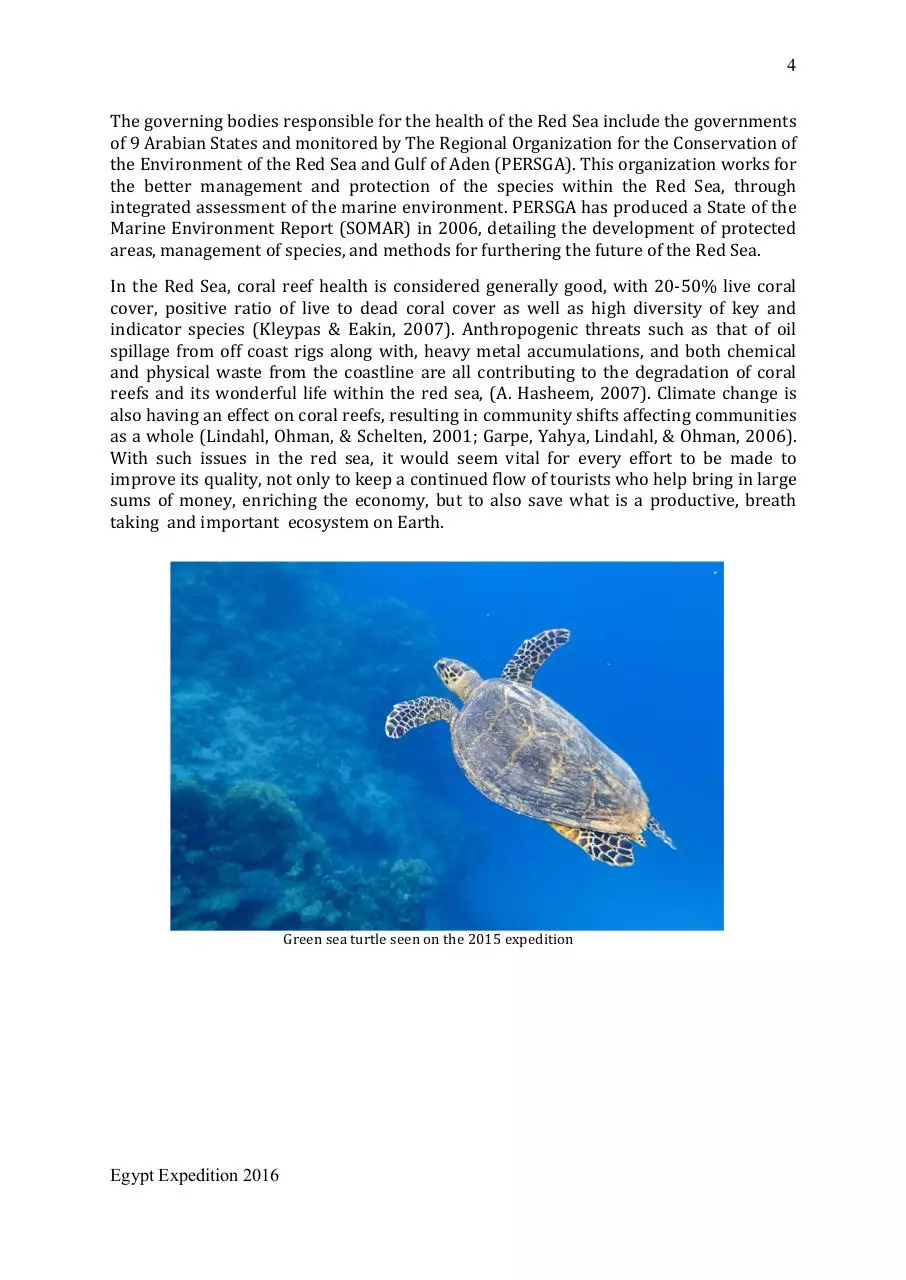
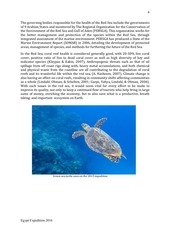
Green
sea
turtle
seen
on
the
2015
expedition
Egypt Expedition 2016
�
5
1.2.
Glasgow
University
Egypt
Marine
Expedition
On
our
most
ambitious
expedition
yet,
the
University
of
Glasgow
Marine
Expedition
will
be
building
on
years
of
previous
work,
using
past
knowledge
and
experience
to
collect
novel
data
and
perform
new
and
exciting
research.
Using
a
newly
designed
research
lab
in
El
Quesir,
the
team
will
be
able
to
carry
out
necessary
tests
and
examine
data,
along
with
field
research.
Past
expeditions
have
set
up
connections
with
researchers
and
schools
in
the
area,
as
well
as
providing
the
necessary
baseline
data
to
embark
on
these
new,
ambitious
projects.
The
team
will
consist
of
three
master’s
students
and
seven
undergraduate
students,
all
of
which
are
studying
in
bioscience
fields.
Together
they
have
designed
four
projects,
one
of
which
will
take
place
in
a
previously
unexplored
area
to
the
south
of
El
Quesir,
Wadi
El
Gamal.
These
projects
will
not
only
expand
our
knowledge
of
the
Red
Sea,
but
will
also
highlight
areas
that
are
in
need
of
further
research
by
examining
the
success
of
a
protected
area
and
the
health
of
reefs.
This
will
also
highlight
areas
that
are
in
need
of
further
research,
opening
up
new
possibilities
for
future
work.
Egypt Expedition 2016
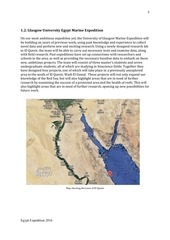
Map
showing
the
town
of
El
Qusier
�
6
2.
Expedition
Aims
2.1.
Collaboration
The
team
will
be
working
in
collaboration
with
contacts
from
the
Egypt
Environmental
Affairs
Agency
(EEAA),
Society
of
Environmental
Awareness
Supporters
(SEAS),
ROYAA,
Hurghada
Environmental
Protection
&
Conservation
Association
(HEPCA),
and
Keep
Quesir
Beautiful
(KQB).
These
organizations
mainly
focus
on
conservation
and
environmental
issues,
and
aim
to
educate
and
inspire
people
to
care
for
the
environment.
These
contacts
will
not
only
assist
with
the
expedition,
but
also
give
us
a
chance
to
reach
out
to
the
community
and
share
our
knowledge
and
facilitate
events
such
as
beach
cleanups.
Working
with
these
organizations
in
the
past
has
been
rewarding
for
both
the
team
members
and
the
community,
allowing
members
to
get
involved
in
the
teaching
of
children
about
the
ocean.
We
will
also
liaise
with
The
Open
Ocean
Science
Centre
(OOSC),
an
NGO
based
in
Dahab
and
El
Quseir.
We
will
also
be
arranging
transportation
through
the
Pharaoh
Dive
Club
and
Roots
camp.
The
OOSC
will
provide
general
logistical
support,
assistance
in
acquiring
the
necessary
permits
from
the
local
authorities,
and
transport
between
El
Quseir
and
Wadi
El
Gamal
for
the
team
members
carrying
out
the
Marine
Protected
Area
research
project.
By
collaborating
with
groups
like
the
OOSC,
we
are
able
to
strengthen
the
University’s
reputation
as
an
international
research
body,
while
also
benefiting
from
the
insider
expertise
of
local
people.
2.2.
Research
The
goal
of
the
2015
Egypt
Expedition
is
to
conduct
four
research
areas
(detailed
below)
that
will
focus
on
conservation
and
the
continuation
of
previous
studies.
Each
project
will
be
designed
and
carried
out
by
one
or
two
members
of
the
expedition,
but
all
team
members
will
fully
understand
and
be
involved
in
all
of
the
projects.
Projects
will
be
carefully
planned
with
the
aid
of
an
academic
supervisor,
who
will
ensure
that
each
one
will
meet
its
goals
and
will
produce
high
quality
research.
The
expectation
is
to
have
most,
if
not
all,
of
the
projects
be
of
publishable
quality,
and
to
have
them
published
in
a
respected
journal.
This
not
only
benefit
the
university,
but
also
prepare
the
expedition
members
for
a
future
in
research,
enabling
expedition
members
to
make
a
contribution
to
the
scientific
community
and
increase
the
repute
of
the
Glasgow
University
Expedition
Society.
We
aim
to
report
our
results
by
means
of
our
blog,
poster
presentations,
attending
seminars
and
conferences
and
by
compiling
a
comprehensive
report
of
our
findings.
2.3.
Public
Outreach
The
past
three
expeditions
have
established
many
useful
connections
not
only
at
home,
but
in
Egypt-‐
these
connections
include
NGOs
and
Universities
and,
importantly,
primary
schools.
As
a
team,
we
recognise
the
importance
of
sparking
an
interest
in
the
natural
world
among
the
next
generation
of
biological
scientists.
Although
we
will
Egypt Expedition 2016
�
7
unfortunately
not
be
able
to
return
to
Hillhead
Primary
as
we
have
in
recent
years
due
to
the
timing
of
the
expedition
interviews,
we
are
planning
to
work
with
schools
in
El
Quesir.
We
will
work
with
the
children
to
teach
them
the
importance
of
the
ocean
and
the
conservation
of
its
biodiversity
through
interactive
workshops,
as
well
as
engaging
in
beach
clean-‐ups
and
snorkeling.
These
events
have
been
very
well
received
in
the
past,
and
have
been
rewarding
for
both
the
schoolchildren
and
expedition
members.
We
also
will
keep
in
touch
with
our
followers
through
weekly
updates
on
our
website
(http://www.gu-‐egypt-‐expedition.co.uk/),
as
well
as
our
popular
Facebook
page
(610
likes)
and
Twitter.
These
updates
will
not
only
focus
on
the
team
and
expedition,
but
also
relevant
news
from
the
world
of
marine
conservation
biology.
3.
Research
The
following
research
areas
will
encompass
no
fewer
than
two
and
no
more
than
four
individual
projects
on
coral
reef
ecosystems.
Each
study
has
been
developed
to
suit
the
research
interests
of
its
particular
student
coordinator,
whilst
attempting
to
further
develop
some
of
the
questions
posed
during
reviews
of
the
results
from
the
Egypt
2015
expedition,
and
take
into
account
questions
arisen
from
the
annual
tropical
ecology
field
course
undertaken
by
the
University
of
Glasgow.
Egypt Expedition 2016
�
8
3.1
Measuring
the
success
of
a
no-‐take
zone
in
marine
protected
area
Wada
El
Gamal
Introduction:
Marine
protected
areas,
and
specifically
no-‐take
zones
(NTZs),
are
becoming
an
increasingly
important
part
of
marine
conservation,
with
as
many
as
5,880
marine
reserves
around
the
world
today
(Bergseth,
Russ,
&
Cinner
2013).
There
is
a
wealth
of
evidence
that
no-‐take
zones
provide
both
social
and
biological
benefits;
not
only
maintaining
and
improving
ecosystem
health
but
also
benefitting
the
communities
that
depend
on
them
(Pomeroy
et
al.
2005,
Advani
et
al.
2015,
Rife
2013,
Halpern
&
Warner
2002).
Overexploited
target
species
are
given
an
opportunity
to
recover,
as
are
habitats
that
may
have
been
destroyed
from
destructive
fishing
practices
such
as
trawling
or
dynamite
fishing.
Surrounding
take
zones
are
also
improved
due
to
the
migration
of
fish
and
larvae
from
the
NTZ,
replenishing
fish
stocks
in
these
fished
areas
(Ashworth&
Ormond
2005).
However,
NTZs
can
be
rendered
ineffective
if
managed
and
monitored
improperly.
A
study
of
1,306
marine
protected
areas
in
1995
showed
that
only
31%
believed
they
had
reached
their
management
goals
(Jameson,
Tupper
&
Ridley
2002),
and
it
is
well
documented
that
the
majority
of
marine
protected
areas
are
not
successful
(Pomeroy
et
al.
2005,
Rife
et
al.
2013).
Failure
of
no
take
zones
is
mostly
due
to
insufficient
monitoring,
poor
funding,
and
lack
of
compliance
from
fishermen
(Advani
et
al.
2015).
There
is
very
little
data
available
on
the
state
of
Red
Sea
fisheries
(FAO
2014),
and
even
less
on
the
status
of
marine
protected
area
and
NTZ
Wadi
El
Gamal.
Wadi
El
Gamal
is
large
(1,600km2),
well
funded
(€131,750
yearly
from
a
variety
of
parties)
and
is
both
staffed
and
monitored
by
an
NGO
called
HEPCA
(Hurghada
Environmental
Protection
and
Conservation
Association)
(Samy,
Lizaso&Forcada2011).
Wadi
El
Gamal
is
also
sparsely
featured
in
Red
Sea
conservation
literature.
Our
research
would
summarize
the
NTZ’s
success
in
this
MPA,
facilitating
comparison
to
other
MPAs
in
Egypt
and
abroad,
and
aiding
Egyptian
stakeholders
in
policymaking,
development
and
future
conservation
work.
Extensive
literature
surrounding
no-‐take
zones
is
vital
if
we
are
to
critically
examine
our
frameworks
for
marine
biodiversity
conservation,
and
design
viable
future
projects.
Aims:
This
project
will
adapt
and
expand
upon
the
research
of
Advani
et
al.
(2015),
investigating
whether
individual
fish
size,
fish
biomass,
abundance,
and
species
richness
are
higher
within
the
no
take
zone
compared
to
the
fishing
zones.
We
will
also
note
the
presence
of
discarded
fishing
gear,
as
an
indicator
of
compliance
to
regulation.
Methodology:
Four
researchers
will
travel
by
Mini
bus
provided
by
Roots
Camp
and
Pharaoh
Dive
Club
to
Wadi
El
Gamal
and
camp
for
5
days
at
a
time,
and
will
then
return
to
El
Quesir
for
2
to
3
days
to
refresh
supplies,
enter
data
and
participate
in
other
project
work.
The
trip
will
occur
a
total
of
4
times,
resulting
in
a
total
of
20
days
camping
in
Wadi
El
Gamal
and
the
surrounding
take
zones.
We
will
be
working
with
EEAA
and
local
counterparts
from
ROYAA,
SEAS,
HEPCA,
and
Suzanna
Aprille
Valle.
Egypt Expedition 2016
�
9
Three
sites
will
be
chosen
in
no-‐take
zone
Wadi
El
Gamal,
along
with
three
sites
in
each
of
two
neighbouring
fishing
zones.
At
all
nine
sites,
two
observers
will
carry
out
four
25m
long
belt
transects:
two
at
3m
depth-‐
representative
of
reef
crest
depth,
where
herbivorous
fish
are
mostly
caught
(Advani
et
al.
2015);
and
two
at
10m
depth-‐
or
reef
slope
depth,
where
predatory
fish
are
mostly
caught
(ibid).
Each
site’s
two
transects
will
be
repeated
three
times,
at
different
hours
on
two
non-‐consecutive
days,
to
avoid
the
effect
of
time
of
day
on
the
marine
community
structure.
Each
observer
will
be
trained
to
recognize
a
group
of
fish
families,
avoiding
pseudoreplication.
In
total,
this
will
require
54
dives.
The
dives
will
occur
three
times
a
day
over
20
days,
which
will
allow
us
60
dives.
This
will
allow
us
a
two-‐day
buffer,
in
case
of
injury
or
illness.
With
the
use
of
computer
software,
the
stereoscopic
cameras
will
allow
fish
size
to
be
calculated
in
order
to
determine
biomass
from
publicly
available
length
to
weight
data.
To
measure
species
richness
and
biodiversity,
researchers
will
use
the
film
to
identify
fish
by
trophic
level
and
family.
Trophic
levels
observed
will
consist
of:
herbivores,
omnivores,
corallivores,
invertivores,
and
piscivores.
Fish
families
that
will
be
identified
are:
Epinephelidae,
Lutjanidae,
Lethrinidae,
Chaetodontidae,
Pomacanthidae,
Scaridae,
Acanthuridae,
and
Siganidae.
It
is
necessary
to
identify
trophic
level
along
with
family
as
lower
trophic
levels
will
experience
different
fishing
pressures
than
higher
tropic
levels,
and
will
respond
differently
to
no-‐take
zones.
Divers
will
also
record
instances
of
discarded
fishing
gear
and
compare
them
between
sites.
This
will
be
done
by
photographing
the
gear,
and
recording
the
location
and
photo
number
of
the
gear
on
a
dive
slate.
Any
results
will
be
written
into
a
log
book
after
each
dive,
and
will
be
entered
into
an
excel
spreadsheet
upon
our
return
to
El
Quesir.
In
a
healthy
reef
system,
we
would
expect
to
find
an
increase
in
large,
piscivorous
fish
due
to
relief
from
fishing
pressures.
Smaller,
herbivorous
fish
that
are
less
commercially
important
may
show
little
change
or
even
an
opposite
effect
due
to
increased
predation
from
piscivores
(Halpern
&
Warner
2002,
Advani
et
al.
2015,
Ashworth
&
Ormond
2005).
The
increase
in
large
piscivorous
fish,
along
with
a
larger
fish
population,
will
also
lead
to
an
increase
in
fish
biomass.
We
would
also
expect
to
find
lower
instances
of
discarded
fishing
gear.
A
map
of
Wadi
El
Gamal
National
Park
Egypt Expedition 2016
�
 Historical archive . public document