Andreea Buga, Bernhard Freudenthaler, Jorge Martínez Gil, Sorana Tania Nemes, Alejandra Lorena Paoletti (2017)
Management of Accurate Profile Matching using Multi-cloud Service Interaction
In: Proceedings of the 19th International Conference on Information Integration and Web-based Applications and Services,
iiWAS 2017, Salzburg, December 4-6, 2017 161-165.
Management of Accurate Profile Matching using Multi-cloud
Service Interaction
Andreaa Buga
Christian Doppler Laboratory for
Client-Centric Cloud Computing
Hagenberg, Austria
a.buga@cdcc.faw.jku.at
Bernhard Freudenthaler
Software Competence Center
Hagenberg GmbH
Hagenberg, Austria
bernhard.freudenthaler@scch.at
Sorana Tania Nemes,
Christian Doppler Laboratory for
Client-Centric Cloud Computing
Hagenberg, Austria
t.nemes@cdcc.faw.jku.at
ABSTRACT
The current paper describes our research towards a cloud infrastructure for the universal access and interaction with a number
of services implementing methods for enriching, matching and
querying information about job offers and applicant profiles in the
cloud. These methods exploit well-known recruitment knowledge
bases in order to deliver valuable information to such organizations as public and private employment agencies that we assume to
be geographically distributed. The rationale behind our approach
is to offer an universal, yet inexpensive, distribution model able
to reduce the cost of installing and maintaining the recruitment
technology within the client’s businesses.
CCS CONCEPTS
• Computer systems organization → Architectures; • Information systems → World Wide Web; Information retrieval;
KEYWORDS
Cloud Computing, Profile Matching, e-Recruitment
ACM Reference Format:
Andreaa Buga, Bernhard Freudenthaler, Jorge Martinez-Gil, Sorana Tania
Nemes, , and Lorena Paoletti. 2017. Management of Accurate Profile Matching
using Multi-cloud Service Interaction. In Proceedings of The 19th International Conference on Information Integration and Web-based Applications &
Services, Salzburg, Austria, December 4–6, 2017 (iiWAS ’17), 6 pages.
https://doi.org/10.1145/3151759.3151831
1
INTRODUCTION
In the Human Resources (HR) domain, the accurate matching of
job applicants to position descriptions and vice versa is of great
Permission to make digital or hard copies of all or part of this work for personal or
classroom use is granted without fee provided that copies are not made or distributed
for profit or commercial advantage and that copies bear this notice and the full citation
on the first page. Copyrights for components of this work owned by others than ACM
must be honored. Abstracting with credit is permitted. To copy otherwise, or republish,
to post on servers or to redistribute to lists, requires prior specific permission and/or a
fee. Request permissions from permissions@acm.org.
iiWAS ’17, December 4–6, 2017, Salzburg, Austria
© 2017 Association for Computing Machinery.
ACM ISBN 978-1-4503-5299-4/17/12. . . $15.00
https://doi.org/10.1145/3151759.3151831
Jorge Martinez-Gil
Software Competence Center
Hagenberg GmbH
Hagenberg, Austria
jorge.martinez-gil@scch.at
Lorena Paoletti
Software Competence Center
Hagenberg GmbH
Hagenberg, Austria
lorena.paoletti@scch.at
importance for both employers looking for filling open positions
and job seekers looking for a suitable job [39]. However, there is a
number of problems to be addressed in order to build such a solution,
some of them related to the scientific challenge consisting of going
further beyond traditional matching techniques, and some of them
related to the deployment of an infrastructure for the universal
access to that technology.
To face the problem of the first kind, we need external sources
of background knowledge supporting the domain knowledge to
be exploited. However, sophisticated knowledge bases in the HR
domain are still rare, as building up a good, large knowledge base
is a complex and time-consuming task, though in principle this
can be done as proven by experiences in many other application
domains. Nevertheless, there already exist several terminological
frameworks that have been developed to capture relevant concepts
in the recruitment field. The most common frameworks in the area
are DISCO [14], ESCO [23] and ISCED [22].
There are also other approaches towards matching algorithms
such the one proposed by Stantchev et al. [48], which proposes
study recommendation based on the social network profiles of students. Or proposals based on the trofile matching between GitHub
accounts and job ads has been introduced by Hauff et al. in [20] in a
three steps procedure: concept extraction, weighting and matching.
Our approach enhances the previous work by allowing extension
of concepts, learning matching measures and performing various
matching queries. The contribution of this work is the proposal
of a cloud infrastructure for the universal access and interaction
with a number of cloud services related to the HR domain. The
potential beneficiaries of such an infrastructure are intended to
be public and private employment agencies that we assume to be
geographically distributed. As shown throughout the paper, the
computing capabilities, the scalability and the heterogeneous deployment models of multi-clouds serve as a robust infrastructure
for an HR profile matching application. Enhanced with robust monitoring and adaptation, the multi-clouds can improve the reliability
of the system.
The rest of this paper is organized as follows, Section 2 details
the architecture of the multi-cloud, while Section 3 explains the
technical details of our contribution. Advantages and limitations
of our approach are discussed in Section 4. Finally, we present the
�
iiWAS ’17, December 4–6, 2017, Salzburg, Austria
concluding remarks and the possible future lines of research in
Section 5.
2
STRUCTURE OF THE MULTI-CLOUD
SERVICES
Distributed computing has favored the development of the cloud
computing business model. Most of the existing services rely on single cloud providers. However, this dependency leads sometimes to
vendor lock-in and to an inefficient usage of resources as while one
provider might be overloaded, others might have idle components.
The current focus in the area of cloud computing is on achieving
multi-cloud solutions, which coordinate services from different
providers and are accessed by the user through simple requests.
While such an implementation relies on complex mechanisms, the
user must be able to access the services through simple interfaces.
The multi-cloud computing model fits the profile matching application as it supports a separation of the services for different
institutions. The interaction of both public and private cloud is
possible with the aid of mediator components as the middleware.
Therefore, sensitive data for a company can be stored on a private
cloud, while the knowledge base can be saved on a public cloud
and enriched by different clients, benefiting in this way different
institutions. Also, for the job candidate an interface supporting
profile editing, update and job search operations can be provided.
2.1
Client-Cloud Interaction Middleware
Bósa et al. describe a formal approach for a robust middleware,
which encompasses also identity management and content adaptivity services [3]. The model was enriched also with a security
module focusing on intrusion detection and with a Service-Level
Agreement (SLA) component addressing the needs of clients [27].
The middleware handles the requests of the user and manages the
intricacies of the additional above mentioned services. Its formal
specification relies on ambient Abstract State Machines (ASM),
which permit modeling algorithms and methods using ASM and
describing service communication topology, location and mobility
using ambient calculus [11].
The proposed middleware can be distributed along a multi-cloud
environment and permit three different modes of interaction as
described by [7]. We will briefly describe the roles of the three
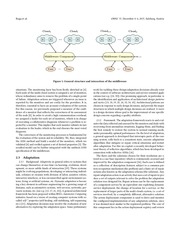
interaction modes for the job profile matching application as depicted by Fig. 1. First supported interaction is between the user and
the middleware. The user accesses the cloud services through a
Software as a Service (SaaS) application and requests to carry out
an operation. For instance, a job candidate updates its profile which
can lead to a modification of the knowledge base stored in the cloud.
The middleware takes the request with its corresponding data and
submits it to the responsible service. In case an operation requires
the coordination of several services, different middleware instances
communicate between each other, this representing the second type
of interaction. For instance, a representative of a company might
request a list of candidates matching a set of criteria. Its request is
recorded by a middleware component and split in different services
as follows. Authentication and authorization is verified in the cloud
with a more robust security where the accounts are saved. The list
of candidates is retrieved by applying similarity measures by the
Buga et al.
query engine belonging to a cloud with higher processing capabilities. If the authentication and authorization middleware validates
the credentials, the querying middleware can further submit its response to the user. The communication between the authorization
middleware and the authorization method is regarded as the third
type of interaction, namely between a middleware and a service
belonging to a cloud it is responsible for.
Multi-clouds are characterized by a high complexity and heterogeneity, usually reflected in faults as random behavior or operation
inconsistencies. For the case of the job profile matching, these faults
can cause inaccurate results that would affect the selection process.
Another undesired effect might be the incorrect alteration of the
data from the knowledge base. In order to avoid such situations, we
address the aspect of robust monitoring and adaptation of services
in case of abnormal execution.
In order to provide guarantees for the functioning of such profiling systems as a whole, the middleware complements the execution
layer with monitoring and adaptation processes. The monitoring
and adaptation layers are cooperating for the delivery of expected
Quality of Service (QoS), each fulfilling clearly defined tasks, but
closely collaborating.
2.2
Monitoring
2.2.1 Background. Monitoring refers to the process of collecting
measurements about a system or a service in order to assess their
behavior and verify the expected properties. Active and passive
monitoring techniques can be applied for these purposes. While active techniques usually generate artificial (controlled) load on a real
system with the only objective of monitoring, passive techniques
collect measurements on a system while it is operating, that is,
under its actual load [9, 10]. Passive monitoring techniques include
network sniffing, code profiling and application service logging.
Measurements are usually stored into trace logs, that is, collections
of time stamped recordings of various types of information, which
can be processed to either on the fly or postmortem.
Monitoring involves examining the execution traces of a system in order to verify expected properties. Monitoring is based on
passive testing, i.e. the observation of the system traces without
interfering with the system’s normal operation [1, 2]. Monitoring
is also closely related to run-time verification [28]. Many established techniques are available addressing either the monitoring of
network communication between services and systems (black-box
monitoring) or the monitoring of application execution (white-box
monitoring). State-of-the-art techniques for network monitoring
exploit SNMP [47, 52], Deep Packet Inspection (DPI) [13], and invariants [35]. DPI is a technique that is used for completely analyzing
communication packets (both headers and payloads) and has been
employed for security analysis of network traffic and for detecting
and preventing intrusions (Intrusion Detection and Prevention Systems (IDPS) [46]). Most techniques depend on pattern matching,
e.g. [50], but a few use correlation of events, e.g. [49]. In white-box
monitoring an application is analyzed during its execution. State-ofthe-art techniques exploit just-in-time compilation (e.g. [38, 44, 51])
or debugging tools.
2.2.2 Framework. Monitors run continuously in the background
of the service execution and check if components face abnormal
�
Buga et al.
iiWAS ’17, December 4–6, 2017, Salzburg, Austria
Cloud1
...
S ... S
Cloudi
Cloudi+1
S ... S
S ... S
Middleware Component
User
...
User
Cloudn
...
S ... S
Middleware Component
User
...
...
User
Figure 1: General structure and interaction of the middleware
situations. The monitoring layer has been firstly sketched in [4].
Each node of the multi-cloud system is assigned a set of monitors,
whose redundancy aims to remove the problem of a single-point
of failure. Adaptation actions are triggered whenever an issue is
reported by the monitors and are costly for the providers. It is,
therefore, essential to have an accurate evaluation of the system.
For this reason, we previously proposed a measure of the confidence of a monitor that reflects the correctness of its assessment
of the node [8]. In order to avoid a high communication overhead,
we assigned a leader for each set of monitors, which is in charge
of executing a collaborative diagnosis whenever a problem is reported by a monitor. This implies that each monitor submits its last
evaluation to the leader, which in the end chooses the most voted
diagnosis.
The correctness of the monitoring processes is fundamental for
the evaluation of the system and its reliability. We, thus, integrated
the ASM method and build a model of the monitors, which we
validated [6] and verified against a set of desired properties [5]. The
resulted model can be further integrated with the ambient ASM
specification of the middleware.
2.3
Adaptation
2.3.1 Background. Adaptivity in general refers to systems that
can change themselves at run-time via learning, evolution, development, or more subtle kinds of interaction [29]. These systems
might be evolving populations, developing or interacting individuals, colonies or swarms with division of labor, assistive robots,
interactive interfaces, or less circumscribed agent-environment systems, living or artificial systems, etc. Dynamic adaptation is becoming a key element in software engineering for a growing range of
domains, such as automotive systems, web services, networks, pervasive systems, etc. (see e.g. [12, 17, 21, 45]). A general architectural
framework has been proposed within IBM’s Autonomic Computing
initiative, based on a vision of creating computer systems with socalled self-* properties (self-healing, self-stabilizing, self-organizing,
etc.) [21]. Adaptation decisions may involve the evaluation of new
alternatives by exploring the adaptation space. Some preliminary
work for tackling these design/adaptation decisions already exist
in the context of software architectures and service-oriented applications (see e.g. [24, 33]). One promising approach, in particular, is
the identification and application of architectural design patterns
and tactics [15, 18, 19, 25, 26, 32, 34, 43]. Architectural patterns are
chosen in response to early design decisions, and provide the major
structures in which multiple design decisions are realized. A tactic
is a design decision whose goal is the improvement of one specific
design concern regarding a quality attribute.
2.3.2 Framework. The adaptation framework reacts to and evaluates the data collected and assessed by the monitors and deals with
recovering from anomalous situations, logging them, and finding
the best remedy to restore the system to normal running mode,
under presumably optimal performance. On the level of adaptation,
a general approach is developed that interrupts parts of the running system, rolls back to a consistent state, execute adaptation
algorithms that mitigate or repair critical situations and restart
after adaptation. For this we exploit a recently developed behavioral theory of reflective algorithms, which has been developed in
connection with reflective ASMs [16].
The flaws and the solutions chosen for their resolution are stored in a case base repository which is continuously accessed and
improved by the adaptation component [36]. Each case is defined
as a collection of description features subject to a common pattern recognition mechanism (the problem) and a finite set of repair
actions also known as the adaptation schema (the solution). Any
repair/adaptation action is an activity that uses a set of inputs to produce a set of outputs relevant to solve the problem the adaptation
solution was designed for. Repair actions can be the replacement
of a component service by an equivalent one exploiting dynamic
service deployment, the change of location for a service, or the
replacement of larger parts of the multi-clouds system, i.e. a set of
services involved, by a completely different, alternative solution.
The action deployment component is used to drive and monitor
the configured implementation of any adaptation solution, once
it was deemed most similar to the registered problem. The core of
this component lies in the action deployment registry and review
�
iiWAS ’17, December 4–6, 2017, Salzburg, Austria
capabilities that compile the action workflow schema and load all
the relevant data to handle the execution of the adaptation [37].
Once the solution is carried out according to its specification,
the monitors are requested to qualitatively characterize the status
of the system post reconfiguration, in other words apply the workflow analysis and performance, accuracy and output evaluation to
specific threshold values. In correlation with previous recording of
the monitors, the system can detect if the adaptation plan was efficient or not. The analysis is further sent to the adapter, which will
either mark the solution as successful and index and retain it in the
case repository for future problem reference, or unsuccessful which
will lead to further revision and optimization of the aggregating
features, making it a better fit for the given problem.
3
SERVICES IN A PROFILE MATCHING
SYSTEM
In previous works, we presented an approach to eliminate the need
for job recruiters to have deep and specialized knowledge within a
professional domain [31]. In this work, we propose a way to model
domain knowledge from a lot of different professional sectors supported by an universally accessible infrastructure. In addition, this
knowledge could be used as a support when performing matching
process so that the results can be very similar to those produced
by an expert from the field of interest. Our previous approach was
designed to work as a standalone system that could be deployed in
a number of organizations with great recruitment needs. However,
each of these organizations was responsible to set up, enrich, train
and maintain the system leading to operations, which imply certain
expenses. For this reason, we propose to work towards a cloud
solution that can facilitate universal access to these services.
In this context, one of the scientific goals that our research tries
to pursue is to develop new methods and tools for achieving a much
more realistic matching between job offers and applicant profiles.
This realistic matching goes further beyond traditional matching
techniques that merely rely on the syntactic overlapping of offers
and profiles. Semantic matching aims to limit this short-sighted
strategy by exploiting knowledge bases that are a valuable source
of background knowledge concerning the different recruiting domains.
It is envisioned to make use of a number of taxonomies available
in the HR area for education, skills, competences such as DISCO,
ESCO, ISCED, as they provide the set of concepts necessary to
construct the initial knowledge base for this approach. Additionally, with social skills, preferences, interests, etc., they comprise
the complete body of Competences required for that purpose. In
this regard, the representation of knowledge can be covered by
Description Logic.
Profile matching reflects how well a given profile fits a required
profile. In order to achieve profile matching in knowledge bases,
the main point is how to represent profiles in knowledge bases and,
to do so, the approach is to represent skills by sets, the sets of skills
a person may posses, for instance: “knowledge of Bionformatics",
“good English speaker", “proactive profile".
In order to match the similarities between the skills of two profiles, the idea is to measure the similarity of the skill sets. Thus, it
seems reasonable to exploit partially-ordered sets and lattices to
Buga et al.
capture the hierarchical dependencies of concepts and, represent
profiles by filters in lattices. Such that, a required profile R and a
given profile G can be respectively represented by filters Fr and Fд
in the lattice, and their matching value µ(Fд , Fr ) can be calculated by their hierarchical dependencies, as introduced in [41]. With
this approach, Popov and Jebelean introduced the first attempt to
use filters in lattices. In fact, our approach is based on this work,
although we have further investigated the filter-based matching.
In this way, the initial approach was introduced in [39] where
weighting on concepts for matching measure was introduced as
well as the over-qualification measures where the inverted measures
are taken into account, and also the blow-up operators, as described
earlier in this work.
Learning of the matching measures is another feature included
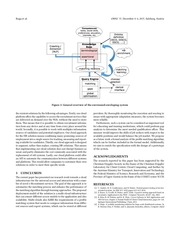
in Fig. 2, initially introduced in [30] and further investigated in
[31, 42]. The goal is to determine the matching measures between
profiles that comply with the matching measures given by a human
expert. The idea is to start from a set of filters and matching values
determined by a human expert and from there derive plausibility
constraints that should be satisfied to exclude unjustified bias, based
on facts not present in the knowledge base.
In this way, the problem of how human-made matching could
be exploited to learn a suitable weighting function is thought to be
also included as part of the approach presented in this work. This
was recently introduced in [30] where we come to the conclusion
that under some assumptions, the ranking preserving matching
measure exists.
In order to make the described architecture in Fig. 2 available to
end users we have investigated an efficient methodology to implement queries to the profile database. This implies the investigation
of matching queries in particular, top-k queries [40] and gap-queries.
As for top-k queries the approach is to allow the users to query
profiles and define themselves the weights for concepts relevance
within the ontology structure. This presumes a pre-computation
of matching measures, which is an efficient formulation provided
that updates to the TBox are assumed to be infrequent. The use
of relational databases are also taken into account for the storage
of profiles, their selected weights and the pre-computed matching
values. The rings and spiders storage architecture designed for the
top-k queries facilitates an accurate and efficient retrieval of the
top-k matching profiles.
As for the gap queries, the basic idea is to benefit the job seekers
by providing them with suggestions on further training/education
in order to increase their chances to be selected. In today’s competitive job market it seems reasonable to provide advise on profiles
improvement in relation to a particular job offer in contrast with
the rest of the job seekers. The approach is to compute an extension
of a given profile that will appear in the result of a top-k matching query for at least l requested profiles. And then, compute the
skill difference between profiles, the original given profile and the
extended result set of profiles.
4
RESULTS
The area of profile matching is essential for the improving the recruitment procedure and ensuring that candidates keep up with the
requirements of the market. Our approach distinguishes itself from
�
Buga et al.
iiWAS ’17, December 4–6, 2017, Salzburg, Austria
Figure 2: General overview of the envisioned enveloping system
the existent solutions by the following advantages. Firstly, our cloud
platform offers the capability to access the recruitment services that
are delivered on demand over the Web, without the need to store
them. This means that it is possible to obtain recruitment information from any device and at any time from every place around the
world. Secondly, it is possible to work with multiples information
sources of candidates and potential employers. Our cloud approach
for the HR solution means combining many promising sources of
employment into a single source for tracking, measuring and reporting available for candidates. Thirdly, our cloud approach is designed
to augment, rather than replace, existing HR solutions. This means
that implementing our cloud solution does not disrupt business as
usual, and partly eliminates the cost commonly associated with the
replacement of old systems. Lastly, our cloud platform could offer
an API to automate the communication between different systems
and platforms. This would allow companies to customize their own
solutions in order to meet their specific needs.
5
CONCLUSION
The current paper has presented our research work towards a cloud
infrastructure for the universal access and interaction with a number of novel e-Recruitment services. The goal of this approach is to
automatize the matching process and enhance the performance of
the matching algorithm through learning approaches. The proposed
deployment model of the solution is a multi-cloud infrastructure
that can ensure different access models to the application and also
scalability. Multi-clouds also fulfill the requirements of a profile
matching system that needs to compose information from different sources and expert systems, which can be stored at different
providers. By thoroughly monitoring the execution and reacting to
issues with appropriate adaptation measures, the system becomes
more reliable.
Furthermore, such a system can be considered an important tool
for educating and training institutions, which could perform gap
analysis to determine the most needed qualification offers. This
measure would improve the skills of job seekers with respect to the
available positions and would balance the job market. We propose
as a future work a formal analysis of the profile matching algorithm,
which can be further included in the formal model. Additionally,
we aim to enrich the specification with the design of a prototype
of the system.
ACKNOWLEDGMENTS
The research reported in this paper has been supported by the
Christian-Doppler Society in the frame of the Christian-Doppler
Laboratory for Client-Centric Cloud Computing, and further by
the Austrian Ministry for Transport, Innovation and Technology,
the Federal Ministry of Science, Research and Economy, and the
Province of Upper Austria in the frame of the COMET center SCCH.
REFERENCES
[1] C. Andrés, M.-E. Cambronero, and M. Nuñez. Formal passive testing of serviceoriented systems. In IEEE SCC 2010, pages 610–613, 2010.
[2] E. Bayse, A. Cavalli, M. Nuñez, and F. Zaidi. A passive testing approach based on
invariants: Application to the WAP. Computer Networks, 48:247–266, 2005.
[3] K. Bósa, R.-M. Holom, and M. B. Vleju. Correct Software in Web Applications and
Web Services, chapter A Formal Model of Client-Cloud Interaction, pages 83–144.
Springer International Publishing, Cham, 2015.
[4] A. Buga. A scalable monitoring solution for large-scale distributed systems. In
R. Moreno-Díaz, F. Pichler, and A. Quesada-Arencibia, editors, Computer Aided
�
iiWAS ’17, December 4–6, 2017, Salzburg, Austria
[5]
[6]
[7]
[8]
[9]
[10]
[11]
[12]
[13]
[14]
[15]
[16]
[17]
[18]
[19]
[20]
[21]
[22]
[23]
[24]
[25]
[26]
[27]
[28]
[29]
[30]
Systems Theory Ű EUROCAST 2015, volume 9520 of Lecture Notes in Computer
Science, pages 219–227. Springer International Publishing, 2015.
A. Buga and S. T. Nemeş. Formalizing monitoring processes for large-scale
distributed systems using abstract state machines. In P. Arcaini, M. Mongiello,
E. Riccobene, and P. Scandurra, editors, Formal Approaches for Advanced Computing Systems – 1st International Workshop (FAACS 2017), LNCS. Springer, 2017.
(to appear).
A. Buga and S. T. Nemeş. Towards modeling monitoring services for largescale distributed systems with abstract state machines. In Proceedings of the
22nd International Working Conference on Evaluation and Modeling Methods for
Systems Analysis and Development (EMMSAD), volume 1859 of CEUR Workshop
Proceedings, pages 103–112. CEUR-WS.org 2017, June 2017.
A. Buga, S. T. Nemeş, and K.-D. Schewe. Conceptual modelling of autonomous
multi-cloud interaction with reflective semantics. In G. Guizzardi, H. Ma, and
H. C. Mayr, editors, Conceptual Modeling – 36th International Conference (ER
2017), LNCS. Springer, 2017. (to appear).
A. Buga and S. T. Nemes. Towards modeling monitoring of smart traffic services
in a large-scale distributed system. In CLOSER 2017 - Proceedings of the 7th
International Conference on Cloud Computing and Services Science, Porto, Portugal,
April 24-26, 2017., pages 455–462, 2017.
M. Calzarossa, M. Della Vedova, L. Massari, D. Petcu, M. Tabash, and D. Tessera.
Workloads in the clouds. In L. Fiondella and A. Puliafito, editors, Principles of
Performance and Reliability Modeling and Evaluation, Springer Series in Reliability
Engineering. Springer, 2016.
M. Calzarossa, L. Massari, and D. Tessera. Workload characterization: A survey
revisited. ACM Compututing Surveys, 48(3):48:1–48:43, 2016.
L. Cardelli and A. D. Gordon. Formal methods for distributed processing. chapter
Mobile Ambients, pages 198–229. Cambridge University Press, New York, NY,
USA, 2001.
B. Cheng, R. de Lemor, H. Giese, P. Inverardi, and J. Magee, editors. Software
Engineering for Self-Adaptive Systems, volume 5525 of LNCS. Springer, 2009.
E. H. Corwin. Deep packet inspection: Shaping the internet and the implications
on privacy and security. Information Security Journal: A Global Perspective,
20(6):311–316, 2011.
European distionary of skills and competences. http://www.disco-tools.eu.
N. Esfahani and S. Malek. On the role of architectural styles in improving the
adaptation support of middleware platforms. In Proceedings of the 4th European
conference on Software architecture (ECSA’10), pages 433–440. Springer, 2010.
F. Ferrarotti, L. Tec, and J. Turull Torres. Towards an asm thesis for reflective
sequential algorithms. In M. Butler et al., editors, ABZ 2016, Proceedings. 2016. to
appear.
H. Giese and B. H. C. Cheng, editors. 2011 ICSE Symposium on Software Engineering for Adative and Self-Managing Systems (SEAMS 2011), Waikiki, Honolulu, HI,
USA, May 23-24, 2011. ACM, 2011.
N. Harrison and P. Avgeriou. How do architecture patterns and tactics interact?
a model and annotation. Journal of Systems and Software, 83(10):1735–1758, 2010.
N. Harrison and P. Avgeriou. Implementing reliability: The interaction of requirements, tactics and architecture patterns. In Architecting Dependable Systems
VII, volume 6420 of LNCS, pages 97–122. Springer, 2010.
C. Hauff and G. Gousios. Matching github developer profiles to job advertisements. In 12th IEEE/ACM Working Conference on Mining Software Repositories,
MSR 2015, Florence, Italy, May 16-17, 2015, pages 362–366, 2015.
M. Huebscher and J. McCann. A survey of autonomic computing - degrees,
models, and applications. ACM Comp. Surv., 40(3), 2008. Article No. 7.
International standard classification of education. http://www.uis.unesco.org/
Education/Pages/international-standard-classification-of-education.aspx.
International standard classification of occupations. http://www.ilo.org/public/
english/bureau/stat/isco/isco08/, 2008.
R. Kazman, L. Bass, G. Abowd, and M. Webb. A method for analyzing the
properties of software architectures. In Proceedings of the 16th International
Conference on Software Engineering (ICSE’94), pages 81–90, 1994.
S. Kim, D. Kim, L. Lu, and S. Park. Quality-driven architecture development using
architectural tactics. Journal of Systems and Software, 82(2):1211–1231, 2009.
A. Koziolek, H. Koziolek, and R. Reussner. Peropteryx: Automated application of
tactics in multi-objective software architecture oprimization. In Proceedings of the
joint ACM SIGSOFT conference – QoSA and ACM SIGSOFT symposium – ISARCS
on Quality of software architectures – QoSA and architecting critical systems –
ISARCS (QoSA-ISARCS’11), pages 33–42, New York, 2011. ACM.
H. Lampesberger and M. Rady. Correct Software in Web Applications and Web
Services, chapter Monitoring of Client-Cloud Interaction, pages 177–228. Springer
International Publishing, Cham, 2015.
M. Leucker and C. Schallhart. A brief account of runtime verification. Journal of
Logic and Algebraic Programming, 78(5):293–303, 2009.
M. Macy and R. Willer. From factors to actors: Computational sociology and
agent based modelling. Annual Review of Sociology, 28:143–166, 2002.
J. Martinez-Gil, A. L. Paoletti, G. Rácz, A. Sali, and K. Schewe. Maintenance of
profile matchings in knowledge bases. In Model and Data Engineering - 6th International Conference, MEDI 2016, Almería, Spain, September 21-23, 2016, Proceedings,
Buga et al.
pages 132–141, 2016.
[31] J. Martinez-Gil, A. L. Paoletti, and K. Schewe. A smart approach for matching,
learning and querying information from the human resources domain. In New
Trends in Databases and Information Systems - ADBIS 2016 Short Papers and Workshops, BigDap, DCSA, DC, Prague, Czech Republic, August 28-31, 2016, Proceedings,
pages 157–167, 2016.
[32] D. Menasce, J. Sousa, S. Malek, and H. Gomaa. QoS architectural patterns for selfarchitecting software systems. In Proceedings of the 7th International Conference
on Autonomic Computing (ICAC’10), pages 195–204. ACM, 2010.
[33] R. Mirandola and P. Potena. Self-adaptation of service based systems based on
cost/quality attributes tradeoffs. In Proceedings of the International Symposium on
Symbolic and Numeric Algorithms for Scientific Computing (SYNACS 2010), pages
493–501. IEEE, 2010.
[34] R. Mirandola, P. Potena, and P. Scandurra. An optimization process for adaptation
space exploration of service-oriented applications. In Proceedings of the IEEE
2011 6th International Symposium on Service Oriented System Engineering (SOSE),
12-14 Dec. 2011, pages 146–151. IEEE, 2011.
[35] G. Morales, S. Maag, A. R. Cavalli, W. Mallouli, E. Montes de Oca, and B. Wehbi.
Timed extended invariants for the passive testing of web services. In ICWS 2010,
pages 592–599, 2010.
[36] S. T. Nemes and A. Buga. Towards a case-based reasoning approach to dynamic
adaptation for large-scale distributed systems. In D. W. Aha and J. Lieber, editors,
Case-Based Reasoning Research and Development - 25th International Conference,
ICCBR 2017, Trondheim, Norway, June 26-28, 2017, Proceedings, LNCS, pages 257–
271. Springer, 2017.
[37] S. T. Nemes and A. Buga. Towards modeling adaptation services for largescale distributed systems with abstract state machines. In B. Shishkov, editor,
Business Modeling and Software Design - 7th International Simposium, BMSD 2017,
Barcelona, Spain, July 3-5, 2017, Proceedings, pages 193–198. Springer, 2017.
[38] A. Nusayr and J. Cook. Extending AOP to support broad runtime monitoring
needs. Software Engineering and Knowledge Engineering, pages 438–441, 2009.
[39] A. L. Paoletti, J. Martinez-Gil, and K.-D. Schewe. Extending knowledge-based
profile matching in the human resources domain. In Q. Chen et al., editors,
Database and Expert Systems Applications (DEXA 2015) Part II, volume 9262 of
LNCS, pages 21–35. Springer, 2015.
[40] A. L. Paoletti, J. Martinez-Gil, and K.-D. Schewe. Top-k matching queries for
filter-based profile matching in knowledge bases. In H. Ma and S. Hartmann,
editors, Database and Expert Systems Applications (DEXA 2016), LNCS. Springer,
2016. to appear.
[41] N. Popov and T. Jebelean. Semantic matching for job search engines – a logical
approach. Technical Report 13-02, Research Institute for Symbolic Computation,
JKU Linz, 2013.
[42] G. Rácz, A. Sali, and K.-D. Schewe. Semantic matching strategies for job recruitment: A comparison of new and known approaches. In M. Gyssens and G. R.
Simari, editors, Foundations of Information and Knowledge Systems (FoIKS 2016),
volume 9616 of LNCS, pages 149–168. Springer, 2016.
[43] A. J. Ramirez and B. H. Cheng. Applying adaptation design patterns. In Proceedings of the 6th international conference on Autonomic computing (ICAC’09), pages
69–70, New York, 2009. ACM.
[44] M. Richters and M. Gogolla. Aspectoriented monitoring of UML and OCL constraints. In AOSD Modeling – UML Workshop, 6th International Conference on the
Unified Modeling Language (UML), 2003.
[45] M. Salchie and L. Tahvildari. Self-adaptive software: Landscape and research
challenges. ACM Transactions on Autonomous and Adaptive Systems, 4(2), 2009.
Article No.14.
[46] K. Scarfone and P. Mell. Guide to intrusion detection and prevention systems (IDPS). http://csrc.nist.gov/publications/nistpubs/800-94/SP800-94.pdf, 2007.
National Institute of Standards and Technology (NIST); accessed 2013-01-04.
[47] K.-S. Shin, J.-H. Jung, J. Y. Cheon, and S.-B. Choi. Real-time network monitoring
scheme based on SNMP for dynamic information. J. Network and Computer
Applications, 30(1):331–353, 2007.
[48] V. Stantchev, L. Prieto-GonzÃąlez, and G. Tamm. Cloud computing service for
knowledge assessment and studies recommendation in crowdsourcing and collaborative learning environments based on social network analysis. Computers in
Human Behavior, 51:762 – 770, 2015. Computing for Human Learning, Behaviour
and Collaboration in the Social and Mobile Networks Era.
[49] http://bro-ids.org.
[50] http://www.snort.org.
[51] http://valgrind.org.
[52] W. Zeng and Y. Wang. Design and implementation of server monitoring system
based on SNMP. JCAI, pages 680–682, 2009.
�
 Historical archive . public document