Realistic user behavior modeling for energy saving in residential buildings
Jorge Martinez-Gil, Georgios Chasparis, Bernhard Freudenthaler, Thomas Natschlaeger
Software Competence Center Hagenberg GmbH
Softwarepark 21, 4232 Hagenberg, Austria
{jorge.martinez-gil, georgios.chasparis, bernhard.freudenthaler, thomas.natschlaeger}@scch.at
Abstract—Due to the high costs of live research, performance
simulation has become a widely accepted method of assessment
for the quality of proposed solutions in this field. Additionally,
being able to simulate the behavior of the future occupants of a
residential building can be very useful since it can support both
design-time and run-time decisions leading to reduced energy
consumption through, e.g., the design of model predictive
controllers that incorporate user behavior predictions. In this
work, we provide a framework for simulating user behavior
in residential buildings. In fact, we are interested in how to
deal with all user behavior aspects so that these computer
simulations can provide a realistic framework for testing
alternative policies for energy saving.
Keywords-user behavior; energy consumption; energy saving
I. I NTRODUCTION
Traditional energy optimization methods have not considered the study of the non-deterministic nature of the
human behavior when providing solutions in this field, but
new human-centric paradigms are emerging gradually. This
means that new human-centric approaches are currently under an intensive research and development phase. Therefore,
and mainly due to the high costs of live research in this field,
performance simulation by means of computers seems to be
an appropriate and cheap method to accurately assess the
quality of these new approaches.
Our idea is shared by the community. For example,
building simulation by means of computers is very important
since every building is different in many ways [3], [4]
e.g., with respect to location and exterior environment, kind
of construction and building envelope, space usage and
interior environment, the Heater-Ventilation-Air Conditioning (HVAC) system, and so on. We think that simulating
user behavior is also an important aspect of the building
simulation since a) users influence the overall heat gain
in a room, and b) comfort level objectives may only be
satisfied when people are present. Thus, realistic simulation
and prediction of user behavior may contribute significantly
in energy saving. In our opinion, a simulation which cannot
take into account these presence and thermal changes cannot
be considered realistic enough to derive precise conclusions.
This is what happens in most existing approaches:
stochastic processes determined by human behavior like
lighting control, occupancy, activities performed, etc., are
forced to operate on a fixed schedule, or according to
control rules similar to the sequences that run the mechanical
systems involved such blinds, windows, and so on. This is
a compromise between the strengths of software tools designed to simulate buildings and the predictable mechanical
controls. However, in actual buildings, we know that manual
control decisions can deviate substantially from what these
simplified models dictate. Until now, not much attention has
been paid on this field of research. According to Oldewurtel
et al. [9], the main reason for research on realistic user
behavior being rarely carried out until now are primarily
the difficulties and costs of obtaining a precise model and
the fact that energy costs played a minor role in the past.
But now the situation is different.
We aim to provide a framework for simulating user behavior in residential buildings, which may be used as a design
and testing tool for efficient energy management. In fact, we
are specially interested in taking into account all the aspects
concerning user behavior (people presence in the different
rooms, activities performed, use of lights and electrical
devices, natural ventilation, use of domestic hot water, and
so on) so that truly realistic scenarios can be replicated in a
computer simulator. Such simulation framework is beneficial
both as a design tool (e.g., for incorporating user behavior
predictions into model predictive controllers), as well as a
testing tool (e.g., for testing the performance of alternative
heating controllers under realistic scenarios).
The rest of this paper is structured as follows: Section II
presents related work on energy data management concerning user behavior in residential buildings. Section III
describes our proposal for user behavior modeling from a
stochastic perspective. In Section IV, we explain how we
have built our user behavior models for simulating realistic
scenarios. In Section V, we evaluate the benefit of the
predictions to energy saving. Finally, Section VI presents
concluding remarks and future work.
II. R ELATED WORK
According to prior work, there are two main ways to address the problem of saving energy in modern buildings. The
first of them depends highly on human intervention since
it proposes manual control purely based on consumption
feedback from the utility companies, domestics systems, and
so on. The second way does not depend on people since
�
tries to automatically supervising the buildings by sensing
and controlling their energy usage.
One of the standard approaches to control energy usage
includes model predictive controllers. However, user behavior predictions are not usually part of such formulations [7].
We think that including some kind of models concerning
the habits of the home occupants could improve existing
predictive strategies. Our opinion is based on many works
such as: Wood & Newbotough [12] achieved a good percentage of reduction in energy consumption of occupants by
changing their behavior. Hoes et al. [4] show that electrical
energy consumption in buildings is not only linked to their
operational and space utilization characteristics, but also
to the behavior of their occupants. Yu et al. [13] tried
to identify the impacts of occupant behavior on building
energy consumption. The results obtained give hints to
prioritize efforts when modifying user behavior in order
to reduce costs. Rijal et al. [11] proposed a model which
was designed to include the interaction of an average user
of an office space with good results. Bourgeois [1] found
that a realistic treatment of the control of lighting device
can result in significant reductions in energy use. Ouyang
and Hokao [10] investigated energy-saving potential by
improving user behavior in 124 houses in China, results obtained showed that effective promotion of energy-conscious
behavior could reduce energy consumption. Finally, some
pilot projects demonstrated that low energy systems, such
as natural ventilation, shading to control solar heat gains
and glare, day lighting to dim lights, and demand controlled
ventilation, especially need the interactions and collaboration
from occupants [5].
Until now, not many solutions for saving energy have
considered using behavioral information from home occupants, but other many factors which can be taken into
account in order to improve energetic efficiency. Some of
these factors are fixed and some are dynamic. Fixed factors
can be collected in advance by simply asking occupants.
Then, experts can suggest the best ways to exploit them.
There are three main groups of factors: related to the house
placement, related to home occupants and related to the
nature of the house subsystems. Regarding dynamic factors
we can mention most of physical conditions, i.e. house
characteristics, seasonal statistics, weather forecasts, and so
on. In this work, we aim to include a new factor to the group
of that dynamic aspects, i.e. user behavior models that can
allow simulating realistic scenarios.
III. S TOCHASTIC MODELING OF USER BEHAVIOR
Nowadays, the traditional control approaches concerning
residential buildings are pushed to their limit by new and
very demanding building technologies. One of the possible
solutions is related to the emergence of a new paradigm
for applying smart technology to residential buildings often
called home automation [8]. Most of the related work
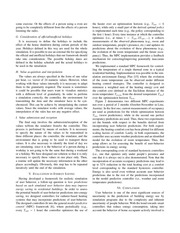
Figure 1. Example of a simulation scenario designed to test the possible
benefits from using a given control strategy. If user behavior is not taken
into account, the simulation could not be considered realistic
focuses on model predictive control methodologies for controlling, e.g., cooling, electrical devices, heating, lighting,
and ventilation in independent building zones. To be more
formal, we can say that model predictive controllers use
a model to predict the future evolution of the housing
subsystems and compute optimal control actions by optimizing a cost function (related to energy saving, comfort
and safety in this case) depending on these predictions. In
the near future, model predictive control should become
even more important to ensure efficient and correct building
functionality. For example, as the outdoor temperature is
supposed to be an influential factor for the building heating
subsystem, some kind of weather forecast could be used by
the model predictive controller to automatically adjust the
indoor temperature.
However, costs of live research are very high, so researchers test their strategies in advance using a simulator.
If the results from these simulations seem to be promising,
then these strategies can be implemented in the real world.
In order to perform simulations, researchers have to take into
account home simulators that can meet their requirements.
Figure 1 shows a simulation scenario designed to test the
possible benefits from using a given control strategy. If real
weather data or user behavior are not taken into account, the
simulation could not be considered realistic. Most of priorly
developed simulators include capabilities to work with past
weather data or even future weather forecasts. Most of them
also include capabilities to model user behavior. However, as
we already mentioned, these models are quite static, i.e. they
are based on fixed behavioral patterns. In this paper, instead,
we take into account the non-deterministic nature of human
behavior so that simulations can reflect what happens in the
real word more accurately.
Emerging empirical models of user behavior tend to be
based on statistical algorithms that predict the probability
of an event, for example: opening a window, given certain
�
environmental conditions. Our modeling strategy is based on
observations of real environments in real buildings that allow
statistical correlation between activities and person who
perform the activity, time of day, season, indoor conditions,
and so on. In other words, we treat user behavior in a
residential building as a stochastic (i.e. probabilistic) process
where the odds of events are based on several factors. For
example, if we observe that a person has waken up at 7am
in workday, our model assumes that this pattern will happen
regularly and adds some stochastic changes depending on a
randomness coefficient. Of course, this pattern is only valid
for a working day, not for weekends or holidays.
IV. P ERFORMANCE SIMULATION OF REALISTIC
SCENARIOS
Taking into account user behavior when performing simulations concerning energy consumption is important since
people living in a house produce internal loads as a result
of their activities. This means that if these internal loads are
not taking into account the simulations performed cannot
be considered realistic. Therefore, we have that internal
loads are those factors that coming from the user behavior
can affect the dynamics of a house. Internal loads includes
but are not limited to: user presence, user activity, use of
electric appliances, use of lights, natural ventilation and use
of domestic hot water. These kind of internal loads can be
modeled using schedules. Schedules are a way of specifying
how much or many of a particular quantity is present or
at what level a physical variable should be set. In order
to perform the simulations we are going to use two main
software tools: EnergyPlus [15], Building Controls Virtual
Test Bed (BCVTB) [14] and Matlab. The strategy that we
propose has a total of 9 steps. We exclude from this list
house modeling, since we suppose the user has a realistic
model on the house in which the simulation is going to be
performed. These steps are going to explained in more depth
in the following subsections.
A. Preparation of data structures
First of all, it is necessary to prepare the data structures
we are going to use to work with the data in main memory.
We need data structures for storing and working with values
representing presence of people in each of the rooms of
the house, activity of the people in each room, percentage
of lights that are switched on each time step, percentage
of electric power that is on each time step, enumeration of
opening/closing windows along the day, and use of domestic
hot water (dishwasher, shower, washing machine, and so on).
B. Automatic capture of time step
The time step is automatically captured from the house
model. This implies that all data from the controller has to be
automatically adjusted. We are prepared to work with time
steps ranging from 1 hour to 1 minute. This value depends on
the degree of resolution researchers want for their strategies.
C. Definition of the randomness coefficient
One of the major characteristics of user behavior is it
lack of predictability. However, but we admit regularities
in the occurrences of activities performed by people under
certain circumstances. For this reason, we need to work with
a randomness coefficient that allows the systems to change
the patterns of the people living in the house.
D. Input parameters
It is necessary to define the parameters for the controller,
i.e. the control signals to control the actuators. This task
seems to be trivial, but it is really very tedious when performing it manually: it is necessary to define the parameters
to be submitted in the controller, to define the parameters
to be received in the simulator, and to define the nature of
the values to be transmitted using the BCVTB environment.
For this reason, we have automatized this task so that users
only have to define these parameters once.
E. Output parameters
It is important to define the output parameters that the
controller will read from the simulator, i.e. the sensors that
monitor the physical conditions of the house and environment. The problem is analog to that concerning the input
parameters. This means that it is necessary the parameters
to be monitored in the simulator, to define the parameter
that the controller will read, and the nature of the data
to be transmitted using the BCVTB environment. For this
reason, we have also automatized this process. Now, it
is possible to define the output parameters only once. A
software routine will accordingly update this information in
the rest of modules.
F. Conversion from user schedule to physical vectors
Monitoring behavior from occupants along with changes
in the home is a critical task when using human-aware
systems. This monitoring process is responsible for capturing relevant contextual information for activity recognition
systems and tries to guess what kind of activity is happening.
However, the simulator does not accept events described in
natural language. This means that the conversion from real
user schedules to physical vectors is of vital importance
for the correct simulation of truly realistic scenarios. The
idea is simple: people gives us an exhaustive list of their
activities at home, we extract the behavioral patterns, and
on basis of these patterns we automatically process this list
and transform into physical values. This list has to describe
activities in a very precise way: the day and date these
activities were performed, the people (age, gender) who
performed them, the rooms in which these activities were
performed, the lights or electrical devices which supported
them, and so on. We use conversion tables for generating the
physical vectors. For instance, a person who is sleeping is
supposed to produce less heat that a person who is making
�
some exercise. Or the effects of a person using a oven are
going to be completely different from the effects of a person
listening the radio.
G. Consideration of official/unofficial holidays
It is necessary to define the holidays to include the
effect of the house shutdown during certain periods of the
year. Holidays defined in this way are used for the whole
simulation. It is possible to use an external file for specifying
the official and unofficial holidays that our framework should
take into consideration. The possible holiday dates are
defined in the holiday schedule and the actual holidays to
be used in the simulation
H. Value acquisition and interpolation
The values are always specified in the form of one value
per hour, i.e. vector of 24 numeric values. However, when
working with these values internally it is necessary to adapt
them to the granularity required. The reason is sometimes
it could be possible that users want to visualize statistics
with a different level of granularity. In order to perform
a simulation correctly, the controller, the environment for
transmitting the data and the simulator have to be synchronized. This can be achieve by interpolating the current
values. Since the simulator works with average values, the
interpolation of the vales has not any negative effect.
I. Value submission and reception
The final step involves the submission/reception of the
values to/from the simulator from/to the controller. This
process is performed by means of sockets. It is necessary
to specify the nature of the values to be transmitted in
three different places: the controller, the simulator, and the
environment that is going to be used to transport these
values. It is also necessary to identify the kind of day we
are simulating, since it is the behavior of a person during a
workday is not going to be the same that during a weekend
or a holiday. We have designed our solution so that it is only
necessary to specify these values in one place only. Then,
a routine will update the necessary information in the other
places accordingly. Obviously, this step has to be repeated
iteratively until the end of the simulation.
V. E VALUATION IN E NERGY S AVING
Having developed a framework for realistic simulation
of user behavior, a follow-up question is how predictions
based on such simulated user behavior data may improve
energy saving in residential buildings. In order to assess
the potential benefit of user-behavior predictions into energy
saving, we designed controllers for radiator-based heating
systems that may incorporate predictions of user-behavior.
The designed controllers fit into the general model-predictive
control (MPC) framework [6], where periodically (e.g.,
every Topt = 1 hour) the controller optimizes the use of
the heater over an optimization horizon (e.g., Thor = 6
hours), while only a small part of the derived optimal policy
is implemented each time (e.g., the policy corresponding to
the first 1 hour). Every time instance at which the controller
optimizes (i.e., at times t = Topt , 2Topt , ...), it collects
measurements of the observed phenomena (e.g., room and
outdoor temperature, people’s presence, etc.) and updates its
predictions about the evolution of these phenomena (e.g.,
the evolution of the room temperature and the future occupancy). Thus, the MPC implementation provides a feedback
mechanism for correcting/improving potentially inaccurate
predictions.
We implemented a standard MPC framework for controlling the temperature of a single thermal zone in a typical
residential building. Implementation was possible in the simulation environment Energy Plus [15] where the evolution
of the room temperature can be observed under different
heating control strategies. The controller is designed to
minimize a weighted sum of the heating energy cost and
the comfort cost (defined as the Euclidean distance of the
room temperature Troom from the desired temperature Tdes )
over the optimization horizon Thor .
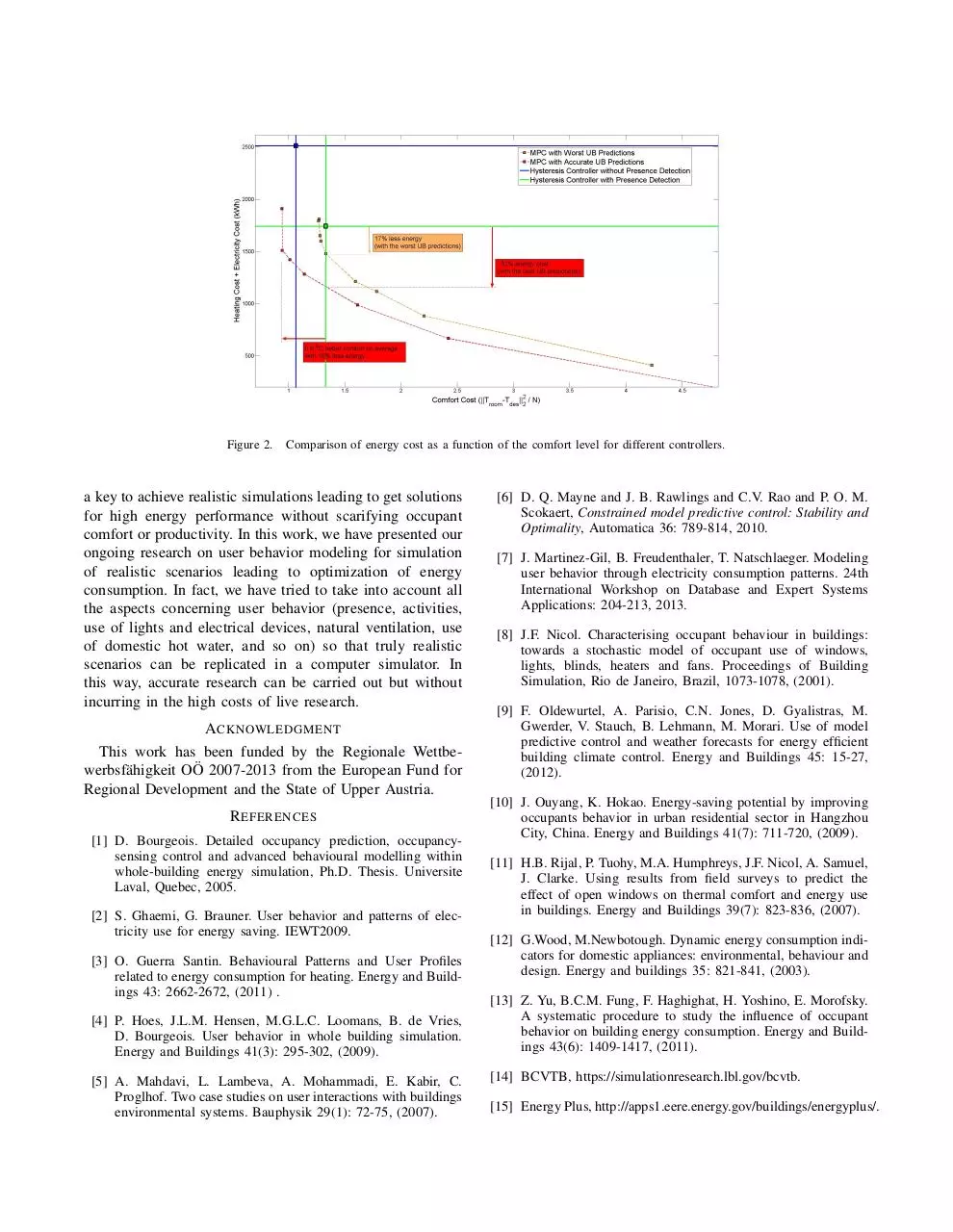
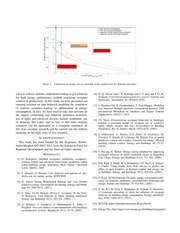
Figure 2 demonstrates two different MPC experiments
run over a period of 2 months (October-November in Linz,
Austria). In the first one, current measurements of occupancy
are used as predictions for the whole optimization horizon
Thor (worst predictions), while in the second one perfect
occupancy predictions are used. Thus, these two experiments
set the bounds with respect to the benefits derived from
incorporating user behavior predictions. For both experiments, the heating-comfort cost has been plotted for different
scaling factors of comfort. Lastly, in both experiments, the
controller uses accurate weather predictions and an identified
model for the evolution of room temperature. Thus, this
setup allows us for assessing the benefit of user-behavior
predictions in energy saving.
The corresponding costs of standard hysteresis controllers
(i.e., one that operates only under people’s presence and
one that it is always on) is also demonstrated. Note that the
incorporation of accurate occupancy predictions may lead to
up to 32% reduction in the total heating cost at a comfort
level corresponding to the standard hysteresis controller.
Energy is also saved even without accurate user behavior
predictions due to the rest of the predictions incorporated
in the model predictive controller (i.e., weather and room
temperature predictions).
VI. C ONCLUSION
User behavior is one of the most significant sources of
uncertainty in the prediction of building energy use by
simulation programs due to the complexity and inherent
uncertainty of people behavior. With the trend towards smart
controllers that reduce energy consumption, taking into
account the behavior of home occupants actively involved is
�
Figure 2.
Comparison of energy cost as a function of the comfort level for different controllers.
a key to achieve realistic simulations leading to get solutions
for high energy performance without scarifying occupant
comfort or productivity. In this work, we have presented our
ongoing research on user behavior modeling for simulation
of realistic scenarios leading to optimization of energy
consumption. In fact, we have tried to take into account all
the aspects concerning user behavior (presence, activities,
use of lights and electrical devices, natural ventilation, use
of domestic hot water, and so on) so that truly realistic
scenarios can be replicated in a computer simulator. In
this way, accurate research can be carried out but without
incurring in the high costs of live research.
ACKNOWLEDGMENT
This work has been funded by the Regionale Wettbe¨ 2007-2013 from the European Fund for
werbsf¨ahigkeit OO
Regional Development and the State of Upper Austria.
R EFERENCES
[1] D. Bourgeois. Detailed occupancy prediction, occupancysensing control and advanced behavioural modelling within
whole-building energy simulation, Ph.D. Thesis. Universite
Laval, Quebec, 2005.
[2] S. Ghaemi, G. Brauner. User behavior and patterns of electricity use for energy saving. IEWT2009.
[3] O. Guerra Santin. Behavioural Patterns and User Profiles
related to energy consumption for heating. Energy and Buildings 43: 2662-2672, (2011) .
[4] P. Hoes, J.L.M. Hensen, M.G.L.C. Loomans, B. de Vries,
D. Bourgeois. User behavior in whole building simulation.
Energy and Buildings 41(3): 295-302, (2009).
[5] A. Mahdavi, L. Lambeva, A. Mohammadi, E. Kabir, C.
Proglhof. Two case studies on user interactions with buildings
environmental systems. Bauphysik 29(1): 72-75, (2007).
[6] D. Q. Mayne and J. B. Rawlings and C.V. Rao and P. O. M.
Scokaert, Constrained model predictive control: Stability and
Optimality, Automatica 36: 789-814, 2010.
[7] J. Martinez-Gil, B. Freudenthaler, T. Natschlaeger. Modeling
user behavior through electricity consumption patterns. 24th
International Workshop on Database and Expert Systems
Applications: 204-213, 2013.
[8] J.F. Nicol. Characterising occupant behaviour in buildings:
towards a stochastic model of occupant use of windows,
lights, blinds, heaters and fans. Proceedings of Building
Simulation, Rio de Janeiro, Brazil, 1073-1078, (2001).
[9] F. Oldewurtel, A. Parisio, C.N. Jones, D. Gyalistras, M.
Gwerder, V. Stauch, B. Lehmann, M. Morari. Use of model
predictive control and weather forecasts for energy efficient
building climate control. Energy and Buildings 45: 15-27,
(2012).
[10] J. Ouyang, K. Hokao. Energy-saving potential by improving
occupants behavior in urban residential sector in Hangzhou
City, China. Energy and Buildings 41(7): 711-720, (2009).
[11] H.B. Rijal, P. Tuohy, M.A. Humphreys, J.F. Nicol, A. Samuel,
J. Clarke. Using results from field surveys to predict the
effect of open windows on thermal comfort and energy use
in buildings. Energy and Buildings 39(7): 823-836, (2007).
[12] G.Wood, M.Newbotough. Dynamic energy consumption indicators for domestic appliances: environmental, behaviour and
design. Energy and buildings 35: 821-841, (2003).
[13] Z. Yu, B.C.M. Fung, F. Haghighat, H. Yoshino, E. Morofsky.
A systematic procedure to study the influence of occupant
behavior on building energy consumption. Energy and Buildings 43(6): 1409-1417, (2011).
[14] BCVTB, https://simulationresearch.lbl.gov/bcvtb.
[15] Energy Plus, http://apps1.eere.energy.gov/buildings/energyplus/.
�
 Historical archive . public document