Statistical Study About Existing OWL Ontologies From a Significant Sample as
Previous Step for Their Alignment
Jorge Martinez-Gil, Enrique Alba, and Jos´e F. Aldana-Montes
Universidad de M´alaga, Departmento de Lenguajes y Ciencias de la Computaci´on
Boulevard Louis Pasteur 35, 29071 M´alaga (Spain)
http://www.lcc.uma.es
Abstract—In this work, we present a proposal for characterizing the OWL ontologies available on the Web from a
significant sample. We have conducted a study to review the
specific characteristics of these ontologies paying attention to
features which can be important from the point of view of
the ontology alignment: language, sizes, number, and kind of
entities that are represented in them. As a result, we offer some
statistical data that can be helpful in order to understand the
current situation of OWL ontologies in the Web and, therefore
to guide the process of taking decisions when developing
applications for aligning them.
Keywords-ontologies; ontology alignment; semantic integration
Measure what is measurable, and
make measurable what is not so.
– Galileo Galilei
I. I NTRODUCTION
Ontologies have become one of the key enablers for the
Semantic Web vision [1]. Ontologies try to represent knowledge (instead of data or information) in order that (Web)
applications can perform more difficult tasks. Unfortunately,
ontologies themselves are heterogeneous and distributed.
Defined by different organizations or by different people in
the same organization, ontologies can have vastly different
characteristics [2]. So it is necessary to provide mechanisms
in order to identify relations among them. This is the main
task of the ontology alignment1 . Ontology alignment has
depthly studied and even, a lot of tools have been developed
to deal with the problem [3]. But these tools are often
developed without taking into account real knowledge from
experts. In order to provide some hints to researchers about
real problems we have conducted a study about ontologies
available on the Web.
We introduce our work in more depth with a 5W approach
which, in our humble opinion, summarizes our purpose.
What is this work about? We have conducted a study to
review the specific characteristics of web ontologies paying
attention to features which can be important from the point
of view of the ontology alignment; such as their language,
sizes or amount and kind of entities that are represented.
1 In this work, we consider the expressions ontology alignment and
ontology matching as synonyms
Why is this work useful? Considerable work has been
made in the past on automating ontology alignment, either
focusing on specific applications or aiming at providing a
generic way for various applications. However, most of the
state of the art automatic approaches are merely applicable
for synthetic ontologies, and the effectiveness of these approaches decreases for real ontologies [4]. Now, we provide
a statistical study about these real ontologies.
Where is this work applicable? Web ontologies are
now in use in areas as diverse as Web Portals, Multimedia
Collections, Design Documentation, Intelligent Agents, Web
Services, and so on. Web ontologies are also the focus of
much research into reasoning, language extensions, modeling techniques, and tool support that makes these various
extensions and techniques accessible to users [5].
When can the results be applied? When developing
knowledge management tools. Ontology alignment has been
proposed as a way for finding solutions in scenarios where
the semantic heterogeneity is a problem. So results for this
study can be taken into account when developing solutions
for information integration or distributed query processing.
Who can get benefited from it? Application developers. For example, only a few tools, called Partition Block
Based[6], DSSIM[7], RIMOM[8], and PRIOR+[9], cares
about the problem of deal with real large ontologies. From
these tools, DSSIM manually partitions large ontologies into
several smaller pieces, while RIMOM and PRIOR+ use
simple string comparison techniques as alternatives, so are
clearly solutions for improvement [6]. Partition Block Based
matching is currently the only technique that is able to work
with any kind of web ontologies. Rest of tools do not even
take into account that ontologies can become larger.
The rest of this document is structured in the following
way: Section 2 describes the related work. Section 3 presents
briefly the preliminaries which are necessary to our approach. Section 4 contains the results of our statistical study.
In Section 5, we make an interpretation of the results we
have obtained. Finally, we summarize with the conclusions
extracted from this study.
�
II. R ELATED W ORK
To the best of our knowledge, only a few statistical studies
about ontologies have been performed in the past. However,
none of them have been conducted from the point of the view
of the ontology alignment when collecting features from the
ontologies. This is a brief summary of them:
• Wang et al. [10] described an algorithm to extract
features from real world ontologies in order to obtain
a benchmark useful for developers who wish to build
software for this kind of ontologies.
• Tempich and Volz [11] used a set of ontologies for
collecting information about entities in order to build
reasoners. By examining their own data, they proposed
to cluster ontologies into five categories.
• Magkannaraki et al. [12] collected information in order
to detect problems (missing typing, namespace problems, wrong vocabularies, and so on) from ontologies.
• Bechhifer and Volz [13] conducted a new study by
using 277 OWL ontologies in order to obtain the
expressivity of them. They showed that many of these
OWL Full2 ontologies (a little restrictive kind of OWL
ontology) are OWL Full because of missing type
triples, and can be easily patched syntactically.
• Wang et al. [14] extended the work in [13]. They
collected a much larger size of samples and applied
similar analysis to attempt to patch these OWL Full
files. In addition, they shown how many OWL Full files
can be coerced into much more restrictive types.
• Finally, Warren [15] paid attention to ontologies in
the public domain as their continuing availability in
order to monitor the ongoing projects for developing
ontologies.
The novelty of our work in relation to these studies is
that we have conducted a study to find the characteristics of
existing public web ontologies paying attention to features
such as their language, sizes or amount and kind of entities
that are represented. In our opinion, these characteristics are
useful from the point of view of the developer of ontology
alignment tools who frequently has to take decisions related
to the ontologies these tools have to deal with.
III. P RELIMINARIES
OWL Web Ontology Language [16] is the most common
language for representing web ontologies. OWL has been
designed to be used by applications that need to process the
content of information instead of just presenting information
to humans. OWL facilitates greater machine interpretability
of Web content. Components from OWL ontologies are
defined now. It is neccesary to bear in mind these concepts
because they are going to be the object of our study.
Definition 1 (Class). A class is a kind of ontology entity
that defines a group of individuals that belong to this class
because they share some properties.
Example 1. Jorge , Enrique and Jos´
e are
members of the class Person. Classes can be organized
in a specialization hierarchy using subClassOf.
In general, there is a most general class named Thing
that is the class of all individuals and is a superclass of all
classes. There is also a most specific class named Nothing
that is the class that has no instances and a subclass of all
classes [16].
Definition 2 (Property). A Property is a kind of ontology
entity that states relationships between individuals or
between individuals and data values.
There are two kinds of properties: a) Object Property and
b) Datatype Property. The first kind can be used to relate
an instance of a class to another instance of other class.
The second can be used to relate an instance of a class to
an instance of a datatype.
Example 2. For example, the property wasBorn is an
Object Property. Because it can be used to link an instance of
a class for representing People to other instance of a class
representing Places . For example (: denotes instance),
:Marta wasBorn :Madrid.
On the other hand, the property hasAge is a Data
Property because it can be used to relate an instance
of the class representing People to an instance of the
datatype Integer. For example (: denotes instance), :Marta
hasAge 29.
Definition 3 (Individual). An Individual is a kind of
ontology entity that is an instance of one o more classes,
and properties may be used to relate one individual to
another.
Example 3. An individual named Jorge may be described as an instance of the class Person and the property
hasNationality may be used to relate the individual
Jorge to the individual Spanish .
A. Data collection
We have used the international version of the Google3
search engine to collect our OWL ontologies. We have
taken the 300 first ontologies that are indexed for the query
filetype:owl. Unlike other works, where toy ontologies4 are
discarded, we have not discarded any kind of ontologies.
3 http://www.google.com
2 OWL
Full is a kind of OWL ontology designed to be compatible with
RDF Schema
4 Several authors use the term toy ontology for naming those kind of
ontologies that are not useful, i.e. examples, tests and, so on
�
Language
English
Neutral
Spanish
German
Portuguese
Internationalized
French
Italian
Dutch
Polish
#Ontologies
250
12
10
10
5
5
3
2
2
1
Percentage
0.833
0.040
0.033
0.033
0.016
0.016
0.010
0.007
0.007
0.003
Table I
S UMMARY OF THE MOST USED LANGUAGES FOR DEVELOPING
ONTOLOGIES
Moreover, we have included ontologies that are bad-formed.
In case we have to deal with a bad-formed ontology, its
contribution to data collected will be ignored. Proteg´e5 has
been used to count the entities contained on the ontologies.
The collection task was was done until march 2009.
IV. S TATISTICAL STUDY
In this section, we perform a statistical study to understand
several characteristics from OWL ontologies. These are the
aspects to research and their justification:
• Language chosen for developing the OWL ontologies.
This aspect is important because it can help designers
to take decisions related to the inclusion of background
knowledge support.
• Size of the files where OWL ontologies are contained.
This aspect is important when designing input components for ontology alignment tools.
• Amount and nature of the entities represented on the
OWL ontologies. Understanding this fact can help designers when taking decisions about the inclusion of
ontology matching algorithms.
• Classification of the ontologies according to the statistical data obtained. We think that it is a very important
too, because it can help us to decide when a ontology
is small, when is medium size, and when is large from
a strictly statistical point of view.
In Table 1 we can see the absolute number and the
percentage of ontologies available on the Web for a specific
language.
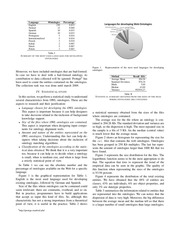
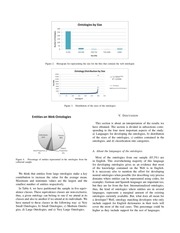
Figure 1 is the graphical representation for Table 1.
English is the most used language used for developing
existing ontologies, followed by German and Spanish.
Size of the files where ontologies can be contained could
seem irrelevant: there are comments, overhead, and so on.
But in practice, programmers have to build applications
that accept as input this kind of files. So, although this
characteristic has not a strong importance from a theoretical
point of view, it is useful in the practice. Table 2 shows
5 http://protege.stanford.edu/
Figure 1.
ontologies
Representation of the most used languages for developing
Method
Average Mean
Standard Deviation
Mode
Median
Variance
Result (Kb)
204.26
976.18
5.00
43.00
952934.27
Table II
S TATISTICAL SUMMARY OBTAINED FROM THE SIZES OF THE FILES
WHERE ONTOLOGIES ARE CONTAINED
a statistical summary obtained from the sizes of the files
where ontologies are contained.
The average size for the file where an ontology is contained is 204.26 Kb. The standard deviation and variance are
so high, so the dispersion is high. The most repeated size in
the sample is a file of 5 Kb. An the median (central value)
is much lower that the average mean.
Figure 2 shows an histogram for representing the size for
the owl files that contains the web ontologies. Ontologies
has been grouped in 250 Kb multiples. The last bar represents the amount of ontologies larger than 1000 Kb that we
have found.
Figure 3 represents the size distribution for the files. The
logarithmic function seems to be the most appropriate to do
that. The equation that tries to represent the trend of the
empirical data can be seen in the graphic. The quality of
this function when representing the sizes of the ontologies
is 93.94 percent.
Figure 4 represents the distribution of the total existing
entities. We have obtained that the 48% of entities are
classes, 43% are individuals, 6% are object properties, and
only 3% are datatype properties.
Table 3 summarizes the information related to entities that
are represented into the ontologies. We can notice that the
dispersion of data is very high. Moreover, the big difference
between the average mean and the median tell us that there
is a larger number of small ontologies than large ontologies.
�
Figure 2.
Histogram for representing the size for the files that contains the web ontologies
Figure 3.
Distribution of the sizes of the ontologies
V. D ISCUSSION
This section is about an interpretation of the results we
have obtained. The section is divided in subsections corresponding to the four most important aspects of the study:
a) Languages for developing the ontologies, b) distribution
of the sizes of the ontologies, c) entities contained in the
ontologies, and d) classification into categories.
A. About the languages of the ontologies
Figure 4. Percentage of entities represented in the ontologies from the
collected sample
We think that entities from large ontologies make a key
contribution to increase the value for the average mean.
Maximum and minimum values are the largest and the
smallest number of entities respectively.
In Table 4, we have partitioned the sample in five equivalence classes. These equivalence classes are non-exclusive,
thus, a given ontology can belong to one if we attend at its
classes and also to another if we attend at its individuals. We
have named to these classes in the following way: a) Very
Small Ontologies, b) Small Ontologies, c) Medium Ontologies, d) Large Ontologies, and e) Very Large Ontologies.
Most of the ontologies from our sample (83.3%) are
in English. This overwhelming majority of this language
for developing ontologies gives us an evidence that most
of the knowledge contained on the Web is in English.
It is neccesary also to mention the effort for developing
neutral ontologies when possible (for describing very precise
domains where entities can be represented using codes, for
example). German and Spanish languages are important too,
but they are far from the first. Internationalized ontologies,
thus, the kind of ontologies where entities are in several
languages, represents a marginal amount of the existing
ontologies currently available. But, what does all mean for
a developer? Well, ontology matching developers who only
include support for English dictionaries in their tools will
cover the most of the real cases. This percentage could be
higher as they include support for the rest of languages.
�
Average Mean
Standard Deviation
Mode
Median
Variance
Maximum
Minimum
#Classes
384.73
1856.75
2.00
52.50
3447517.65
23141.00
0.00
#Object Properties
46.16
86.93
0.00
17.50
7557.73
950.00
0.00
Table III
#Data Properties
21.82
46.93
0.00
7.00
2202.52
557.00
0.00
#Individuals
343.62
1801.95
0.00
11.00
3247017.29
17943.00
0.00
S TATISTICAL DATA RELATED TO ENTITIES THAT ARE REPRESENTED FROM THE ONTOLOGIES COLLECTED
Very Small Ontologies
Small Ontologies
Medium Ontologies
Large Ontologies
Very Large Ontologies
#Classes
0-12
13-29
30-75
76-160
171-23141
#Object Properties
0-3
4-11
12-30
31-60
61-950
Table IV
#Data Properties
0
1-4
5-11
12-34
35-557
#Individuals
0
1-4
5-26
27-172
173-17943
PARTITION OF THE SAMPLE ACCORDING TO EQUIVALENCE CLASSES
B. About the sizes of the ontologies
Sizes of the ontologies follow a long tail distribution (also
known as Zipf distribution or Pareto distribution). That it
is to say, the size of ontologies is very small for a big
proportion of the population of the distribution and this size
is increased gradually for the rest of ontologies. The main
characteristic of this kind of distribution is known as the
80/20 rule. Thus, the 80 percent of the population is small,
and the other 20 percent is distributed along a long tail of
sizes that are increased gradually.
Developers of ontology alignment tools can use this
characteristic for taking decisions about the percentage of
real ontologies that is covered by their tools. That it is to
say, developing a tool for dealing with the 80 percent of the
ontologies is easy but, dealing with the rest of the population
of ontologies becomes more difficult in a gradual way.
C. About the entities represented in the ontologies
According to our study, we have a web of classes. Classes
are designed to contain individuals but, nowadays, we have
more classes (or groups of individuals) than individuals. One
possible explanation could be that ontologies are frequently
used as models for interoperability purposes, instead of
annotating resources. In order to the Semantic Web may
become real, ontologies should begin to be used more
intensively for annotating resources. Related to the small
number of properties, maybe ontologies are not enough
expressive and are unfortunately still often reduced to some
kind of ligthweight models like taxonomies.
What is the lesson that a developer can learn from this?
Well, it seems a good idea to design algorithms which uses
individuals for comparing the classes to which they belong.
However, these tools are not going to find many individuals
yet.
Figure 5. Inflexion point tells us where the linear trend for entities is
broken, and therefore where we can begin to call Very Large to ontologies
D. About the classification into categories
If we attend to the results, we can realize of an annoying
fact. Could be an ontology considered very large with
171 classes? Well the answer is not clear. Firstly, from
a strictly statistical point of view, an ontology with 171
classes has a larger number of classes than the 80 percent
of existing ontologies. But it is neccesary that this ontology
may have at least 61 object properties, 24 data properties and
173 individuals to be considered as a complete very large
ontology. However, experience tells us that it still seems to
be a medium size ontology.
Maybe we should use the average size of an OWL
ontology. We have that according to the average mean, a
medium ontology has 384.73 classes. So we could consider
an ontology with a larger number of classes as a large
ontology, at least, larger that the mean. The problem consists
in that the number of classes still seems to be insufficient
to be considered as a big one.
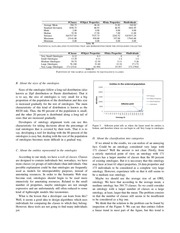
We think that the solution to the problem can be found by
inspection of the Figure 5. We can see that entities follow
a linear trend in most part of the figure, but this trend is
�
broken in a point (called inflexion point) where the number
of classes and individuals begin to grow in an exponential
way. We think that it is reasonable to consider this inflexion
point, where an explosion of classes and individuals can be
appreciated, as the limit for separating very large ontologies
from the rest. This inflexion point tell us that the limit could
be near to 1500 classes or 1500 individuals.
VI. C ONCLUSIONS
In this work, we have surveyed a significant sample of
OWL ontologies available on the Web. The end goal of this
work is to provide some information about characteristics
that can be interesting from the point of view of the ontology
alignment. As conclusion of this work, we can remark
several interesting points:
1) Most of the ontologies from our sample (83.3%) are
in English. It exists a big difference in relation to
the second most used language: neutral (4%), thus,
ontologies which only contain technical words that are
not attribuible to any language. German and Spanish
languages are the third most used languages when
developing OWL ontologies, but their use is marginal
in comparison with English.
2) Size for existing OWL ontologies tends to follow
a long tail distribution. According to the heuristic
formulated by Pareto for this kind of distributions, this
means that the 80 percent of the population is small
and, the other 20 percent is distributed along a tail of
sizes that are increased slowly and gradually.
3) We have studied the nature and distribution of entities
represented on the ontologies and we have found that
classes are the most represented entity. Therefore,
we have more groups of individuals than individuals
themselves on the Web. This is an evidence that ontologies are not being used intensively for annotating
resources or, at least, that are not being populated.
4) Finally, we have been able to establish a five-class
classification of ontologies according to the kind and
number of entities that they contain. We have ordered
and partitioned the set of ontologies and we have
obtained five non-exclusive equivalence classes and
the conditions that are necessary to test in order to
determine if a given ontology belongs to them. We
have discussed about the existence of a inflexion point
where linear trend for the growth of entities is broken.
We have proposed to use this inflexion point in order
to differentiate Very Large Ontologies from the rest.
As future work, we propose to use the results of this
study to develop applications that can address the problem
of aligning real ontologies. We think that the statistical data
that we have provided can guide to developers when taking
design decisions for their ontology alignment tools.
ACKNOWLEDGMENTS
This work have been funded by the Spanish Ministry
of Sciences and Innovation (MICINN) and FEDER under
contracts TIN2008-04844 and TIN2008-06491-C04-01 and
CICE, Junta Andalucia, under contracts P07-TIC-02978 and
P07-TIC-03044.
R EFERENCES
[1] T. Berners-Lee, J. Hendler and, O. Lassila. The Semantic Web.
Scientific American, May 2001.
[2] J. Li, J. Tang, Y. Li and, Q. Luo. RiMOM: A Dynamic
Multistrategy Ontology Alignment Framework. IEEE Trans.
Knowl. Data Eng. 21(8): 1218-1232 (2009)
[3] J. Euzenat, P. Shvaiko. Ontology Matching. Springer-Verlag,
2007
[4] P. Shvaiko, J. Euzenat, F. Giunchiglia and, B. He. Proceedings
of the 2nd International Workshop on Ontology Matching
(OM-2007) Busan, Korea, November, 2007
[5] A. Kalyanpur, B. Parsia and, J. Hendler. A Tool for Working
with Web Ontologies. Int. J. Semantic Web Inf. Syst. 1(1):
36-49 (2005)
[6] W. Hu, Y. Qu and, G. Cheng: Matching large ontologies. A
divide-and-conquer approach. Data Knowl. Eng. 67(1): 140160 (2008)
[7] M. Nagy, M. Vargas-Vera and, E. Motta. DSSim managing
uncertainty on the semantic web, in: Proceedings of ISWC +
ASWC Workshop on Ontology Matching, 2007, pp. 160-169.
[8] M. Mao and Y. Peng. The Prior+: results for OAEI campaign
2007, in: Proceedings of ISWC + ASWC Workshop on Ontology Matching, 2007, pp. 219-226.
[9] J. Tang, J. Li, B. Liang, X. Huang, Y. Li and, K. Wang.
Using Bayesian decision for ontology mapping, Journal of Web
Semantics 4 (4) (2006) 243-262
[10] T. Wang, B. Parsia and, J. Hendler. A Survey of the Web
Ontology Landscape. International Semantic Web Conference
2006: 682-694
[11] S. Bechhofer and R. Volz. Patching Syntax in OWL Ontologies. International Semantic Web Conference 2004: 668-682
[12] A. Magkanaraki, S. Alexaki, V. Christophides, and D. Plexousakis. Benchmarking RDF Schemas for the Semantic Web.
International Semantic Web Conference 2002: 132-146
[13] C. Tempich and R. Volz. Towards a benchmark for Semantic
Web reasoners - an analysis of the DAML ontology library.
EON 2003
[14] S. Wang, Y. Guo, A. Qasem, and J. Heflin. Rapid Benchmarking for Semantic Web Knowledge Base Systems. International
Semantic Web Conference 2005: 758-772
[15] R. Warren, Ontologies: Where are we at?, Knowledge-Based
Bioinformatics Workshop, September 2005.
[16] OWL, Ontology Web Language, http://www.w3.org/TR/owlfeatures/, 2008.
�
 Historical archive . public document