Recommendation of Job Offers Using Random Forests and
Support Vector Machines
Jorge Martinez-Gil
Bernhard Freudenthaler
Thomas Natschläger
Software Competence Center
Hagenberg GmbH
Hagenberg, Austria
jorge.martinez-gil@scch.at
Software Competence Center
Hagenberg GmbH
Hagenberg, Austria
bernhard.freudenthaler@scch.at
Software Competence Center
Hagenberg GmbH
Hagenberg, Austria
thomas.natschlaeger@scch.at
ABSTRACT
The challenge of automatically recommending job offers to appropriate job seekers is a topic that has attracted many research
effort during the last times. However, it is generally assumed that
there is a need of more user-friendly filtering methods so that
the automated recommendation systems might be more widely
used. We present here our research on two methods from the
data analytics field being able to disseminate job offers to the
right person at the right time, which are based on Random Forest
and Support Vector Machines respectively. Both methods are
used here to identify the actual attributes in which users are set
when they are attracted to a job offer. Preliminary results in the
context of automatic job recommendation suggest that these two
methods seem to be promising.
KEYWORDS
e-recruitment, data analytics, random forests, support vector
machines
1
INTRODUCTION
Today, the job market is becoming more and more dynamic. In
fact, this is one of the major reasons for an increasing demand for
better methods for publishing or finding interesting jobs offers.
Moreover, this interest is bidirectional [13], what means that it
stems not only from Human Resources (HR) departments in companies, intermediaries or manufacturers of recruiting software,
but also from job seekers looking for facing new professional
challenges. This means that, as a first step, it is assumed that
a preliminary reduction of the most promising applicants and
job offers can lead to considerable improvements and savings
(in terms of money, time and effort) for both parties [10]. In this
context, job portals and online recruitment platforms have been
traditionally designed in order to help job providers and job seekers to easily find suitable candidates and job offers respectively.
At present, many job portals and web-based recruitment systems offer their services around the world. However, there is
a great corpus of literature suggesting that the functionality of
the existing portals could be improved [3, 7, 14–16, 19, 23]. As
a general case, only references to online job advertisements are
managed, which are then classified using a simple textual description or core attributes. This means that there are serious
obstacles for a satisfactory support, at least, in the side of job
seekers who are forced to browse through the list of available
job offers to find what better fits their needs and interests.
In order to allow job seekers to efficiently find what they
are looking for, the research community has been working in a
© 2018 Copyright held by the owner/author(s). Published in the Workshop
Proceedings of the EDBT/ICDT 2018 Joint Conference (March 26, 2018, Vienna,
Austria) on CEUR-WS.org (ISSN 1613-0073). Distribution of this paper is permitted
under the terms of the Creative Commons license CC-by-nc-nd 4.0.
kind of information filtering mechanism (a.k.a. job recommender
system [2, 6, 20]) aiming to predict the potential interest of job
seekers on given job offers. More specifically, job recommender
systems aim automatically suggesting job openings in such a way
that as many offers as possible are offered to the right candidates
at the right moment.
To appropriate face these problems, a number of alternatives
have been already explored: whether data concerning the offer should be provided in a structured or unstructured way [7],
which communication channels are the most appropriate in a
given context [4, 5], how knowledge extraction over the job descriptions should be performed [22], and so on. However, it is
widely assumed that more accurate and user-friendly filtering
methods need to be developed in order to reach a wider audience
for these kind of software products [18].
Our research work proposes to make this process much more
smooth and comfortable for the users looking for accurate job
recommendations. In fact, our methods aim to automatically
identify the criteria on what potential candidates evaluate the
acceptance of a given job offer. Additionally, our research aim to
improve the perceived quality of recommendations as feedback
is received from users. Therefore, in view of the aforementioned
issues, we propose here a novel approach for the accurate recommendation of job offers using two well-known methods from
the data analytics field that can have great performance in this
context. In fact, the major contributions of this ongoing work
can be summarized as follows:
• We propose a novel mechanism to automatically recommend job offers based on Random Forests in an accurate
way.
• We propose an alternative mechanism to automatically
recommend job offers based on the computation of Support Vector Machines.
• We perform an empirical evaluation of our two proposed
methods with real data concerning recruitment from one
of our partners.
The remainder of this work is organized in the following way:
Section 2 reports the state-of-the-art on existing methods and
tools for the automatic recommendation of job offers. Section 3
presents the problem that we are addressing within the frame
of this work. Section 4 described our two methods to face that
problem, these two methods are based on Random Forests and
Support Vector Machines respectively. Section 5 reports the empirical evaluation of our methods. Section 6 outlines the analysis
of the results that we have achieved from our empirical evaluation. Finally, we remark the conclusions and the future lines of
research.
�
2
BACKGROUND
For many years, information systems for human resources (a.k.a.
Human Resources Management Systems or simply HRMs) have
been mainly restricted to tracking applicant’s data through the
applicant’s management systems [11]. However, through an increasing differentiation of labor and business worlds, the process
of finding the right person for a job opening and vice versa is
increasing its complexity. It is clear that upcoming social media
channels in addition to an overwhelming number of job portals
require new strategies and technologies for both recruiters and
job seekers [9].
2.1
Uses Cases
Solutions for the automatic recommendation of job offers are
currently of great interest for a number of organizations that
wish to automatize their e-recruitment processes. Among the
most important ones, we can mention HR departments, market
intermediates, electronic job platforms and portals, or software
manufacturers. We offer here a closer overlook to each of them.
2.1.1 HR departments. The Human Resources (HR) departments in companies have to daily face with problems of this kind.
Currently, the HR departments of large companies receive lots
of incoming e-mail applications. All the application documents
have to be manually process, so that the relevant information
extracted can be transferred into the internal recruiting systems.
This process is very time consuming and spends a lot of resources
(time, money, effort). For this reason, only the data from proper
candidates should be transferred into the system.
2.1.2 Market intermediaries. HR Recruiters and headhunters
usually receive the order of finding the most suitable candidate
for a specific job description. The challenge is so complex that
many companies are willing to pay big sums for successfully
completing this task. Solutions for job recommendation can help
to alleviate this problem, so that it can be performed much more
efficiently and effectively.
2.1.3 Electronic job platforms and portals. The segment of
electronic job platforms and/or portals is subject to a strong
competition. To survive in this highly competitive market, these
operators provide their customers continually new and additional
services. With the envisaged research results in the field of automatic job recommendation, portal operators can increase their
level of innovation and therefore generate additional competitive
advantages for their customers.
2.1.4 Manufacturers of recruiting software. It is also necessary to mention the manufacturers of recruiting software, since
this group is constantly striving to expand their software solution continuously with additional and innovative modules to
increase customer satisfaction and generate additional revenue.
For this reason, software manufacturers of recruiting solutions
are potentially beneficiaries of results leading to a satisfactory
job recommendation.
2.2
Existing Recommendation Engines
Existing job portals are mainly based on either the use of relational databases or well-known methods from the area of information retrieval (IR). A major difference between them is that
relational systems are only able to work with job offers that are
already stored in the databases, while IR-based approaches may
allow global searches over the Web or social networks.
When using relational databases, job offers with descriptive
attributes such as job title, location, company, required skills,
etc. and the URL of the job advertisement are stored in relations,
and access is provided by means of database queries in standard
languages such as SQL [21]. Consequently, only those vacancies
matching exactly the given search criteria can be found [17].
When using IR methods, the full text search is alternatively supported by keywords whereby standard search engines can be
integrated. Both procedures can be used in a similar way when
searching for offers. However, IR-based methods allow to exploit
semantic similarity in keywords, but this is only supported to a
limited extent by standard search engines. On the other hand,
these approaches generate ordered lists of URLs, where users
have a proven tendency to view only the highest ranking results.
For these reasons, and regardless of the way in which job offers
are handled and processed, the task of recommending the right
offer to the right user has been always an important task [12].
In this way, the research community is working to find ways
to make this recommendation fully satisfactory to all parties
involved in the process.
2.3
Existing Methods
Techniques for automatic recommendation of job offers are specifically designed to address the problem of information overload
by giving priority to information delivery for individual users
based on their learned preferences [1].
The most common to process this information nowadays consists of automatically processing the documents involved in the
e-recruitment process. For each document, it is possible to extract
a vector for each of its fields (which contain textual information)
using the bag-of-words model and TF-IDF as weighting function.
Then, some kind of methods for set comparison can shed results
on the suitability of a given candidate for a specific job offer.
In general, most of methods try to exploit solutions based on
the Vector Space Model (VSM) to measure the similarity ratio
between the original job offer and the application received. It is
a solution easy to implement, with very low computational costs,
and that traditional has achieved very good results in the context
of job recommendation. However, new trends bet on the use of
machine learning technology in order to overcome the traditional
limitations concerning the incapability of going further beyond
the syntactical representation of the documents.
3
PROBLEM STATEMENT
The problem that we address within the frame of this work is being able to automatically recommend job offers to the appropriate
candidates. We are given past solved cases
(x i , yi ),
x ∈ Rd , y ∈ {−1, 1}.
We want a classifier so that,
д(x) = sign(ϕ(w) · ϕ(x) + b),
(1)
ϕ(w) · ϕ(x) = K(w, x).
(2)
where
The key here is being able to evaluate the performance of the
proposed method in relation to the past solved cases that are used
to feed the algorithm in each iteration to readjust the internal
parameters.
�
y
..
..
..
..
ss
es
he
t
..
te
st
..
4
off
er
s
b
re
lev
an
t
hy
p
x
METHODS
In order to improve the accuracy of the predictions, great research
efforts have been made in the last few years concerning the
definition of methods for combining a number of simple methods.
These methods construct a set of hypotheses (a.k.a. ensemble),
and combine the predictions of the ensemble in some way to
classify new data. The precision obtained by this combination of
hypotheses is usually better than the precision of each individual
component. One of the most popular methods in this context are
random forests.
On the other hand, algorithms based on n-dimensional geometry where given a set of past solved cases from the past are also
gaining popularity. In this way, it is possible to label the classes
and train the algorithm to build a geometric model that correctly
classify a new sample. We give a deeper insight of these two
methods below.
4.1
er
pl
Figure 1: Example of Random Forest bagging N decision
trees. Each decision tree gives a vote for a given class.
Then, the random forest chooses the classification having
the most votes.
no
n
an
e
th
at
Y N Y N Y N Y N Y N Y N Y N Y N
jo
be
st
s
eg
re
ga
..
re
lev
..
w
o
an
tj
cla
ob
Tn
T3
T2
T1
off
er
s
RF
Random Forests
The first method that we envision in this research work is the
Random Forest (RF). The rationale behind RF is to work with a
given number of decision trees at the same time. Each tree gives
a vote for a given class. This process is iterated by all trees. Then,
the RF indicates the results having the most votes.
One of the advantages of RFs using is that, in most situations,
this method is able to avoid overfitting of the training set, what
it is not always possible by using other machine learning techniques. Figure 1 shows us an example of RF. Please note that, in
order to work in a correct way, each decision tree has to been
built following these steps:
(1) Be N the number of test cases, M is the number of variables
in the classifier.
(2) The number of input variables to be used to determine the
decision on a node is m; more m must be always smaller
than M
(3) Select a training set for this tree and use the remaining
test cases to calculate the error.
(4) For each node of the decision tree, randomly select m
variables on which to base the decision. Calculate the best
distribution of the training set from the variable m.
We think that the main advantages of using RF in this context
can be summarized as follows:
• In general, RF has only one parameter to configure, the
number of trees in the RF
• Unlike black-box models, the results obtained by RF are
easier to interpret
Figure 2: Example of 2-dimensional Support Vector Machine. The method consists of looking for the hyperplane
that maximizes the separation between the two given
classes
• RF, in general, can be easily extended to support multiple
classes
• RF are based on probabilistic principles
4.2
Support Vector Machines
Support Vector Machines (SVM) is a state-of-the-art classification
method that separates data samples using the geometric notion
of hyperplane. The concept behind SVM is very intuitive and
easy to understand: If we have data samples that has been already classified, SVM can be used to generate multiple separation
hyperplanes so that the data samples already classified can be
divided into segments.
The idea is that each of these segments contain only one class.
The SVM technique is generally useful and very accurate in
scenarios involving some kind of classification. The reason is
that SVM is designed to minimize the classification error and
maximize the geometric margin.
From all the classifiers which are able to correctly classify the
past samples, we are just interested in picking the closest to the
hyperplane. Figure 2 shows us the rationale behind SVM with an
example that represents a space of two dimensions. The aim here
is to find the hyperplane that best segregates the class of relevant
job offers from the class of non relevant job offers. When a new
instance is added, then this hyperplane has to be recalculated in
order to facilitate future classifications.
SVM has demonstrated a great performance in a number of
scenarios involving some kind of classification of data samples
in the past. We also think that SVM offers several advantages in
the context of automatic recommendation of job offers. These
advantages are the following:
• SVM has a regularization mechanism which allows avoiding over-fitting (a.k.a. geometric margin)
• SVM is defined by a optimization problem for which there
is a number of existing efficient solutions
• SVM provides an approximation to a bound on the test
error, which makes it very robust
SVM also has additional advantage that consists of using kernels, so that it is possible to add expert knowledge about the
�
Table 1: Average values and standard deviations for the numerical attributes of our data set
100
SVM
RF(B)
Workers
Inhabitants
Distance
Salary
Working time
Average
5069.5
361547.5
36.3
52437.5
38.8
Std. Deviation
9195.2
642882.9
37.4
13717.4
3.5
87.5
62.5
Baseline
0
100
Degree of success
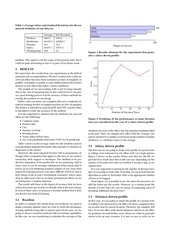
Figure 3: Results obtained for the experiment that generates a salary driven profile
problem. This aspect is out the scope of the present work, but it
could be quite interesting to face it as part of our future work.
0.8
RESULTS
We report here the results from our experiments in the field of
automatic job recommendation. We have worked with a data set
of 40 job offers that have been evaluated on basis of templates or
profiles. A template or profile is a pre-defined pattern that shows
interest on job offers that follow certain conditions.
The sample set we are working with is not too large (mainly
due to the cost of acquiring data in this context) but it can give
us a good starting point to test the accuracy of these methods for
solving the problem we are facing.
Before each execution, our complete data set is randomly divided in training set (80% of samples) and test set (20% of samples).
The former is intended to train both RF and SVM, and the latter
is intended to verify the accuracy of the method.
It is also important to mention that the attributes for each job
offers are the following:
•
•
•
•
•
•
•
Company name
Position title
City
Distance to home
Working hours
Yearly salary before taxes
Are your potentially interested (Y/N)? (to be predicted)
Table 1 shows us the average values for the attributes and its
corresponding standard deviations (the amount of variation or
dispersion of the values)
Moreover, the most repeated Position Title is programmer, although other occupations that appear in the data set are analyst,
researcher, desk support or developer. The attribute to be predicted is dependent of the profile that we are analyzing. And in
some cases it can be strongly unbalanced (what means that it
will be an an overwhelming majority samples of one class) what
makes the learning process even more difficult. However, this is
how things work in real e-recruitment scenarios, where users
click in either just a few or in many potential job offers, so we
are facing here a realistic situation.
The results will show us the degree of accuracy that we have
achieved in each case. In order to identify what is the best strategy
in each of these cases, we propose a baseline method that it does
not involve any kind of learning.
0.6
Score
5
0.2
0
5
Baseline
In order to compare the results from our methods, we need to
define a baseline method. Since we want to verify the advantages
of using methods being able to analyze past solved cases, we are
going to choose a baseline method with no learning capabilities.
In this case, we are considering to calculate the average of the
10
15
20
25
Number of Decision Trees
30
Figure 4: Evolution of the performance as more decision
trees are considered in the case of a salary driven profile
attributes for each of the offers that the potential candidate liked
in the past. Then, we compare new offers with the ’average’ one,
and we decide if it is similar or not based on the number of similar
attributes, i.e. attributes closer to the average.
5.2
Salary driven profile
The first case we are going to study is the profile of a person who
is willing to be interested in job offers with very high salaries.
Figure 3 shows us the results. Please note that for the RF, we
pick the best result since this result can vary depending on the
number of decision trees that our method is trying to bag, as we
explain later.
It is very important to determine the number of decision trees
that we are going to work with. To do that, we run several time the
algorithm in order to determine what is the appropriate number
of trees to be bagged.
From Figure 4 it is possible to see, the more decision trees we
add the better get the results. However, at a certain point the
benefit is lower than the cost (in terms of computing time) of
including additional decision trees.
5.3
5.1
0.4
Distance driven profile
In this case, we are going to study the profile of a person who
is willing to be interested in job offers for those companies that
are located near its current location. Therefore, the template will
have Yes in job offers with shorter distances and No in job offers
for positions located further away. However, what in principle
seems to be an easy scenario, it is not so easy to solve as we
�
75
SVM
RF(B)
0.6
87.5
37.5
Baseline
0.4
100
Score
0
Degree of success
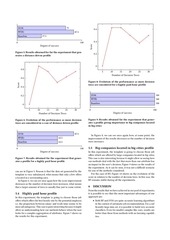
Figure 5: Results obtained for for the experiment that generates a distance driven profile
0.2
0
0.8
5
10
15
20
25
Number of Decision Trees
30
Score
0.6
Figure 8: Evolution of the performance as more decision
trees are considered for a highly paid hour profile
0.4
0.2
0
5
10
15
20
25
Number of Decision Trees
62.5
Baseline
62.5
0
Baseline
100
100
Figure 9: Results obtained for the experiment that generates a profile giving importance to big companies located
in big cities
In Figure 8, we can see once again how, at some point, the
improvement of the results decreases as the number of decision
trees increases.
100
Degree of success
Figure 7: Results obtained for the experiment that generates a profile for a highly paid hour profile
can see in Figure 5. Reason is that the data set generated by the
template is very unbalanced, what means that only a few offers
a located in a surrounding area.
In Figure 6, we can see once again how the score improvement
decreases as the number of decision trees increases, what means
that a larger amount of trees is usually fine just to some extent.
5.4
100
Degree of success
87.5
RF(B)
100
RF(B)
0
30
Figure 6: Evolution of the performance as more decision
trees are considered in a case of distance driven profile
SVM
SVM
Highly paid hour profile
In this experiment, the template is going to choose those job
offers which offers the best hourly rate by the potential employer,
i.e. the proportion between salary and work time seems to be
more advantageous. This case is quite interesting because it might
allow us understanding how our methods behave when the user
looks for a complex aggregation of attributes. Figure 7 shows us
the results for this experiment.
5.5
Big companies located in big cities profile
In this experiment, the template is going to choose those job
offers which are offered by large companies located in big cities.
This case is also interesting because it might allow us seeing how
our methods deal with the fact that more than one attribute has
an impact in the user’s decision. Figure 9 shows us the results of
the experiment. As it can be seen, it was not a difficult scenario
for any of the methods considered.
For the case of RF, Figure 10 shows us the evolution of the
score in relation to the number of decision trees. In this case, the
RF remains stable during all the experiments.
6
DISCUSSION
From the results that we have achieved in our pool of experiments,
it is possible to see that the most important advantages of our
approach are:
• Both RF and SVM are quite accurate learning algorithms
in the context of automatic job recommendation. For a sufficiently large data set, it is possible to build very accurate
classifiers. Even for smaller samples like ours, results are
better than those from methods with no learning capabilities.
�
mapping in the case of SVM as we mentioned earlier. Finally, it
is also necessary to study how to integrate this technology with
existing web information systems so that these two methods can
be put into operation by the industry.
1
Score
0.8
ACKNOWLEDGMENTS
0.6
We would like to thank the anonymous reviewers for their useful
suggestions to improve this work. The research reported in this
paper has been supported by the Austrian Ministry for Transport, Innovation and Technology, the Federal Ministry of Science,
Research and Economy, and the Province of Upper Austria in the
frame of the COMET center SCCH.
0.4
0.2
0
REFERENCES
5
10
15
20
25
Number of Decision Trees
30
Figure 10: Evolution of the performance as more decision
trees are considered for the profile Big companies located
in big cities
• RF and SVM both can handle many variables without
discarding any of them, what makes them good candidates
to efficiently work at web scale, in large databases or with
large instances.
• Last, but not least, RF is able to provide useful insights
for understanding the interactions between the different
variables. On the other hand, SVM operate in a less intuitive way, but in exchange, has had a better performance
in most of cases.
However, an complete empirical evaluation over larger data
sets should be performed in order to gain deeper insights on the
advantages of these two methods. The reason is that, as we have
seen, it is not always possible to obtain optimal results with small
samples like ours.
7
CONCLUSIONS AND FUTURE WORK
In this work, we have presented our proposal for the automatic
recommendation of job offers. Our goal here is being able to
build methods being able to deliver appropriate job offers to
those job seekers that could be potentially interested on them. To
do that, we have based our research efforts on two well-known
classification methods: random forests (RF) and support vector
machines (SVM).
Our empirical evaluation shows us interesting facts. For example, RF are more likely to be interpreted although they do no
present a particularly good performance in relation to SVM. On
the other hand, SVM are more accurate, although they work with
a model being much harder to interpret by human. What it is
clear is, that in both cases, we have shown that these two methods are quite appropriate for accurately working in the context
of automatic job recommendation.
As future work, we propose to design novel computational
methods being able to process the textual description from the
job offers. At that point, we were using just the quantitative
information that is advertised. However, we think that the way
an offer is written can help attracting potential candidates as
well, maybe new methods for natural language processing using
neural networks could help in this task. We also would like to
explore the possibilities to work with expert knowledge via kernel
[1] Fabian Abel, Andras A. Benczur, Daniel Kohlsdorf, Martha Larson, Robert
Palovics: Proceedings of the 2016 Recommender Systems Challenge, RecSys
Challenge 2016, Boston, Massachusetts, USA, September 15, 2016. ACM 2016.
[2] Daniel Bernardes, Mamadou Diaby, Raphael Fournier, Francoise FogelmanSoulie, Emmanuel Viennet: A Social Formalism and Survey for Recommender
Systems. SIGKDD Explorations 16(2): 20-37 (2014).
[3] Stefan Buschner, Rafael Schirru, Hanna Zieschang, Peter Junker: Providing
recommendations for horizontal career change. I-KNOW 2014: 33:1-33:4
[4] Mamadou Diaby, Emmanuel Viennet, Tristan Launay: Toward the next generation of recruitment tools: an online social network-based job recommender
system. ASONAM 2013: 821-828
[5] Mamadou Diaby, Emmanuel Viennet, Tristan Launay: Exploration of methodologies to improve job recommender systems on social networks. Social Netw.
Analys. Mining 4(1): 227 (2014)
[6] Frank Faerber, Tim Weitzel, Tobias Keim: An Automated Recommendation
Approach to Selection in Personnel Recruitment. AMCIS 2003: 302.
[7] Evanthia Faliagka, Lazaros S. Iliadis, Ioannis Karydis, Maria Rigou, Spyros
Sioutas, Athanasios K. Tsakalidis, Giannis Tzimas: On-line consistent ranking
on e-recruitment: seeking the truth behind a well-formed CV. Artif. Intell. Rev.
42(3): 515-528 (2014).
[8] Evanthia Faliagka, Athanasios K. Tsakalidis, Giannis Tzimas: An Integrated ERecruitment System for Automated Personality Mining and Applicant Ranking.
Internet Research 22(5): 551-568 (2012).
[9] Tobias Keim: Extending the Applicability of Recommender Systems: A Multilayer Framework for Matching Human Resources. HICSS 2007: 169.
[10] Stefan Lang, Sven Laumer, Christian Maier, Andreas Eckhardt: Drivers, challenges and consequences of E-recruiting: a literature review. CPR 2011: 26-35.
[11] Sven Laumer, Andreas Eckhardt: Help to find the needle in a haystack: integrating recommender systems in an IT supported staff recruitment system.
CPR 2009: 7-12.
[12] Jochen Malinowski, Tim Weitzel, Tobias Keim: Decision support for team
staffing: An automated relational recommendation approach. Decision Support
Systems 45(3): 429-447 (2008).
[13] Jochen Malinowski, Tobias Keim, Oliver Wendt, Tim Weitzel: Matching People
and Jobs: A Bilateral Recommendation Approach. HICSS 2006.
[14] Jorge Martinez Gil: An Overview of Knowledge Management Techniques for
e-Recruitment. JIKM 13(2) (2014).
[15] Jorge Martinez Gil, Alejandra Lorena Paoletti, Klaus-Dieter Schewe: A Smart
Approach for Matching, Learning and Querying Information from the Human
Resources Domain. ADBIS (Short Papers and Workshops) 2016: 157-167.
[16] Alejandra Lorena Paoletti, Jorge Martinez Gil, Klaus-Dieter Schewe: Extending
Knowledge-Based Profile Matching in the Human Resources Domain. DEXA
(2) 2015: 21-35.
[17] Alejandra Lorena Paoletti, Jorge Martinez Gil, Klaus-Dieter Schewe: Topk Matching Queries for Filter-Based Profile Matching in Knowledge Bases.
DEXA (2) 2016: 295-302.
[18] Ioannis K. Paparrizos, Berkant Barla Cambazoglu, Aristides Gionis: Machine
learned job recommendation. RecSys 2011: 325-328.
[19] Gabor Racz, Attila Sali, Klaus-Dieter Schewe: Semantic Matching Strategies
for Job Recruitment: A Comparison of New and Known Approaches. FoIKS
2016: 149-168.
[20] Amit Singh, Rose Catherine, Karthik Visweswariah, Vijil Chenthamarakshan,
Nandakishore Kambhatla: PROSPECT: a system for screening candidates for
recruitment. CIKM 2010: 659-668.
[21] Eufemia Tinelli, Simona Colucci, Francesco M. Donini, Eugenio Di Sciascio,
Silvia Giannini: Embedding semantics in human resources management automation via SQL. Appl. Intell. 46(4): 952-982 (2017).
[22] Eufemia Tinelli, Simona Colucci, Silvia Giannini, Eugenio Di Sciascio,
Francesco M. Donini: Large Scale Skill Matching through Knowledge Compilation. ISMIS 2012: 192-201.
[23] Xing Yi, James Allan, W. Bruce Croft: Matching resumes and jobs based on
relevance models. SIGIR 2007: 809-810.
�
 Historical archive . public document