2020
CURE
CANCER
VIRTUAL
RESEARCHER
SYMPOSIUM
MONDAY 6th JULY 2020
�
Welcome
We are delighted to welcome you to Cure Cancer’s inaugural Virtual
Researcher Symposium.
As we know, the global pandemic has seen us all adapt the way we work.
Although we are disappointed not to be able to bring our researchers
together physically this year, we are looking forward to our first ever virtual
symposium and hope you will find the day interesting, useful and enjoyable.
The Researcher Symposium is an important platform for our early-career
researchers to connect with fellow grant recipients and learn about each
other’s innovative ideas and approaches to improving the prevention,
detection and treatment of all cancers. This year’s event is also an
opportunity for our researchers to exercise their skills in presenting scientific
research in layman’s terms – something that is becoming increasingly
important in today’s competitive grant application environment.
Cure Cancer identifies research projects with the best possible chance of
finding a cure, and funds you; the emerging research stars of tomorrow, all
whom are fearless in their development and exploration of ground-breaking
ideas. We are incredibly proud to be associated with such an inspiring group
of emerging researchers.
As part of our grant award program, Cure Cancer also focusses on providing
professional development and mentorship to our grant recipients. This year
we are privileged to have excellent guest speakers James Butler, Chair
of Cancer Council NSW’s Consumer Research review panel, Lisa Greissl,
Cure Cancer Fundraiser and Big Hug Box Founder and Professor Carolyn
Mountford, Professor of Radiology, Queensland University of Technology.
We’d also like to thank Hugh Kearns from Thinkwell for providing his
expertise on staying well and being productive.
A special thank you to the Symposium Research Organising Committee;
Dr Paul Beavis (Peter MacCallum Institute), A/Prof Michael Doran
(Queensland University of Technology), A/Prof Viive Howell (Kolling Institute,
The University of Sydney) and Dr Susan Woods (South Australian Health and
Medical Research Institute (SAHMRI)) for their support of this event and to
all of those attending today.
Kind Regards,
Nikki Kinloch
Chief Executive Officer
Cure Cancer
2
�
Program
MONDAY 6th JULY
9.00am
Welcome - A/Prof Ilona Cunningham, Chair, Cure Cancer Research Committee
9.05am
Welcome - Nikki Kinloch, CEO, Cure Cancer
9.25am
SESSION 1
9.25am
Session Chair: Dr Paul Beavis, Peter MacCallum Institute
9.30am
Dr Arutha Kulasinghe, Queensland University of Technology
Spatial profiling of the tumour microenvironment
9.35am
Dr Simone Park, The University of Melbourne
Targeting tissue-resident memory T cells in cancer immunotherapy
9.40am
Dr Fernando Guimaraes, University of Queensland Diamantina Institute
Therapeutic blockade of TGF-b superfamily members improves natural killer cell
function and anti-cancer immunity
9.45am
9.50am
9.55am
Dr Jessica Da Gama Duarte, Olivia Newton-John Cancer Research Institute
Predicting immunotherapy outcomes in rare cancers
Dr Melissa Cantley, The University of Adelaide and SAHMRI
Biomarker discovery using novel proteomics to enable identification of high-risk
smouldering myeloma patients
Q&A Session with Dr Paul Beavis and Session 1 Researchers
10.10am
James Butler: Consumer Advocate
10.20am
Q&A Session with James Butler and Nikki Kinloch
10.30am
BREAK
10.45am
SESSION 2
10.45am
Session Chair: A/Prof Viive Howell, Kolling Institute, The University of Sydney
10.50am
Dr Kate Vandyke, University of Adelaide
N-cadherin inhibitors as vascular disrupting agents: increasing drug delivery to
tumours and improving quality of life for cancer patients
10.55am
Dr Nathalie Bock, Queensland University of Technology
Bioengineered humanised models: A novel preclinical platform for bone
metastatic cancer research
11.00am
Dr Rachel Thijssen, The Walter and Eliza Hall Institute of Medical Research
Single cell analyses reveal unexpected and complex heterogeneity in leukaemia
relapse on venetoclax
11.05am
Dr Laurence Cheung, Telethon Kids Institute and Curtin University
Dissecting the Bone Marrow Microenvironment in pre-B Acute Lymphoblastic
Leukaemia
11.10am
Dr Shuai Li, The University of Melbourne
Integrating epigenomics and genomics to understand the causal pathways and
mechanisms of how menarche and menopause modify breast cancer risk
11.15am
Q&A Session with A/Prof Viive Howell and Session 2 Researchers
3
�
Program
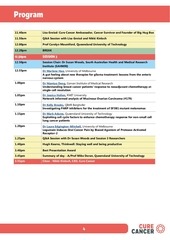
11.40am
Lisa Greissl: Cure Cancer Ambassador, Cancer Survivor and Founder of Big Hug Box
11.50am
Q&A Session with Lisa Greissl and Nikki Kinloch
12.00pm
Prof Carolyn Mountford, Queensland University of Technology
12.20pm
BREAK
12.50pm
SESSION 3
12.50pm
Session Chair: Dr Susan Woods, South Australian Health and Medical Research
Institute (SAHMRI)
12.55pm
1.00pm
1.05pm
Dr Marlene Hao, University of Melbourne
A gut feeling about new therapies for glioma treatment: lessons from the enteric
nervous system
Dr Niantao Deng, Garvan Institute of Medical Research
Understanding breast cancer patients’ response to neoadjuvant chemotherapy at
single-cell resolution
Dr Jessica Holien, RMIT University
Network informed analysis of Mucinous Ovarian Carcinoma (#179)
1.10pm
Dr Kelly Brooks, QIMR Berghofer
Investigating PARP inhibitors for the treatment of SF3B1 mutant melanomas
1.15pm
Dr Mark Adams, Queensland University of Technology
Exploiting cell cycle factors to enhance chemotherapy response for non-small cell
lung cancer patients
1.20pm
Dr Laura Edgington-Mitchell, University of Melbourne
Legumain Induces Oral Cancer Pain by Biased Agonism of Protease-Activated
Receptor-2
1.25pm
Q&A Session with Dr Susan Woods and Session 3 Researchers
1.40pm
Hugh Kearns, Thinkwell: Staying well and being productive
3.40pm
Best Presentation Award
3.45pm
Summary of day - A/Prof Mike Doran, Queensland University of Technology
3.55pm
Close - Nikki Kinloch, CEO, Cure Cancer
4
�
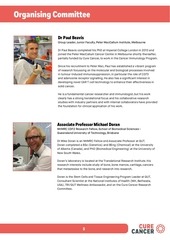
Organising Committee
Dr Paul Beavis
Group Leader, Junior Faculty, Peter MacCallum Institute, Melbourne
Dr Paul Beavis completed his PhD at Imperial College London in 2010 and
joined the Peter MacCallum Cancer Centre in Melbourne shortly thereafter,
partially funded by Cure Cancer, to work in the Cancer Immunology Program.
Since his recruitment to Peter Mac, Paul has established a vibrant program
of research focussing on the molecular and biological processes involved
in tumour-induced immunosuppression, in particular the role of CD73
and adenosine receptor signalling. He also has a significant interest in
developing novel CAR T cell technology to enhance their effectiveness in
solid cancer.
He is a fundamental cancer researcher and immunologist, but his work
clearly has a strong translational focus and his collaborative research
studies with industry partners and with internal collaborators have provided
the foundation for clinical application of his work.
Associate Professor Michael Doran
NHMRC CDF2 Research Fellow, School of Biomedical Sciences Queensland University of Technology, Brisbane
Dr Mike Doran is an NHMRC Fellow and Associate Professor at QUT.
Doran completed a BSc (Genetics) and BEng (Chemical) at the University
of Alberta (Canada), and PhD (Biomedical Engineering) at the University of
New South Wales.
Doran’s laboratory is located at the Translational Research Institute. His
research interests include study of bone, bone marrow, cartilage, cancers
that metastasise to the bone, and research into research.
Doran is the Stem Cells and Tissue Engineering Program Leader at QUT,
Consultant Scientist at the National Institutes of Health (NIH, Bethesda,
USA), TRI/QUT Wellness Ambassador, and on the Cure Cancer Research
Committee.
5
�
Organising Committee (continued)
Associate Professor Viive Howell
Research Director, Bill Walsh Translational Cancer Research Laboratory,
Kolling Institute, The University of Sydney, Sydney
A/Prof Howell is a molecular geneticist with expertise in in vivo modelling.
Her research encompasses a number of cancers including brain, ovarian,
thoracic and gastro-intestinal cancers. She is currently establishing preclinical pipelines for these cancers to test new therapeutics alone or in
combination with radiotherapy or chemotherapy.
Working closely with clinical and surgical colleagues the goal of this
research is to fast-track efficacious regimens to clinical trials, identify
prognostic and predictive biomarkers and determine strategies to
overcome chemoresistance.
Dr Susan Woods
Senior Research Fellow, South Australian Health and Medical Research
Institute (SAHMRI), Adelaide
Susan is a mid-career investigator with three co-first author Nature journal
publications in the field of cancer research. The focus of her Gut Cancer
group at the University of Adelaide is on improving detection methods and
treatment for gastrointestinal tract cancers.
She trained with Nobel Laureate J. Michael Bishop at University of California
San Francisco and with Prof Nick Hayward at QIMR-Berghofer in Brisbane,
specialising in genetic alterations found in cancer. She is now working
closely with clinician-scientist A/Prof Dan Worthley at SAHMRI, in Adelaide.
She uses both patient samples and sophisticated preclinical models.
Her research integrates next-generation sequencing data, modelling
genomic alterations using CRISPR/Cas9 gene editing and organoid culture
to address clinical needs for bowel cancer. This has led to the development
of a personalised medicine screening platform to guide patient-specific
treatment for patients with advanced colorectal cancer.
6
�
Speakers
Associate Professor Ilona Cunningham MBBS FRACP
Haematologist
Ilona Cunningham is past head of Haematology at Concord Hospital, a
partnership of eight Haematologists. She is one of a number of cancer
specialists, who has worked tirelessly to establish the Concord Cancer
Centre and is a vocal advocate for holistic, multidisciplinary care for cancer
patients in the local community. She successfully lobbied for a state of
the art building for the Concord Cancer Centre, which will be completed in
2021. It will ensure cutting edge clinical care for cancer patients, including
radiotherapy and clinical trials.
She is a member of the Medical Staff Council Executive and past Chair of
the Medical Staff Council at Concord and continues to advocate for Stage
2 of the redevelopment of Concord Hospital, to benefit all patients. In her
role as practising haematologist and Board Member of the ANZAC Research
Institute, she is strongly committed to supporting basic, translational and
clinical, ie bench to bedside research, to enable doctors to deliver worldclass care to patients.
Ilona trained in Melbourne and at Stanford University in California as a
post-doctoral fellow in Haematology. She is a fellow of the Royal Australian
College of Physicians and a member of a number of organisations, including
the Australasian Leukaemia and Lymphoma Group and the American Society
of Haematology. Ilona has a long-standing and active interest in clinical
research in Myelodysplasia and AML in elderly patients, Myeloproliferative
Neoplasms, CML and other haematologic malignancies as well as ITP.
James Butler
Chair, Cancer Council NSW's Consumer Research review panel
James is currently Chair of Cancer Council NSW’s Consumer Research
review panel and a former chair of the Hills Community Cancer Network.
Mr Butler is a retired businessman having been in business for over
30 years. He is an active consumer representative on cancer services
committees in Western Sydney Local Health District. James has been an
active volunteer for Cancer Council NSW for over 20 years, holding roles
including Chair of The Hills Relay For Life Organising Committee and Chair
of Western Sydney Cancer Advocacy Network.
As a two time cancer survivor, he understands the need to influence
decision makers around key issues that have an impact on people affected
by cancer.
7
�
Speakers
(continued)
Lisa Greissl
Cure Cancer Fundraiser & Ambassador, The Big Hug Box Founder
Lisa Greissl is a wife and mum of two girls who, shortly after the birth of her
second daughter, was diagnosed with a rare and malignant cancer on her
spine in 2015. When her life should have been focused on motherhood, it
was instead focused on fighting for her life.
Although based in Newcastle, Lisa was extremely fortunate to be referred
to a team of specialists down in Sydney which included Cure Cancer Alumni
Professor Tattersall. Professor Tattersall, which Lisa also called “The Prof”
shared just before commencing treatment that although he hadn’t seen
this type of tumor before he remained confident and his approach would
be a little “left of field". Despite the odds, and to the surprise of many, Lisa
received the unexpected news that she was cancer free in February 2016
and so now dedicates her life passionately to supporting cancer research in
hope to save more lives just like hers.
In understanding the importance of research, all Lisa’s family began to give
generously. In looking for a broader way to raise funds and awareness of
research Lisa came up with the idea to create The Big Hug Box. The Big
Hug Box, founded in 2018 supports cancer patients through a practical and
empowering gift box. From all sales it was decided that 100% of proceeds
would go to Cure Cancer. The Big Hug Box has now become more than
just a gift but a community who share a common passion for empowering
patients through our Big Hug Boxes.
Whilst Lisa’s goal was to initially sell 20 boxes, The Big Hug Box continues
to grow and have already sold close to 700 boxes that have been sent to
patients Australia wide. With all proceeds donated directly back to Cure
Cancer, Lisa says that her charity enables the community to give not
only their loved ones a big hug, but also our amazingly dedicated cancer
researchers.
8
�
Speakers
(continued)
Professor Carolyn Mountford MSc(Oxon) DPhil(Oxon)
MS(Harv)
Professor of Radiology, Queensland University of Technology
Professor Carolyn Mountford is an Oxford Educated Biophysicist. She
recently stepped down as CEO and Director of Research for Australia’s
Translational Research Institute. Carolyn was awarded full Professor of
Radiology at Harvard Medical School in 2011 and retains a position as
NeuroScientist at the Athinoula A. Martinos Center for Biomedical Imaging
at MGH and Harvard Medical School. She is currently Professor of Radiology
at QUT and CEO of a start up DatChem.
Professor Mountford and her team have been a worldwide development
site for Siemens since 1999. She is a co-inventor of the diagnostic protocol
to monitor women at high risk for breast cancer identifying metabolic
deregulations in their breast tissue that precede tumour growth. The same
technology is shown to identify changes to the brain associated with
learning, memory, Post-Traumatic Stress Disorder (PTSD) and injury from
blast and impact. Her team is under contract to the USA and Australian
military to develop this approach to improve the health of soldiers.
Hugh Kearns
Thinkwell
Hugh Kearns is recognised internationally as a public speaker, educator and
researcher. He regularly lectures at universities across the world and has
recently returned from lecture tours of the UK and the US which included
lectures at Oxford, Cambridge, Harvard, Berkeley and Stanford.
His areas of expertise include self-management, positive psychology, worklife balance, learning and creativity. He draws on over twenty five years of
experience as a leading training and development professional within the
corporate, financial, education and health sectors in Ireland, Scotland, North
America, New Zealand and Australia. He has coached individuals, teams
and executives in a wide range of organisations in the public and private
sectors.
Hugh lectures and researches at Flinders University, Adelaide, Australia. He
is widely recognised for his ability to take the latest research in psychology
and education and apply it to high-performing people and groups. As a coauthor with Maria Gardiner, he has published ten books which are in high
demand both in Australia and internationally.
9
�
List of abstracts (in order of presentation)
Dr Arutha Kulasinghe
NHMRC Early Career Research Fellow
Institute: Queensland University of Technology at the Translational
Research Institute
Email address: Arutha.kulasinghe@qut.edu.au
Grant funded by our principal supporter, the Can Too Foundation.
Spatial profiling of the tumour microenvironment
1. School of Biomedical Sciences,
Institute of Health and
Biomedical Innovation,
Queensland, University of
Technology, Brisbane, QLD,
Australia.
2. Translational Research Institute,
Woolloongabba, QLD, Australia.
Arutha Kulasinghe1,2
Immune checkpoint inhibitors (ICI) have
Rather, a number of immune cell types/
shown durable and long-term benefits in
activation status were found to correlate
a subset of head and neck squamous cell
with progressive disease. This study, to
carcinoma (HNSCC) patients.
our knowledge, represents the first spatial
analysis of HNSCC tumours.
To identify patient-responders from nonresponders, biomarkers are needed which
Current Research Interests:
are predictive of outcome to ICI therapy.
Spatial profiling of the tumour
Cues in the tumour microenvironment
microenvironment, liquid biopsy, head
(TME) have been informative in
and neck cancers, lung cancers,
understanding the tumour-immune
predictive biomarkers of response to
contexture. In this study, the NanoString
immunotherapy.
GemoMx™ Digital Spatial Profiling (DSP)
technology was used to determine the
Keywords:
immune marker and compartment specific
Head and neck cancer, lung cancer,
measurements in a cohort of HNSCC
tumour microenvironment, digital spatial
tumours from patients receiving ICI
profiling, circulating tumour cells.
therapy.
Our preliminary findings revealed
that markers involved with immune
cell infiltration (CD8 T-cells) were not
predictive of outcome to ICI therapy.
10
�
List of abstracts (continued)
Dr Simone Park
Research Fellow
Institute: The University of Melbourne at the Peter Doherty Institute for Infection and Immunity
Email address: simone.park@unimelb.edu.au
Grant co-funded with Cure Cancer, Cancer Australia and 50% funded by our
principal supporter, the Can Too Foundation.
1. Department of Microbiology
& Immunology, The University
of Melbourne at The Peter
Doherty Institute for Infection
and Immunity, Melbourne, VIC,
Australia, 3000
Targeting tissue-resident memory T cells in cancer
immunotherapy
Simone L. Park1, Stephane Guillaume1, Maleika Osman1, Laura K. Mackay1
The immune system is critical to inhibit
the development and spread of cancer
with T cells being central to this process.
Immunotherapies that target T cells have
greatly advanced the treatment of solid
cancers including melanoma, but current
strategies are not universally effective.
Design of novel treatment strategies will
require a better understanding of how
effective anti-tumour T cell responses are
generated and controlled. Tissue-resident
memory T (TRM) cells are a population of
non-recirculating immune cells that reside
permanently in non-lymphoid peripheral
tissues and can potently inhibit cancer
growth. These cells have been identified
in a variety of solid human cancers where
they correlate with improved patient
survival.
The goal of this project is to determine
whether the efficacy of cell-based
immunotherapies can be improved by
boosting TRM cell formation in tumours.
We will combine a novel orthoptic
melanoma model that we have established
in mice with gene editing technologies
11
to devise novel strategies to enhance
the generation of tumour TRM cells. We
will assess the ability of chimeric antigen
receptor (CAR) TRM cells to form in the
tumour microenvironment and ask whether
increasing the generation and activity of
CAR TRM cells can enhance protection
against solid cancers. By addressing these
aims, we hope to identify novel pathways
that direct formation of protective TRM
cells in tumours and uncover ways to
artificially enhance their generation
using immunotherapy. These insights will
therefore unlock new avenues to develop
more effective cancer treatments.
Current Research Interests:
Immunotherapy, T cells, immune memory,
tissue-resident memory, solid cancers.
Keywords:
Immunotherapy, CAR T cells, melanoma,
solid cancers, T cells.
�
List of abstracts (continued)
Dr Fernando S. F. Guimaraes
Group Leader
Institute: University of Queensland Diamantina Institute
Email address: f.guimaraes@uq.edu.au
Grant co-funded with Cure Cancer, Cancer Australia and 83% funded by
the Can Too Foundation.
1. University of Queensland
Diamantina Institute. Brisbane/
Australia
Therapeutic blockade of TGF-b superfamily members
improves natural killer cell function and anti-cancer
immunity.
Fernando Souza-Fonseca-Guimaraes1
Natural killer (NK) cells are innate
Activin-A, phosphorylates SMAD2/3 to
lymphocytes that play a major role in
efficiently suppress IL-15-mediated NK
immunosurveillance against tumour
cell metabolism. Activin-A impairs human
initiation and metastatic spread.
and mouse NK cell proliferation and
downregulates intracellular granzyme B
The signals and checkpoints that regulate
levels to impair tumour killing. Similar to
NK cell fitness and function in the tumour
TGF-b, Activin-A also induces SMAD2/3
microenvironment are not well defined.
phosphorylation and drives NK cells to
Transforming growth factor (TGF)-b is a
upregulate several innate lymphoid cell
recognized suppressor of NK cells that
(ILC)1-like surface markers. Further,
inhibits IL-15-dependent signalling and
Activin-A also induces these changes
induces cellular transdifferentiation.
on TGF-b receptor deficient NK cells,
highlighting that Activin-A and TGF-b are
Computational analyses of an NK cell gene
independent pathways that can drive
signature in metastatic melanoma showed
SMAD2/3-mediated NK cell suppression.
that higher NK cell infiltration is associated
Finally, therapeutic inhibition of Activin-A
with improved patient survival and this
by Follistatin significantly slows orthotopic
effect is ablated in patients where there is
melanoma growth in mice. These data
evidence of active TGF-b signalling. This
highlight the relevance of examining
suggests that a subset of patients would
TGF-b-independent SMAD2/3 signalling
benefit from therapies that can prevent
mechanisms as a novel therapeutic axis to
pSMAD2/3, however, in NK cells the role of
relieve NK cell suppression and promote
other SMAD signalling pathways that act
tumor immunity.
downstream from the TGF-b superfamily
is unknown. Here, we show that NK cells
Current Research Interests:
also express the type I Activin receptor,
Immunotherapy, cancer metastases, cancer
ALK4, which upon binding its ligand
immunosuppression, natural killer cells.
12
�
List of abstracts (continued)
Dr Jessica Da Gama Duarte
Postdoctoral Research Fellow
Institute: Olivia Newton-John Cancer Research Institute
Email address: Jessica.Duarte@onjcri.org.au
Grant funded by Cure Cancer through the Cancer Australia Priority-driven
Cancer Support Scheme. Year one of her grant is in Memory of Micaela Virgona.
Predicting immunotherapy outcomes in rare cancers
Jessica Da Gama Duarte1,2, Jonathan Cebon1,2, Oliver Klein1,2, Andreas Behren1,2
1. Olivia Newton-John Cancer
Research Institute, Heidelberg,
Victoria
2. School of Cancer Medicine,
La Trobe University, Heidelberg,
Victoria
Effective immune engagement with
a tumour occurs when immune cells
recognize, and destroy malignant cells.
However, tumours have developed
multiple ways of escaping immune
attack, often leading to uncontrolled
tumour growth1. In general, patients
with evidence of strong immune
engagement have a large number
of anti-tumour immune cells within
their tumours, and improved clinical
responses to treatments targeting
the immune system (immunotherapy),
when compared to those without2.
Serological cancer-specific antibodies
produced by B cells upon malignant
cell recognition are a form of immune
engagement that have been proposed
to stratify patients and predict
treatment response3. However, when
produced in excess, antibodies
may contribute to autoimmune-like
conditions typical of immunotherapy
toxicities4,5. A custom protein
microarray able to detect antibodies
This study aims to identify predictive
against over 100 tumour markers in
biomarkers of response and toxicity
parallel using only one drop of blood
using the microarray technology, and
with high sensitivity was developed6.
to compare findings to a large suite of
biomarker studies being performed in
Rare cancers have limited therapeutic
parallel.
options, low survival and are often
excluded from clinical trials and
Current Research Interests:
biomarker studies due to their low
Immunotherapy, B cell immunology,
incidence. However, while incidence
tumour immunology, protein
is low for each individual rare cancer,
microarrays, personalised medicine,
collectively they comprise of almost
predictive/diagnostic/prognostic
a third of all cancer diagnoses,
cancer biomarkers.
highlighting the need for novel
therapies. A recent clinical trial
Keywords:
investigates the use of combined
Immunotherapy, rare cancers, protein
immune checkpoint blockade (ICB)
microarrays, autoantibodies.
in 60 cancer patients with rare
upper gastrointestinal malignancies,
neuroendocrine tumours and
gynaecological tumours, with
previously unprecedented clinical
responses (31%) and disease control
(31%), independent of tumour type.
However, this combination yielded
treatment-induced toxicities, which
led to treatment cessation in a
proportion of patients (22%). As such,
the ability to predict the likelihood of
clinical response and toxicity onset
is of the utmost value for adequate
patient stratification and clinical
1. Da Gama Duarte J, Woods K, Andrews MC, Behren A. The
good, the (not so) bad and the ugly of immune homeostasis
in melanoma. Immunol Cell Biol. 2018 Feb 2;1–10.
2. Chen DS, Mellman I. Elements of cancer immunity and the
cancer-immune set point. Nature. 2017;541(7637):321–30
3. Yuan J, Hegde PS, Clynes R, Foukas PG, Harari A, Kleen TO, et
al. Novel technologies and emerging biomarkers for
personalized cancer immunotherapy. J Immunother cancer.
Journal for ImmunoTherapy of Cancer; 2016;4(1):3.
4. Da Gama Duarte J, Parakh S, Andrews MC, Woods K, Pasam
A, Tutuka C, et al. Autoantibodies May Predict ImmuneRelated Toxicity: Results from a Phase I Study of
Intralesional Bacillus Calmette-Guérin followed by
Ipilimumab in Patients with Advanced Metastatic Melanoma.
Front Immunol. 2018;9(March):411.
5. Gowen MF, Giles KM, Simpson D, Tchack J, Zhou H, Moran U,
et al. Baseline antibody profiles predict toxicity in melanoma
patients treated with immune checkpoint inhibitors. J Transl
Med. BioMed Central; 2018;16(1):82
6. Beeton-Kempen N, Duarte J, Shoko A, Serufuri J-M, John
T, Cebon J, et al. Development of a novel, quantitative protein
microarray platform for the multiplexed serological analysis
of autoantibodies to cancer-testis antigens. Int J cancer.
management.
2014 Oct 15;135(8):1842–51.
13
�
List of abstracts (continued)
Dr Melissa Cantley
NHMRC Early Career Research Fellow
Institute: The University of Adelaide and SAHMRI
Email address: melissa.cantley@adelaide.edu.au
Grant co-funded by Cure Cancer with Cancer Australia and Leukaemia
Foundation.
Biomarker discovery using novel proteomics to enable
identification of high-risk smouldering myeloma patients
1. Myeloma Research Laboratory,
Adelaide Medical School, Faculty
of Health and Medical Sciences,
University of Adelaide, Adelaide
2. Cancer Program, Precision
Medicine Theme, South
Australian Health and Medical
Research Institute, Adelaide
3. Mass Spectrometry Core Facility,
South Australian Health and
Medical Research Institute,
Adelaide
4. Cancer Sciences Unit, Faculty of
Medicine, University of
Southampton, UK
5. Australian Centre for Blood
Diseases, Monash University,
Victoria
6. Proteome Exploration
Laboratory, Beckman Institute,
Californian Institute of
Technology (Caltech), USA
7. Central Adelaide Local Health
Network, Adelaide, Australia
Melissa Cantley1,2, Kate Vandyke1,2, Marten Snel3, Surinder Sahota4, Andrew Spencer5,
Spiros Garbis6 and Andrew Zannettino1,2,7
common haematological cancer. MM
to enable early therapeutic intervention.
is preceded by largely asymptomatic
stages known as monoclonal
The goal of this study is to utilise our
gammopathy of undetermined
existing extensive biobank of peripheral
significance (MGUS) and smouldering
blood plasma collected from over 1500
myeloma (SMM).
patients with MGUS, SMM and active
MM, in combination with state-of-
Currently, the standard of care is to
the-art quantitative high-precision
treat patients when they progress
proteomics technologies. This novel
to symptomatic, active MM, a point
approach will enable the identification
at which there is evidence of end-
of protein biomarkers that are
organ damage that is, in many cases,
associated with disease progression.
irreversible. Utilizing this current model
This will result in the development of
of treatment, the disease is incurable,
a minimally invasive, peripheral blood-
with only 50% of patients surviving 5
based test to predict SMM patients
years from diagnosis.
at high-risk of progression enabling
earlier treatment to improve treatment
Despite the growing number of
responses, patient quality of life and
trials highlighting the benefit of
overall survival.
early treatment in SMM patients,
the use of anti-myeloma therapies
Current Research Interests:
Multiple Myeloma (MM) is a
in this cohort of patients is not
Multiple myeloma, bone loss,
haematological malignancy
currently recommended due to their
smouldering myeloma, bone
characterized by the uncontrolled
unfavourable toxicity profiles. There is
microenvironment.
proliferation of clonal plasma cells
substantial heterogeneity that exists in
(PCs) in the bone marrow (BM).
the SMM cohort, with 30% considered
Keywords:
at high-risk of progression within 2
Smouldering myeloma, Multiple
Approximately 140,000 people
years of diagnosis. However, no robust
myeloma, Disease progression,
worldwide are diagnosed with MM
biomarkers have been defined that can
Biomarkers, Proteomics
each year, making it the second most
identify those high-risk SMM patients
14
�
List of abstracts (continued)
Dr Kate Vandyke
Cancer Council Beat Cancer Early Career Research Fellow
Institute: University of Adelaide
Email address: kate.vandyke@adelaide.edu.au
Grant co-funded by Cure Cancer with Cancer Australia and Leukaemia Foundation.
N-cadherin inhibitors as vascular disrupting agents:
increasing drug delivery to tumours and improving quality
of life for cancer patients
1. Myeloma Research Laboratory,
Adelaide Medical School, Faculty
of Health and Medical Sciences,
The University of Adelaide,
Adelaide, Australia
2. Precision Medicine Theme,
South Australian Health and
Medical Research Institute,
Adelaide, Australia
3. Division of Urology, McGill
University, Montreal, Canada
4. Centre for Nanoscale
BioPhotonics, University of
Adelaide, Adelaide, Australia
5. Vascular Biology and Cell
Trafficking Laboratory, Centre for
Cancer Biology, University of
South Australia, Adelaide, Australia
Kate Vandyke1,2, Krzysztof M. Mrozik1,2, Duncan R. Hewett1,2, Jacqueline E. Noll1,2, Khatora S. Opperman1,2, Orest W. Blaschuk3, Mark Hutchinson4, Claudine Bonder5, Andrew C.W. Zannettino1,2
Introduction: N-cadherin is a homotypic
cell-cell adhesion and signalling
molecule which plays an important
role in maintaining endothelial barrier
integrity and controlling vascular
permeability.
Previous studies have demonstrated
that the N-cadherin blocking peptide
ADH-1 increases vascular permeability
and chemotherapeutic drug delivery
to the tumour microenvironment. Here,
we have evaluated the effects of a
small molecule ADH-1 peptidomimetic,
LCRF-0006, on blood vessel integrity
and permeability. Additionally, we have
assessed the ability of LCRF-0006 to
increase the efficacy of the anti-cancer
agent bortezomib in a mouse model
of the haematological cancer multiple
myeloma (MM).
< 0.001; co-efficient of drug interaction
< 0.7).
Methods: In vitro vascular disruption
and permeability assays were performed
using the human bone marrow
endothelial cell line TrHBMEC. Druginduced cell apoptosis was assessed
by flow cytometry using Annexin V
and 7-AAD. The therapeutic utility of
LCRF-0006 (100mg/kg) alone, and in
combination with a sub-therapeutic
dose of bortezomib (0.5mg/kg), was
evaluated in the syngeneic C57Bl/
KaLwRij/5TGM1 mouse model of MM.
Conclusion: These findings demonstrate
the potential utility of LCRF-0006 to
increase bortezomib efficacy in vivo.
Future studies will investigate whether
LCRF-0006 can be used to increased
tumour-specific update of bortezomib
and other anti-myeloma therapies,
thereby decreasing the off-target sideeffects of these treatments.
Results: LCRF-0006 disrupted preformed endothelial tubes and rapidly
disrupted cell-cell junctions in confluent
endothelial monolayers in a reversible
manner in vitro. Additionally, LCRF0006 increased monolayer permeability
to FITC-dextran in vitro, suggesting
enhanced vascular permeability
following LCRF-0006 treatment.
LCRF-0006 treatment once daily for
4 weeks was well-tolerated in C57Bl/
KaLwRij mice, with no effect on body
weight, haematopoiesis, or bone marrow
osteoblast, mesenchymal stromal cell
or endothelial cell numbers. Notably,
LCRF-0006 synergistically increased
MM tumour response to a low dose of
the anti-MM agent bortezomib, leading
to regression of disease in 5 of 5 mice (P
15
Current Research Interests:
Dr Vandyke's current research
interests involve elucidating the
molecular and cellular mechanisms
responsible for disease progression
in the haematological cancer multiple
myeloma. In particular, her research
focusses on why up to one quarter of
patients have rapidly progression or
rapid relapse following therapy, leading
to death within three years of initial
diagnosis. These studies primarily
focus on investigating the mechanisms
controlling myeloma dissemination and
the identification of novel therapeutic
targets to improve response to antimyeloma therapies.
Keywords:
multiple myeloma, N-cadherin, vascular
permeability, bortezomib
�
List of abstracts (continued)
Dr Nathalie Bock
Research Fellow
Institute: Institute of Health and Biomedical Innovation (IHBI),
Translational Research Institute (TRI), Queensland University of
Technology (QUT)
Email address: n.bock@qut.edu.au
Grant co-funded with Cure Cancer, Cancer Australia and 66% by our principal
supporter, the Can Too Foundation.
1. Queensland University of
Technology, Brisbane,
Queensland, Australia
Bioengineered humanised models: A novel preclinical
platform for bone metastatic cancer research
Nathalie Bock1, Jacqui McGovern1, Jenni Gunter1, David Waugh1, Dietmar Hutmacher1
Prostate cancer (PCa) is the most
adiposity. Considering that the bone
the presence of human bone marrow
commonly diagnosed cancer in
microenvironment itself is highly fatty
fat, and used to assess whether co-
Australia (estimated 16,665 new
in old people, bone marrow adipocytes
targeting drugs may be an effective
cases in 2017). Whilst survival rates
may be pivotal in PCa progression.
therapeutic strategy against CRPC.
therapies, cancer adaptation and
Importantly, despite successful
Current Research Interests:
acquired resistance continues to be a
testing in mouse studies, more than
Cancer Models, Bioengineering Models,
major therapeutic problem.
80% of novel drug candidates fail
Biomimetic Cell Culture Models;
have improved as a result of targeted
to prove their efficacy when tested
Patient-Derived Explants; Patient-
The current treatment upon
in humans [7]. Traditional mouse
Derived Xenografts (PDX), Organoid
unsuccessful chemical androgen
models are unable to fully recapitulate
Models, In Vitro Tumor Models, In Vivo
deprivation therapy (ADT) is the use
the physiological or pathological
Tumor Models, Humanised Mouse
of androgen-targeted therapies (ATT).
processes in humans and one of
Models, Preclinical Models, Bone,
While PCa initially responds, the
the key challenges in the field of
Bone Metastasis, Prostate Cancer,
development of castrate-resistant PCa
translational medicine is to “make the
Breast Cancer, 3D Imaging, Tissue
(CRPC) is inevitable and PCa thrives in
mouse organism more human” [8].
Engineering, Biomaterials, Drug Testing,
Targeted Therapy; Personalised
the bones, the primary metastatic site
and incurable condition.
This project will be focusing on this
Medicine, Tumor Microenvironment.
key area by implementing a humanised
In the bone microenvironment,
in vitro 3D model (including human
Keywords:
adipocytes contribute actively to
osteoblasts and adipocytes cultured
Cancer Models, Microtissue
bone function. In the context of ADT, a
in 3D) in a mouse model, in order
Bioengineering, Bone Metastasis,
main side-effect is the development
to recreate a humanised fatty bone
Humanised Mouse Models.
of metabolic dysfunction, including
metastatic niche in vivo. The model
insulin resistance and increased
will be confirmed using ADT/ATT in
16
�
List of abstracts (continued)
Dr Rachel Thijssen
Postdoctoral fellow
Institute: The Walter and Eliza Hall Institute of Medical Research
Email address: thijssen.r@wehi.edu.au
Grant co-funded with Cure Cancer, Cancer Australia and 50% funded by our
principal supporter, the Can Too Foundation.
Single cell analyses reveal unexpected and complex
heterogeneity in leukaemia relapse on venetoclax
R. Thijssen1,2, L. Tian1,2, C. Flensburg1,2, C.E. Teh1,2, M.A. Anderson1,2,3,4, H.K. Peng1,2,
1. The Walter and Eliza Hall
Institute of Medical Research,
Melbourne, VIC. 3052 Australia
2. University of Melbourne,
Melbourne, VIC. 3004 Australia
3. Royal Melbourne Hospital,
Parkville. VIC. 3050. Australia
4. Peter MacCallum Cancer Centre,
Melbourne, VIC 3000, Australia
P. Blombery3,4, D.H.D. Gray1,2, I.J. Majewski1,2, M.E. Ritchie1,2, D.C.S. Huang1,2, A.W. Roberts1,2,3,4
Venetoclax, the pro-survival BCL2
inhibitor, is highly effective for the
treatment of chronic lymphocytic
leukaemia (CLL), a disease marked by
BCL2 overexpression.
However, the disease will eventually
progress in most patients after years
on venetoclax monotherapy and
further treatment options are often
limited. Thus, there is an urgent
need to fully define the molecular
mechanisms driving venetoclax
resistance.
Using paired samples from patients
who have progressed while on
venetoclax, all the relapse samples
were less sensitive to the drug in vitro
indicating that cell intrinsic changes
must drive acquired resistance.
One such change is the acquired
BCL2 G101V mutation which blocks
venetoclax binding (Blombery et al.
Taken together, our findings reveal
Cancer Discov 2019). However, cells
that multiple mechanisms must
bearing this mutation only account
operate to allow acquisition of
for a fraction of the tumour cells
venetoclax resistance. A detailed
at disease progression, strongly
understanding of how venetoclax fails
implicating other mechanisms must
is important for developing strategies
operate to subvert the action of
to avoid emergence of resistance
venetoclax.
and to optimally use these powerful
anti-cancer agents as part of up-front
We applied the state-of-the art
therapeutic options for this disease.
technology - Cellular indexing of
transcriptomes and epitopes in single
Current Research Interests:
cells (CITE-seq) - which allows us to
My goal is to apply single cell
fully characterize the tumour cells on
techniques (e.g. single cell RNA-
the basis of proteomics data and gene
seq, CyTOF) to identify all of the
expression data, from short-read and
mechanisms of resistance that
full length-read scRNA-seq. We have
have significant implications for
identified other drivers of venetoclax
how venetoclax is best used, both
resistance: intriguingly, high BCLxL
in preventing the development of
gene expression marked a distinct
therapy resistance, and by developing
sub-population of tumour cells from
strategies to tackle resistance.
a cluster harbouring the BCL2 G101V
Ultimately, this project should
mutation in one patient. These have
significantly improve outcomes for
unique transcriptional signatures.
patients with CLL.
Using mass spectrometry (CyTOF), we
have now detected high BCLxL in 5
Keywords:
out of 15 patients. In these, there was
B-cell leukaemia, apoptosis,
no evidence for BCLxL amplification or
venetoclax, single cell RNA-seq,
mutation.
CyTOF.
17
�
List of abstracts (continued)
Dr Laurence Cheung
Senior Research Officer and Senior Lecturer
Institute: Telethon Kids Institute and Curtin University
Email address: Laurence.cheung@telethonkids.org.au
Grant co-funded by Cure Cancer with Cancer Australia and Leukaemia Foundation.
Dissecting the Bone Marrow Microenvironment in pre-B
Acute Lymphoblastic Leukaemia
Laurence Cheung1,2, Anastasia Hughes1,2, Patrycja Skut1, Rishi Kotecha1-3
1. School of Pharmacy and
Biomedical Sciences, Curtin
University, Perth, Australia
2. Telethon Kids Institute, The
University of Western Australia,
Perth, Australia
should be treated at diagnosis, and
leukaemia burden and prolonged
whether such treatments would have
survival compared to control mice.
any impact on leukaemia progression.
In addition, we showed that the
3. Perth Children’s Hospital, Perth,
Australia
We hypothesise that restoring the
combination of tyrosine kinase inhibitor
healthy BMM can hinder leukaemia
therapy and ZA significantly improved
progression and further, that targeting
survival compared to TKI therapy alone.
Acute lymphoblastic leukaemia (ALL),
both leukaemia cells and bone cells
In conclusion, our study reveals the
the most common childhood cancer,
simultaneously is an effective strategy
impact of pre-B ALL development on
represents over one quarter
to treat BCR-ABL1+ ALL.
haematopoiesis, bones and the BMM.
of paediatric cancer diagnoses.
We have developed an
Our findings provide evidence for
immunocompetent mouse model
targeting leukaemia-induced bone
Unfortunately, children harbouring
of BCR-ABL1+ pre-B ALL that has
loss as a novel therapeutic strategy for
high-risk genetic alterations in their
enabled comprehensive investigation
patients.
ALL cells such as the BCR-ABL1+
of the architecture of the BMM during
fusion gene have dismal prognoses.
leukaemogenesis. We found that
Current Research Interests:
haematopoiesis was perturbed, B
• Develop leukaemia preclinical models
The microenvironments of leukaemia
lymphopoiesis was impaired, collagen
• Single cell RNA sequencing to
and cancer are critical for multiple
production was reduced, and the
dissect the leukaemia bone marrow
stages of malignancies and they
number of osteoblastic cells was
microenvironment
are an attractive therapeutic target.
decreased in the BMM.
• Using flow cytometry to enumerate
subpopulations of cells in the
Clinical studies in children diagnosed
with ALL have clearly demonstrated
Moreover, leukaemia-bearing mice
defects in the bone marrow
exhibited severe bone loss during
microenvironment (BMM), yet little
leukaemogenesis, which is consistent
Keywords:
is known about the contribution of
with clinical data in paediatric ALL.
• Leukaemia
the normal bone marrow cells during
We demonstrated that zoledronic
• Bone marrow microenvironment
the development of this disease, it’s
acid acid (ZA) is effective at reducing
• Hematopoiesis
progression and relapse. Further, it
trabecular bone loss during leukaemia
• Preclinical cancer models
remains unclear whether the clinical
development. Further, mice treated
• Flow cytometry
symptoms of increased bone fragility
with ZA showed significantly lower
18
microenvironment
�
List of abstracts (continued)
Dr Shuai Li
Victorian Cancer Agency Early Career Research Fellow
Institute: Centre for Epidemiology and Biostatistics,
The University of Melbourne
Email address: shuai.li@unimelb.edu.au
Grant funded by our principal supporter, the Can Too Foundation.
1. 1Centre for Epidemiology and
Biostatistics, Melbourne School of
Population and Global Health, The
University of Melbourne, Parkville,
Victoria, Australia
2. Cancer Epidemiology Division,
Cancer Council Victoria, Melbourne,
Australia
3. Precision Medicine, School of Clinical
Sciences at Monash Health, Monash
University, Clayton, Victoria, Australia
4. Department of Clinical Pathology, The
University of Melbourne, Melbourne,
VIC, Australia.
Integrating epigenomics and genomics to understand the
causal pathways and mechanisms of how menarche and
menopause modify breast cancer risk
Shuai Li1, Graham Giles1-3, Melissa Southey,2-4 Roger Milne1-3, John Hopper1
Early menarche, late menopause and
datasets from two cohort studies.
pre-menopausal status are known to be
associated with increased breast cancer
This project aims to (1) screen DNA
risk.
methylation changes associated with
age at menarche, age at menopause
Understanding the causal pathways and
and menopausal status by analysing
mechanisms of how these risk factors
genome-wide DNA methylation
modify disease risk could provide
datasets; (2) assess the evidence for
evidence for breast cancer aetiology
causality between DNA methylation
and molecular targets for risk-reducing
and the corresponding risk factor
interventions. DNA methylation, an
by applying and comparing the two
epigenetic modification affecting
causal inference methods, MR and ICE
gene transcription and involved in
FALCON; and (3) investigate whether
carcinogenesis, can provide evidence for
DNA methylation mediates the effects of
causal pathways.
the corresponding risk factor on breast
cancer risk by assessing and comparing
We have developed a novel causal
both observational and genetic evidence.
inference statistical method, ICE
Preliminary results are expected at the
FALCON (Inference about Causation from
end of 2020.
Examination of FAmiLial CONfounding),
which gives the same causality
Current Research Interests:
conclusion as the commonly used
Cancer epidemiology, genetic
Mendelian randomisation (MR) with a
epidemiology, epigenetic epidemiology.
greater power. Both ICE FALCON and MR
will be used to investigate the causal
Keywords:
pathways by integrating large-scale
Breast cancer, menarche, menopause,
genome-wide association study (GWAS)
epigenetics, causal inference.
and genome-wide DNA methylation
19
�
List of abstracts (continued)
Dr Marlene Hao
Co-lab head
Institute: University of Melbourne
Email address: : hao.m@unimelb.edu.au
Grant funded by our principal supporter, The Can Too Foundation.
A gut feeling about new therapies for glioma treatment:
lessons from the enteric nervous system
Marlene Hao1, Amelia Nash1, Thomas Gan1, Yvette Wilson1,2, Annette Bergner1, Lincon Stamp1
1. Department of Anatomy and
Neursocience, the University of
Melbourne, Australia.
2. Department of Physiology, the
University of Melbourne,
Australia
Gliomas are an incredibly aggressive form
and enteric glia. Our data shows that
of brain cancer, making up the majority (70-
these mice exhibit severe behavioural
80%) of malignant primary brain tumours.
defects, including loss of co-ordination,
dragging of hindlimbs, and irregular gait.
Although there have been improvements
Gross morphological analysis of the brain
in diagnostic and therapeutic options,
showed that they had gliomas of the
survival rates remain low for brain cancers,
optic nerves, which is typical of gliomas
with only 1 in 5 patients surviving beyond
derived from oligodendrocytes. However,
5 years.
no tumours have yet been identified in the
gut (n = 3). We are currently continuing
Gliomas can arise from mutations that
to characterise these mice, and plan to
affect glial cells in the brain. Glial cells
use RNA-sequencing to compare gene
are found throughout the nervous system,
expression differences between enteric
including in the enteric nervous system, a
glia and CNS glia isolated from this mutant
network of neurons and glia located within
model. We aim to identify candidate genes
the wall of the gut. Gliomas in the gut are
that are differentially regulated in mutant
very rare, and over 95% of tumours are
enteric glia that reduce their proliferative
benign. These are very different from the
and metastatic potential.
malignant gliomas of the brain. Therefore,
what is unique about enteric glial cells
Current Research Interests:
that protect them from developing
Our laboratory has extensive experience in
aggressive cancers? We hypothesise that
studies of the enteric nervous system, with
this protective effect could arise due to (i)
experience in live calcium imaging, electro-
activation of cell intrinsic pathways, or (ii)
physiology, as well as stem cell biology and
as a result of cell-cell interactions in the
transplantation. We are novices in cancer
gut environment.
biology research and welcome this
opportunity to learn more from the
To investigate this, we have developed
experienced researchers in this field!
a novel strain of mice, Sox10-creERT2;
Pik3caH1047R,Ptenfl/fl,R26R-YFP
Keywords:
mice, with mutations in the PI3K
Glioma, enteric glia, RNA-seq,
(phosphoinositide 3 kinase) pathway in
oligodendrocytes, PI3K pathway.
both central nervous system (CNS) glia
20
�
List of abstracts (continued)
Dr Niantao Deng
Senior Research Officer
Institute: Garvan Institute of Medical Research
Email address: n.deng@garvan.org.au
Grant funded by our principal supporter, the Can Too Foundation.
Understanding breast cancer patients’ response to
neoadjuvant chemotherapy at single-cell resolution
1. The Kinghorn Cancer Centre &
Cancer Research Division,
Garvan Institute of Medical
Research, Sydney, Australia;
2. St Vincent’s Clinical School,
Faculty of Medicine, UNSW
Sydney, Australia;
3. Chris O’Brien Lifehouse,
Sydney, Australia;
Niantao Deng1.2, Mun Hui1,2,3, Kate Harvey1,2 , Jessica Yang1,2 , Alexander Swarbrick1,2
The use of neoadjuvant therapy (NAT)
sequencing analysis. In the first pair of
before surgery to render large tumours
samples collected before and after NAT,
operable in breast cancer (BC) is
we have successfully profiled 5,705
increasingly common.
and 2,370 cells respectively with mean
number of reads above 25,000 reads
However, only <30% of breast cancers
per cell. Initial analysis shows different
treated with neoadjuvant chemotherapy
compositions of cell populations before
would have a complete pathological
and after treatment, with enriched
response, which is the complete
cancer-associated fibroblasts and
disappearance of cancer cells following
reduced epithelial cell populations. We
treatment. Even with the addition of
have now collected more than 5 pairs of
immunotherapy, the best response
samples and in the process of sequencing
is only 60%. Although generally safe,
more samples. The data will provide
immunotherapy can result in irreversible
insights into understanding of breast
organ damage in a small population of
cancer microenvironment and their role in
patients. We have developed a novel
the patients’ treatment response.
sequencing method to study a unique
clinical cohort to understand mechanisms
Current Research Interests:
of treatment resistance in all breast
Cancer genomics, bioinformatics, genome
cancer subtypes.
evolution.
We have serial biopsy specimens from
Keywords:
breast cancer patients at diagnosis,
Single cell sequencing, neoadjuvant
during chemotherapy and at surgery.
chemotherapy, complete pathological
These samples are subsequently
response, cell subpopulations.
characterised through single-cell
21
�
List of abstracts
(continued)
Dr Jessica Holien
Vice Chancellor’s Fellow
Institute: RMIT University
Email address: jessicaholien@outlook.com
Grant funded by Cure Cancer through the Cancer Australia Priority-driven
Cancer Support Scheme.
Network informed analysis of Mucinous Ovarian
Carcinoma (#179)
1. St Vincent's Institute of Medical
Research, Fitzroy, VIC, Australia
2. Peter MacCallum Centre,
Melbourne, VIC, Australia
3. WEHI, Melbourne, VIC, Australia
4. Bio21 Institute, Melbourne, VIC,
Australia
5. Baker IDI, Melbourne, VIC,
Australia
6. RMIT, Melbourne, VIC, Australia
Jessica Holien 1,6 , Samuel Lee 1 , Nathan Williams 1,6 , Yunkai Gao 2 , Dane Cheasley 2 ,
Matthew Wakefield 3 , Ian Campbell 2 , David Ascher4,5, Kylie Gorringe 2.
Mucinous Ovarian Cancer (MOC) is a rare
The interactions we discover may also be
subtype that is highly distinctive from
applicable to tumour types with related
other ovarian carcinomas.
key drivers, such as low-grade serous
ovarian carcinoma and pancreatic cancer.
Treatments that work well for other
In addition, our approach can also be
ovarian cancer subtypes are no more
applied to established ovarian cancer
likely to work for MOC than for any other
genomic data sets, such as those for the
tissue type. Indeed, MOC is intrinsically
more common high-grade serous ovarian
resistant to standard ovarian cancer
carcinoma.
chemotherapy (platinum/taxane). With
the outcome for advanced stage patients
Current Research Interests:
being dire, any new effective therapy will
Drug discovery, Protein-protein
have a massive and immediate impact.
interactions, networks, bioinformatics.
We have leveraged our unique multi-
Keywords:
platform genomics data on MOC to
Drug discovery, Protein-protein
discover protein-protein interaction
interactions, networks, bioinformatics.
networks that offer a therapeutic
opportunity. By incorporating protein
structural elements into the analysis
and computationally assessing the key
protein-protein interactions for their
druggability, we can conduct an effective
therapeutic screening program which will
readily translate to patients.
22
�
List of abstracts (continued)
Dr Kelly Brooks
Research Officer
Institute: QIMR Berghofer
Email address: Kelly.brooks@qimrberghofer.edu.au
Grant co-funded with Cure Cancer, Cancer Australia and 50% funded by
the Can Too Foundation.
Investigating PARP inhibitors for the treatment of SF3B1
mutant melanomas
1. QIMR Berghofer Medical Research
Institute, Brisbane, Queensland,
Australia.
2. Cancer Research UK Manchester
Institute, Manchester, United Kingdom.
Kelly Brooks1, Richard Marais2, Nicholas Hayward1.
Uveal melanoma (UM) is the most
If this sensitivity can be validated and a
common primary ocular cancer, and the
direct mechanistic link demonstrated, it
second most common melanoma subtype.
is possible that PARPis could be readily
repurposed and applied to SF3B1-
Primary UM is effectively controlled withe
mutant UM patients (15-24%) and other
radiation, laser or surgical approaches,
cancers with a significant proportion of
including combinations of these. However,
SF3B1-mutant cases including mucosal
despite intervention at the stage of
melanoma (MM) and chronic lymphoid
primary disease, ~50% of UM cases
leukaemia (CLL).
will metastasize within 15 years, which
is invariably fatal, with no effective
Current Research Interests:
treatments available. SF3B1 is a splicing
Uveal Melanoma, Genetics, DNA Damage,
factor that is mutated in ~20% of UM
organotropism.
and is associated with late metastatic
progression, though its exact role, and the
Keywords:
impact of other UM-associated mutations
Cancer biology, genetics, CRISPR.
is unknown. Preliminary work suggests
that these SF3B1 mutations sensitise
these cancers to PARP inhibitors.
23
�
List of abstracts (continued)
Dr Mark Adams
Postdoctoral Research Fellow
Institute: Institute of Health and Biomedical Innovation-Queensland
University of Technology; Translational Research Institute
Email address: mn.adams@qut.edu.au
Grant supported by the Denton Trust.
1. Institute of Health and
Biomedical Innovation Queensland University of
Technology, Brisbane
2. Translational Research
Institute, Brisbane
Exploiting cell cycle factors to enhance chemotherapy
response for non-small cell lung cancer patients
Mark Adams1-2, Derek Richard1-2, Kenneth O’Byrne1-2
Lung cancer is the leading cause of
improve response of NSCLC tumours
CDCA3low NSCLC patients. This
cancer-related mortality worldwide
to therapy.
strategy is being investigated for
application in other solid malignancies.
with a ~14% 5-year survival rate. The
most commonly diagnosed form of this
We demonstrate that in patients and in
Ultimately, such a strategy might
disease is non-small cell lung cancer.
vitro analyses, CDCA3 levels correlate
benefit cancer patient health outcomes by
with measures of genome instability
delaying or preventing therapy resistance.
Chemotherapy employing platinum-
and platinum sensitivity, whereby
based doublet combinations remains
CDCA3high tumours are sensitive to
Current Research Interests:
the cornerstone of treatment for
cisplatin. In NSCLC, CDCA3 protein
• Non-small cell lung cancer & breast
non-oncogene driven NSCLC. This
levels are regulated by the ubiquitin
cancer (ER+ and triple-negative)
treatment is commonly used in the
ligase APC/C and c
...
 Historical archive . public document